Email Marketing Services
Lifecycle flows, deliverability care, and revenue reporting for the one marketing channel no platform can take away from you.
Email marketing services from Egochi turn the list you own into repeat revenue: welcome flows, cart recovery, nurture sequences, and newsletters, built on deliverability work that keeps them out of spam. Every send reports to revenue rather than opens, and every subscriber, template, and automation we build stays yours.
Platforms change the rules. Your list does not. We build the program on the channel you own.
As Featured In





What are email marketing services?
Email marketing services are the strategy, production, and management of a brand’s email program: list growth, lifecycle automations, campaign sends, deliverability care, and revenue reporting. Businesses hire the service to turn a subscriber list into repeat revenue without renting attention from feed algorithms or ad auctions. The work spans welcome flows, cart recovery, nurture sequences, newsletters, and the measurement that proves what each send earned.
Egochi has built email programs since 2014 from offices in New York, Miami, Milwaukee, and Madison, with 250+ Google reviews and 190+ Clutch reviews at a 5.0 rating behind the work. We work inside your platform account, you approve every send, and the list, templates, and flows are yours permanently. The next step costs nothing: a free email audit covering deliverability, flow coverage, and the revenue your list leaves unclaimed.
The Metrics We Actually Work On
Email produces more numbers than any other channel, and most of them flatter. These are the four we manage, in the order they matter.
-
Inbox Placement
The metric that comes before every other metric. A brilliant campaign that lands in spam earned nothing. We watch placement, authentication health, and complaint rates so the rest of the numbers are measured on mail that actually arrived.
-
Opens and Clicks, Read Honestly
Open rates report inflated since Apple Mail Privacy Protection began preloading messages in 2021, so we treat opens as a directional signal and judge subject lines and content on click-through, replies, and the revenue behind them.
-
List Growth Quality
Net growth of subscribers who open, click, and buy, not the raw count. A list padded with cold addresses drags deliverability down for everyone else on it. Growth that cannot convert is a liability wearing a vanity metric.
-
Revenue per Send
What a campaign or flow actually earned, per send and per subscriber. This is the number that settles arguments about frequency, segmentation, and creative, and it is the one at the top of every report we deliver.
How big does my list need to be?
Smaller than most email marketing agencies admit. A few thousand engaged subscribers with purchase history can out-earn a hundred thousand cold addresses, because email pays on relationship, not reach. If you have no list and little traffic yet, email is premature, and we will say so. The audit answers the question honestly: whether your list can carry a program now, or what to build first.
Lifecycle Flows and Campaigns We Build
Weighted toward automation on purpose: flows earn while you sleep, and campaigns layer on top of a machine that already runs.
-
Welcome Series
The first days after signup are the highest-attention window a subscriber will ever give you. A welcome series introduces the brand, sets expectations for what arrives next, and carries the first purchase or the first call.
-
Abandoned Cart and Browse Recovery
For ecommerce, the flows that pay for the whole program. Cart and browse abandonment sequences answer the objection that stalled the order: a reminder first, the hesitation handled second, an incentive only when it earns its cost.
-
Post-Purchase and Winback
Order follow-ups, review requests, replenishment reminders, and winbacks that reach lapsed customers before the sunset policy retires them. Transactional messages get worked too, because nothing you send gets more attention than an order confirmation.
-
Lead Nurture for Services and B2B
Considered purchases run on long cycles, and nurture sequences hold the relationship from the first download or inquiry to the booked call. Each email answers one real question a buyer at that stage is already asking.
-
Newsletters, Done Honestly
The relationship layer, not the strategy. A newsletter keeps the brand present between purchases, and it earns that place only when each issue has something worth opening. We would rather skip a week than pad one.
-
Promotions and Tentpoles
Launches, seasonal peaks, and sale events, planned on a calendar so the list is warmed before the moment and never burned by it. Promotional revenue spikes get engineered weeks ahead, not blasted the night before.
Deliverability Is the Part Most Agencies Skip
Deliverability is where email programs quietly die, and it is the part most pitches leave out because it is unglamorous plumbing. Here is the plain-English version of what we manage on every engagement.
-
Authentication, in Plain Words
SPF names the servers allowed to send for your domain. DKIM signs each message so nobody can forge it. DMARC tells inbox providers what to do when the first two fail. Google and Yahoo now require all three from anyone sending 5,000 or more daily messages, and they enforce it, so this stopped being optional.
-
List Hygiene and Sunset Policies
Subscribers who never open eventually mark you as spam or drag your reputation down silently. Google’s published ceiling for user spam complaints is 0.3%, and lists that keep mailing the silent are the ones that cross it. A sunset policy retires the unresponsive on a schedule, which protects delivery to everyone who reads.
-
Why Bought Lists Destroy Sender Reputation
A purchased list has no consent behind it, so it produces complaints, hits spam traps seeded to catch exactly this, and can put your domain on blocklists that outlive the campaign. We do not send to bought lists, whatever the deadline, and any agency that will is spending your sender reputation to hit a number.
-
Warmup, Honestly
A new domain or sending platform earns inbox trust gradually, and volume has to ramp over weeks, not days. Anyone promising full-volume sends on day one is borrowing against your domain’s reputation. We publish the warmup schedule up front so nobody mistakes caution for slowness.
Our Email Marketing Process
Five steps, run in order, every engagement. The audit decides what gets built; the lifecycle map decides the sequence; the revenue report decides what happens next.
-
Audit and Deliverability Baseline
Authentication, inbox placement, list health, flow coverage, and what the current program earns. The audit names the revenue your list leaves unclaimed and sequences the fixes by impact, and you keep the findings whether or not you hire us.
-
Lifecycle Map
Every stage a subscriber moves through, from signup to lapsed, mapped against the flow that should meet them there. The gaps get sequenced by expected revenue, so the highest-earning automations are built first, not the easiest ones.
-
Build the Flows, Templates, and Segments
Automations, email design with mobile-tested templates in your brand, and segments built on behavior rather than guesswork, all inside your platform account. Every sequence passes quality assurance and your approval before it turns on, and everything built is yours from day one.
-
Campaign Rhythm and Testing
Email campaigns ship on a planned calendar with A/B testing on subject lines and content that accumulates into knowledge instead of one-off coin flips. AI tooling helps draft test variants, build segments, and spot patterns in send data, while strategy and final copy stay with the people accountable for them. Frequency follows what the list rewards, never a quota written into a contract.
-
Revenue Reporting and Pruning
Monthly reporting runs to revenue per flow and per campaign, not opens. Winners get expanded, underperformers get rewritten or retired, and the sunset policy keeps the list earning its deliverability month after month.
Email at Egochi runs as the retention layer of the EGOCHI VERTEX™ Growth System: the audience your search and paid channels earn becomes the audience email keeps.
How much do email marketing services cost?
Email marketing at Egochi starts at $1,500 monthly and scales with list size, the number of lifecycle flows, and campaign volume, up to $15,000 for full programs across ecommerce, lead generation, and B2B. Platform fees are billed by your provider and stay separate from our management fee. The free email audit ends with a fixed quote, so the full cost is transparent before you commit.
Email Agency vs In-House vs DIY Platform
Three honest ways to run email. Each one wins something real; the right choice depends on the gap you are actually trying to close.
| Factor | Email Agency (Egochi) | In-House | DIY Platform |
|---|---|---|---|
| Monthly Cost | $1,500 - $15,000 monthly, scoped by list size and flows | $5,000 - $15,000+ in salary for a real email hire | $0 - $500 in platform fees, plus your hours |
| Lifecycle Architecture | Flow maps built across the whole customer lifecycle | Depends entirely on the hire | Usually one welcome email and ad-hoc blasts |
| Deliverability Judgment | Authentication, warmup, and complaint monitoring managed | Rarely a specialist skill on staff | Often ignored until mail lands in spam |
| Brand Voice | Learned through calibration, with your approval on every send | Unmatched: nobody knows the brand better | Authentic, when time allows for writing |
| Copy and Design | Specialist copy and mobile-tested templates | Generalist skills stretched across jobs | Stock templates and rushed subject lines |
| Testing Discipline | Structured tests that accumulate into knowledge | When time permits | Rarely done at all |
| Platform Ceiling | Works inside your platform at any tier | Any platform, given budget | Honestly fine on early lists; caps arrive with scale |
| Best For | Lists big enough that flows move revenue | Brands where email is already a full-time job | Early lists and single-product stores |
The Verdict
Fair credit where it is due. An in-house marketer beats any agency on brand voice, because nobody outside the building hears the founder talk every day. DIY platforms are genuinely fine below a few thousand subscribers; the templates work and the stakes are low. The gap an email marketing company closes shows up later: lifecycle architecture across the whole customer journey, and deliverability judgment once authentication, warmup, and complaint rates start deciding whether anyone sees the mail at all. Hire for the gap you actually have. The audit will say which case you are, even when the answer is not us.
Is Email Marketing Right for You?
This is for you if
- You run an ecommerce store with purchase history. Cart recovery, replenishment, and winback flows are the closest thing to found money in this business, because the buyer already said yes once.
- You sell a considered service: legal, financial, healthcare, B2B, anywhere buyers take weeks to decide. Nurture sequences hold the relationship between the first inquiry and the signed agreement.
- Your audience lives on rented platforms today. If a follower count is your main asset, one algorithm change can bury years of work; our social media marketing services build that reach, and email is where it should land, as subscribers no feed can take back.
This may not be the right fit if
- You have no list and no traffic yet. Email needs an audience source before it can compound, and a program pointed at an empty list bills the same as one that earns. Our search engine optimization services build the visitor flow that opt-in forms turn into a list, and email joins once there is someone to write to.
- You want a blast tool, not a program. If the plan is renting our hands to send more mail to the same tired list, the money is better spent finding out why the list is tired. We will say that in the audit rather than take the retainer.
Fair Questions Before You Hire an Email Marketing Agency
Is email marketing dead?
Email keeps outearning its obituary. Litmus measured in 2021 that email returns an average of $36 for every $1 spent, a survey-based ROI average, not a promise your program inherits automatically. The structural reason it endures is ownership: every platform shift of the last fifteen years reshuffled who wins social reach, and none of them touched anyone’s email list. The channel that survives every algorithm change is the one the algorithm cannot reach.
Why did our emails start going to spam?
Run the autopsy and the same three findings appear in some order almost every time. Authentication is missing or misaligned, which matters more since Google and Yahoo started enforcing their bulk-sender rules. The list decayed while the sending continued, so complaint and non-engagement signals piled up until inbox providers stopped giving the benefit of the doubt. Or volume jumped suddenly, from a new platform, a bought list, or a holiday blast, and the domain never earned that scale. The fix runs in that order too: authenticate, cut to the engaged core, rebuild volume on mail people open. What does not work is sending harder.
How often should we email?
As often as you have something worth opening, and no schedule can substitute for that test. For most lists that lands somewhere between weekly and a few sends a month, with flows filling the space between campaigns, but the honest answer comes from the list itself: watch revenue per send and unsubscribes as frequency moves, and let the readers vote. The one rule with no exception is to stop mailing the silent. Sunsetting subscribers who never open feels like shrinking the audience; it is actually protecting delivery to the people who buy.
Can we just use the free platform tier?
Yes, and early on you genuinely should. A free tier with a few hundred subscribers, one welcome email, and a monthly newsletter is the right amount of email program for a business at that stage. It breaks in predictable places: subscriber caps and send limits arrive first, then the segmentation and flow limits that keep you from mailing buyers differently from browsers, then the day mail starts missing inboxes and there is no deliverability support to call. When those walls show up, the upgrade decision funds itself. Until they do, keep your money.
Email Marketing Case Studies
Every case study here is a receipt from an engagement where email carried real weight. Where an engagement was bigger than email alone, the numbers cover the whole engagement, labeled honestly.
-
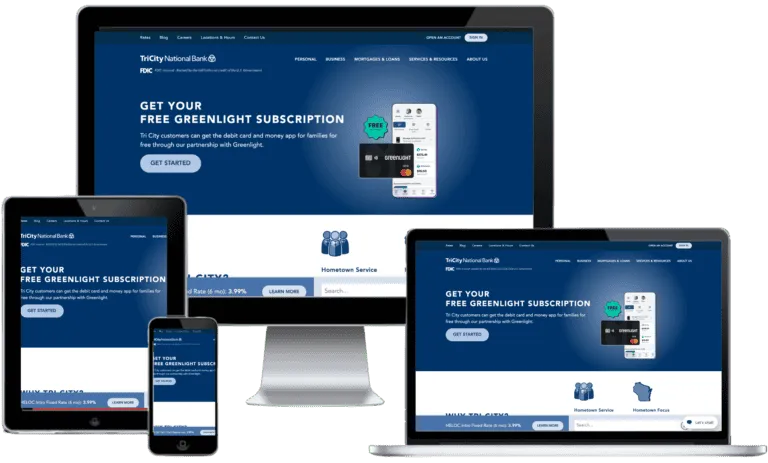
TriCity National Bank
Community Banking
A Wisconsin community bank whose customers actually open mail about their money. Lifecycle email ran alongside search and paid work; the engagement lift here is measured on the email program itself, and the other figures cover the whole engagement, labeled honestly.
- +80% Email Engagement Lift
- +90% Organic Traffic
- +77% PPC Conversion Rate
-
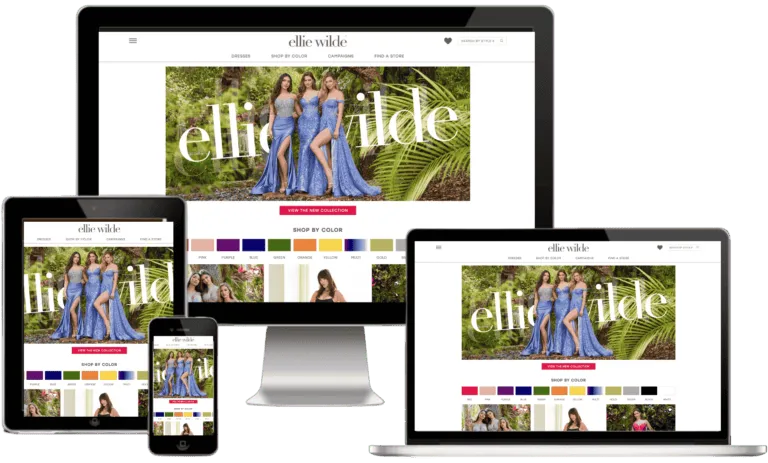
Ellie Wilde
Prom Dress Ecommerce
A prom dress brand with the most seasonal buying calendar in fashion. Flows timed to the season carried subscribers from first browse to fitting; the open-rate lift is from the email program, with the rest of the engagement labeled honestly.
- 70% Email Open Rate Increase
- 80% Social Engagement Growth
- 100K+ Monthly Organic Visitors
-
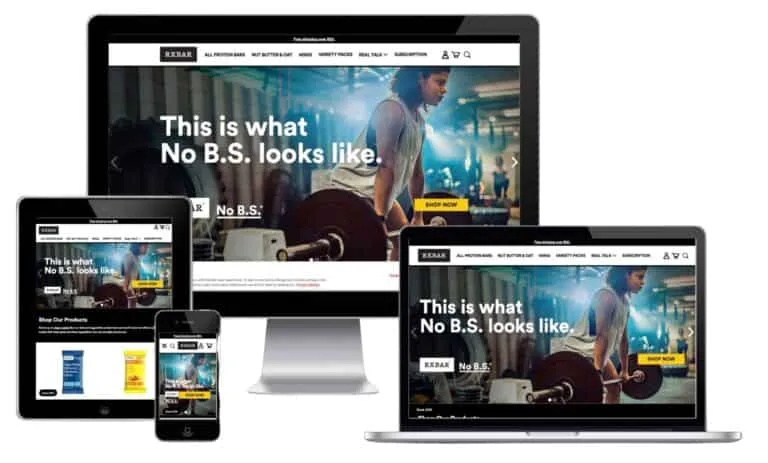
RXBAR
Health Food Ecommerce
A protein bar brand where replenishment is the whole game: the box runs out on a schedule, and email is what brings the buyer back before a store shelf does. Whole-engagement numbers, labeled honestly.
- +90% Organic Traffic Surge
- 60K New Monthly Visitors
- $250K Monthly Revenue Lift
-
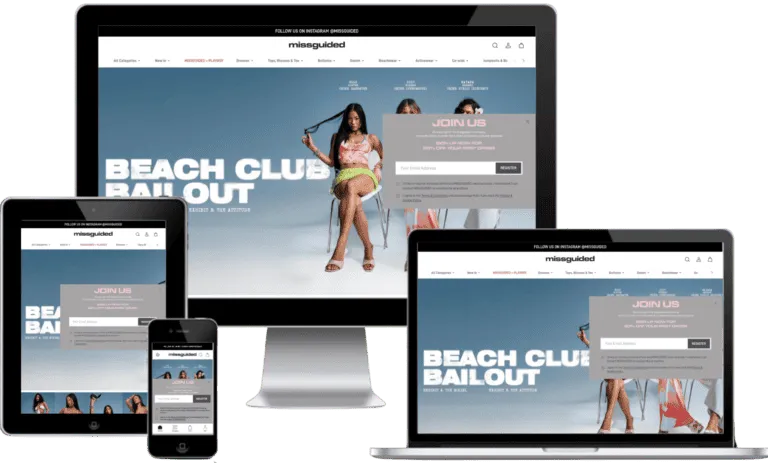
MissGuided
Fast Fashion Ecommerce
A fast-fashion brand moving at drop speed, with a list that expects daily newness. Email carried new-arrival and tentpole campaigns inside an engagement that spanned search and content. Whole-engagement numbers, labeled honestly.
- +55% Revenue Growth
- 4.1% Conversion Rate
- 100K+ Monthly Visitors
-

Grown Brilliance
Luxury Jewelry Ecommerce
Buyers researching lab-grown diamonds for weeks leave and return many times before spending thousands. Nurture email held the consideration window between visits and carried it to product. Whole-engagement numbers, labeled honestly.
- 160K+ Organic Visits
- $2.1M → $4.2M Non-brand Organic Revenue
- +80% Conversion Increase
-
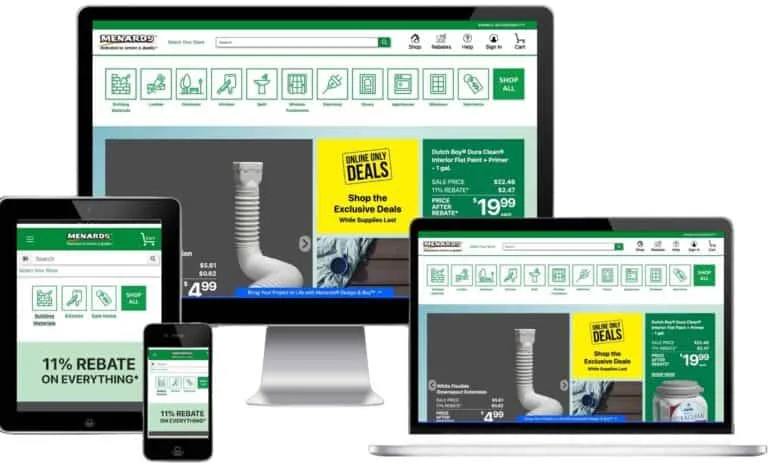
Menards
Home Improvement Retail
A national retailer whose promotional calendar runs the whole year. Campaign and automation work supported tentpole events across a catalog far too wide for one-size sends. Whole-engagement numbers, labeled honestly.
- +$8.7M Organic Revenue
- +250% Organic Traffic
- +435% Transactions
What Our Email Marketing Clients Say
-

Maria Antoinette
Founder, Antoinette Realtors
"Email is now our top channel"
Egochi built our email program from nothing: listing alerts and a nurture sequence that works leads while I show homes. Our email open rate reached 50% across the whole engagement, and the follow-up that used to slip through the cracks now runs on its own.
-

Krispen Culbertson
Sr. Partner, Culbertson Law
"Finally, emails that get read"
Our newsletters were landing in spam and nobody could tell us why. Egochi fixed the authentication, retired the dead half of the list, and rewrote the sequences. Qualified calls rose 91% across the whole engagement, and email now produces consultations instead of silence. Source: CallRail.
-

Justin Tyme
Owner, Reef Side Tattoo
"The cart emails just work"
Egochi set up cart recovery and a welcome series for our merch store, and the shop side finally pulls its weight. Weekly bookings climbed from 18 to 56 in 4 months across the whole engagement. Source: GA4 and GBP Insights.
"The results are just amazing"
"Egochi is the best"
Meet Your Email Marketing Team
The people who build your flows, protect your deliverability, and hit every send.
-

Jobin John
Chief Executive Officer
-

Justin Brown
Head of Search Engine Optimization
-

Bryan Thomson
Head of Web Design & Development
-

Ina Komins
Head of Social Media Marketing
-

Kierra Pita
Head of Advertising & Content Marketing
-

Patricia Turner
Chief Creative Officer
-

William Carter
Chief Digital Strategy Officer
-

Andrew Miller
Senior SEO Strategist
-

Amy Robinson
Content Marketing Manager
-

Betty Harrison
PPC Campaign Specialist
-

Anthony Carter
Lead Digital Account Executive
-

Amanda Cooper
Social Media Director
-

Carol Parker
Senior Client Success Manager
-

Barbara Bennett
Email Marketing Lead
-

Charles Turner
Technical SEO Analyst
-

Brian Sullivan
Creative Director
-

Christine Walker
Director of Project Management
-

Christopher Brooks
Digital Marketing Strategist
-

Daniel Wright
Senior Analytics Specialist
-

David Henderson
Lead Content Strategist
-

Donna Mitchell
Client Communications Manager
-

Elizabeth Foster
Director of Paid Advertising
-

Emily Baredi
Brand Experience Specialist
-

Emma Scott
Social Media Content Creator
-

George Crawford
Technical Solutions Architect
-

Jacob Evans
Digital Content Coordinator
-

James Anderson
Marketing Automation Specialist
-

Jason Palmer
Junior Copywriter
-

Jeffrey Reynolds
Paid Media Analyst
-

Jennifer Lewis
Community Engagement Specialist
-

Jonathan Murphy
SEO Reporting Specialist
-

Joseph Morgan
Influencer Marketing Coordinator
-

Kenneth Stevens
Digital PR Manager
-

Kimberly Harper
Digital Marketing Intern
-

Kevin Morris
SEO Outreach Specialist
-

Lee Dawson
Junior Web Developer
-

Linda Peterson
Email Campaign Coordinator
-

Lisa Thompson
Social Media Ads Specialist
-

Margaret Bradley
Marketing Operations Lead
-

Mark Richards
Data & Insights Analyst
-

Mary Kennedy
Senior Copyeditor
-

Matthew Clark
Growth Marketing Manager
-

Michelle Sanders
Junior Marketing Designer
-

Michael Foster
Senior Conversion Rate Specialist
-

Nancy Wheeler
Digital Analytics Manager
-

Nicholas Pierce
Affiliate Marketing Specialist
-

Nicole Adams
Outreach Program Coordinator
-

Paul Franklin
Paid Social Campaign Manager
-

Richard Barnes
Reputation Management Specialist
-

Robert Murphy
Lead Solutions Architect
-

Ronald Davis
Marketing Technology Analyst
-

Ryan Bell
Paid Media Buyer
-

Sandra Gregory
Digital Account Coordinator
-

Scott Hopkins
CRM Implementation Specialist
-

Shirley Ellis
Customer Insights Manager
-

Stephanie Cross
Brand Content Designer
-

Steven Greene
Web Analytics Specialist
-

Susan Price
Affiliate Campaign Manager
-

Thomas Fisher
Lead Technical Architect
-

Timothy Nash
Mobile Marketing Strategist
Is email marketing still worth it?
Yes, for businesses with an audience worth writing to. Email is the one channel where no algorithm or auction stands between you and the people who asked to hear from you, and the one where measurement runs all the way to revenue. Because open rates now inflate, we judge programs on clicks, conversions, and revenue per send, which keeps the answer honest.
Email Marketing FAQs
What is included in Egochi’s email marketing service?
A deliverability and program audit, a lifecycle flow map, automation builds, template design, campaign management, copy and sends, segmentation, testing, and monthly revenue reporting. List growth work, from opt-in forms to lead magnets, is scoped where the goal needs it. Deliverables are named in the agreement by flow and campaign count, so nothing hides behind the phrase full service.
What email platforms do you work with?
Klaviyo, Mailchimp, HubSpot, ActiveCampaign, Omnisend, Brevo, Constant Contact, and Drip cover most engagements, and we work inside your email service provider account rather than ours. If you have outgrown your ESP, we will say so with the switching cost attached, and we handle migrations without losing your list, your flows, or your history.
Who writes the email copy?
Egochi writers handle the copywriting, in your brand voice and under your approval. Subject lines, preview text, and body copy all ship for review before anything sends, and the first weeks include a calibration round where your edits teach us the voice. Nothing goes to your list without your sign-off, ever, and the pace tightens as trust builds.
Do we own our list, templates, and automations?
Yes, all of it, permanently. The platform account is yours, the subscribers are yours, and every template, flow, and segment we build lives in that account from day one. If the engagement ends, nothing gets exported away or held hostage. Ask any email agency this question before hiring, and walk away from a slow answer.
How long until email marketing shows results?
Flows earn fastest: a cart recovery or welcome series can produce revenue within days of turning on, because it works traffic you already have. Building out the full lifecycle takes a few months, and list growth compounds over quarters. Deliverability repairs run slowest of all, since inbox providers restore trust on their schedule, not ours.
Can you fix a damaged sender reputation?
Usually, with honesty about the timeline. The repair sequence is authentication first, then cutting the list to its proven engaged core, then rebuilding volume gradually on mail people open. Reputation returns over weeks to months depending on the damage. What nobody can do is repair it while continuing to send the way that broke it.
Do you handle transactional emails?
Yes. Order confirmations, shipping notices, and account messages get more attention than anything else you send, and most stores leave them as unstyled platform defaults. We bring them into brand, keep them on separate sending infrastructure from marketing mail where the platform allows, and make sure promotional reputation problems never drag them down.
What is the difference between email marketing and marketing automation?
Email marketing is the channel: campaigns, lifecycle flows, and the list itself. Marketing automation is the broader machinery that triggers actions across email, SMS, and your CRM based on behavior. Most businesses need the email fundamentals working first, and we recommend building toward wider automation only once that foundation earns it.
What should I look for in an email marketing agency?
Ask where the work happens; it should run inside your platform account, with the list and flows yours from day one. Ask how deliverability gets managed and what the warmup schedule looks like. Ask what the reports lead with; revenue per send is honest, open rates are inflated. Walk away from anyone willing to send to a bought list, whatever the deadline.
Do you require long-term contracts?
No. Engagements run month-to-month after an initial three-month period, consistent with how all Egochi services work. Three months exists because flows need build time and deliverability changes need a full cycle to read honestly. After that, the retainer gets re-earned with revenue reporting, never defended with a lock-in clause.
How do I choose an email marketing agency?
Ask how they protect deliverability before they promise revenue, because emails that land in spam produce nothing. Ask which platforms they work in and who owns the account; it should be you. Ask to see a flow map from a real program. Ask how success is measured, and walk away from anyone reporting opens alone instead of revenue. And ask for deliverables named by flow and campaign count in the agreement.
Free Email Marketing Audit
Get a deliverability check, a flow-coverage map against the lifecycle your buyers actually move through, and a sequenced plan with a fixed quote. You keep the findings either way, whether or not you hire us.
Ready to Earn From the Channel You Own?
Tell us about your list, your platform, and what email earns today. We will send back a plan with real numbers in it: the flows worth building, the deliverability fixes worth making first, and the fixed monthly fee.
Questions? Call (888) 644-7795 or email care@egochi.com
Egochi Stats
- 250+ Google Reviews
- 5.0 Clutch Rating
- 12+ Years Experience
- $200M+ Revenue Generated
- 4 US Offices
- 190+ Clutch Reviews
Blog Posts
- Aug 12, 2026 GEO vs. SEO: A Comparative Guide for Digital Marketers
- Aug 12, 2026 What is llms.txt? | How to Create llms.txt file for your website
- Aug 12, 2026 What is Semantic SEO? | How to Build Topical Authority That Ranks
- Aug 12, 2026 What is Schema Markup? | How to Add Structured Data to Your Website
- Aug 12, 2026 How to Optimize for Voice Search: A Realistic 2026 Guide