Online Reputation Management
Review growth, response standards, and truthful content that outranks problems: reputation work you never have to hope stays hidden.
Online reputation management from Egochi builds the version of your name search you deserve: real reviews growing steadily, every one answered, profiles and pages strong enough to outrank the complaints truthfully. No fake reviews, no burial tricks, no erasure promises. Just a record that holds because you earned it.
We do not delete the internet. We build the record that outranks it, because it is true.
As Featured In





What is online reputation management?
Online reputation management (ORM) is the work of shaping what people find when they search your business or your name: reviews, search results, profiles, and press. Egochi practices the earned version: growing real reviews, answering all of them, and publishing truthful content strong enough to outrank the negatives, so the record that greets a searcher is accurate and yours.
Egochi has managed brand reputations since 2014 from offices in New York, Miami, Milwaukee, and Madison, with 250+ Google reviews and 190+ Clutch reviews at a 5.0 rating, earned the same way we earn yours: by asking real clients after real work. The next step costs nothing: a free reputation audit that shows what your name search says about you today and what would change it.
Why Reputation Decides Revenue
Not because reputation is abstractly nice to have, but because of four specific moments where buyers check the record before they ever talk to you.
-
Reviews Get Read Before You Get Called
BrightLocal’s Local Consumer Review Survey puts it at 98%: nearly every consumer reads online reviews for local businesses. Your review profile is your first sales conversation, and it happens while you are not in the room.
-
The Name-Search Moment
Every referral, ad, and proposal triggers the same reflex: search the name. Whatever page one says next is your first impression, repeated for every prospect who checks. That page is either something you built or something you left to chance.
-
Star Filters Hide You Before Anyone Reads a Word
Map results let searchers filter to higher star ratings with a single tap. Fall below that line and you are not losing the comparison, you are missing from it entirely. Rating maintenance is visibility work, not vanity.
-
An Unanswered Complaint Reads as a Verdict
Prospects do not just read the complaint, they watch what you did next. A calm, factual reply tells the next reader the story has two sides. Silence tells them the complaint stands, or that nobody is home.
What Is Inside the Reputation Program
Six disciplines, one standard: everything published under your name has to be true, and strong enough to rank because it is.
-
Review Growth Programs
Asking every customer while the experience is fresh, through email, text, and QR codes at the point of service. Never buying reviews, and never gating: Google’s review policy bans asking only happy customers while steering unhappy ones away, so we ask everyone and let the record be real.
-
Response Standards
Every review gets an answer, positive ones included. Complaint playbooks are written before the complaint arrives: who responds, how fast, in what voice, and when an issue moves offline. Sensitive replies reach you for approval before a word is published.
-
Listening and Monitoring
Brand mentions tracked across search results, review platforms, news, and forums, with alerts read by a person who knows your account, not just a dashboard.Profile monitoring pairs with oursocial media marketing services where the conversations actually happen.
-
Owned-Asset Strength
Your website, Google Business Profile, and platform profiles built strong enough to own your name search. Review velocity feeds map rankings too, which is why this work ties directly into ourlocal SEO services instead of running beside them.
-
Earned Coverage
Press and community mentions earned with real stories: expertise worth quoting, local involvement worth covering, data worth citing. No pay-to-play placements dressed up as news. This is the public relations layer of reputation work: earned coverage ranks for your name and keeps ranking, because publications stand behind it.
-
Crisis Response, Honestly
When something breaks, damage control means moving fast on what actually works: a factual response published where people are looking, policy-violating content flagged with evidence, your team briefed on one consistent message. What we never promise is making a true story vanish. Nobody can, and the ones who claim to are the second crisis.
Reputations Get Earned, Not Buried, and Here Is Our Line
Half this industry sells burial: push the problem down, collect the retainer, hope nobody digs. We build reputations the other way, and the difference is worth two minutes of your attention.
-
What Suppression Mills Sell
The pitch is always the same: a wall of churned content, mass-produced links, and lookalike profiles stacked up to shove negative content off page one. It sometimes works for a while. Then the churned pages get filtered as the thin content they are, the link schemes burn, and the problem climbs right back, with your name now attached to spam as well. What holds instead is a record search engines have reasons to keep ranking: real pages, real reviews, real coverage. Slower, and permanent, because it deserves its position.
-
The Honest Limits
Defamation is a legal matter, not an SEO trick. If content about you is false and damaging, removal is a legal remedy that runs through a lawyer and the platform’s legal process, and we work alongside that, never in place of it. And when negative coverage is true, no ethical firm can erase it. What we can do is make it one result among many instead of the whole story: a stronger, truer record ranking above it. Sometimes the honest first step is fixing the customer experience people complained about. We have said that to clients, and it has never been the wrong call.
-
Why Fake Reviews Are a Trap
Bought reviews are the suppression mill’s little sibling, and the trap is structural. Platforms purge in sweeps, so padded profiles deflate overnight and take their standing down with them. Since October 2024, the FTC’s rule on consumer reviews and testimonials has banned buying, selling, or faking reviews outright, with civil penalties attached. And readers were never fooled for long: a stack of vague praise with no specifics reads as purchased. Every review program we run has to survive an audit by the platform, the FTC, and a skeptical customer, because all three are watching.
Can negative reviews be removed?
Only reviews that break platform rules: fake reviews, spam, off-topic rants, conflicts of interest, or prohibited content. Those get flagged through the platform with documentation, and the platform decides. A genuine negative review from a real customer cannot be removed, and anyone promising otherwise is selling something. It gets answered well and outweighed by newer, real reviews.
Our Online Reputation Management Process
Five steps, run in order, every engagement. The audit decides what hurts most; the standards go live before anything new gets built; the readout keeps the whole program honest.
-
Reputation Audit
A snapshot of what your name search shows today, a review inventory across every platform that matters in your category, and a sentiment read on mentions. The audit ranks what hurts by how many buyers actually see it.
-
Response Standards First
Before anything new gets built, the existing backlog gets answered and playbooks go live: response times, voice, escalation paths, and who approves what. The fastest reputation win is usually the reviews already sitting there unanswered.
-
Review Growth
The asking program gets wired into how you already serve customers: the email after the job, the text after the visit, the QR code at the counter. Every customer gets asked, nobody gets screened, and volume compounds monthly.
-
Build the Record
Owned pages, profiles, and earned mentions built to rank for your name because they deserve to: real credentials, real stories, real coverage. This is the work that outranks a problem truthfully, and the reason it stays outranked.
-
Monitor, Report, Repeat
Alerts watched by a person, not just a feed. Monthly readouts show the name-search snapshot, review velocity and averages per platform, and response times against the standard, with regressions reported as plainly as wins.
Reputation work at Egochi runs inside the Reach phase of the EGOCHI VERTEX™ Growth System: review velocity and name-search visibility are part of the same program that earns your rankings, not a separate retainer bolted on.
How much does online reputation management cost?
Online reputation management services at Egochi start at $1,500 monthly for review growth and response programs at a single location, and scales with platform coverage, content volume, and how much repair the name search needs, up to $15,000 for multi-location brands. The free reputation audit ends with a fixed quote, so the full cost is on the table before you commit.
ORM Agency vs Reputation Software vs In-House
Three honest ways to run reputation work. Each one wins something real; the right choice depends on the gap you are actually trying to close.
| Factor | ORM Agency (Egochi) | Reputation Software Only | In-House Owner |
|---|---|---|---|
| Monthly Cost | $1,500 - $15,000 monthly, scoped by locations and repair need | $500 - $2,000 in subscriptions, plus your hours | $8,000 - $15,000+ in salary, plus the same software |
| Monitoring at Scale | The same class of tooling, plus a person reading it | Genuinely excellent: every location, every platform, one dashboard | Limited to the tools purchased and the hours available |
| Review Responses | Playbooks in your voice, sensitive replies routed for approval | Templates and AI drafts that read like templates | Unmatched voice, when someone actually owns the queue |
| Judgment Under Fire | Crisis playbooks and a team that has been here before | A dashboard cannot decide what to say | Depends entirely on who is on call that week |
| Content and SEO Muscle | The pages, profiles, and earned coverage that outrank problems | Monitoring tools do not write or rank anything | Requires writer and SEO hires beyond the first salary |
| Asking for Reviews | Program design plus the automation to run it | Automation is the strong suit: requests at scale, well timed | Manual outreach unless tooling gets bought anyway |
| Best For | Brands whose name search carries revenue and needs repair or defense | Multi-location teams with an owner who reads the dashboard | Enterprises where reputation is a full-time seat |
The Verdict
Fair credit where it is due. Reputation software platforms are genuinely good at what software does well: monitoring every location and platform in one place and sending review requests at a scale no human matches. An in-house owner beats everyone on voice, because nobody outside the building sounds like the building. The gap an agency closes is judgment under fire, the response nobody wants to improvise at midnight, and the content and SEO muscle it takes to outrank a problem truthfully, which no monitoring dashboard provides. Hire for the gap you actually have. The audit will say which case you are, even when the answer is not us.
Is Reputation Management Right for You?
This is for you if
- Your name search decides deals. Law firms, medical and dental practices, agencies, contractors, advisors: anyone whose every proposal triggers a search before a signature. The record that greets that search is either working for you or against you.
- You compete in a review-driven local category. Restaurants, home services, salons, clinics: where the Map Pack stars and the newest review decide who gets the call, review velocity and response quality are revenue work, not housekeeping.
- Your owned footprint is thin. When a search for your brand shows directories, aggregators, and strangers instead of you, the vacuum is the risk: whoever writes about you next owns page one. Building the record now is cheaper than repairing it later.
This may not be the right fit if
- You want true things erased. If the coverage is accurate and the ask is to make it disappear, we decline that work, and we say so plainly rather than taking the retainer and burying it badly. What we offer instead is a stronger true record above it.
- You need legal remedies first. Defamation, impersonation, leaked private information: those run through a lawyer and the platform’s legal process before marketing can help. We will work alongside counsel once the legal path is moving, but we are not a substitute for it.
Reputation work stops at the searches that carry your name. Winning the searches for what you sell, where buyers have not heard of you yet, is a different discipline, and our search engine optimization services own that layer. This page keeps your name search telling the truth; that one brings in the people who have never typed it.
Fair Questions Before You Hire an ORM Agency
Can you guarantee a clean first page for our name?
No, and you should be suspicious of anyone who does. Nobody outside Google controls what Google ranks, and a firm promising a spotless page one is either planning to fail quietly or to use tactics that get clients hurt in the next update. What an honest program controls is the strength of the record: more real reviews, stronger owned pages, earned mentions worth ranking. That reliably moves name searches in your favor, and the readout shows exactly how far it moved each month. A promise beyond that is a sales script, not a service.
Should we respond to unfair reviews?
Yes, every time, and calmly, because the response is for the next reader, not the reviewer. The person who left a one-star review in anger may never read your reply; the hundred prospects who watch the exchange will. A factual, unbothered response that corrects the record and offers a path to resolution tells them exactly who they would be dealing with. Arguing tells them something too, and so does silence. Our response playbooks exist for this moment: the words are ready before the review that needs them arrives.
We have no bad reviews yet. Why would we need this?
Because a thin record is its own risk. When almost nothing ranks for your name, the first complaint that appears has page one to itself, and one unhappy customer becomes your whole reputation overnight. Businesses with deep review profiles and strong owned pages absorb a bad week; businesses with three reviews and a directory listing do not. The cheapest time to build the record is before you need it, which is exactly when nobody feels the urgency. That is the honest pitch: this is insurance you build, not insurance you buy.
Is buying positive reviews really that risky?
Yes, and the risk has grown teeth. Platforms purge fake reviews in sweeps, so the stars you bought disappear overnight and can take the profile’s standing with them, and a business caught soliciting fakes risks having its listing suspended. The FTC rule covered above bans buying and selling fake reviews outright, with civil penalties attached. Beyond enforcement, readers have learned to spot padded profiles, and a wall of vague five-star praise reads as exactly what it is. Earned reviews cost effort. They are also the only kind that survives.
Reputation Management Case Studies
Receipts from engagements where reputation work carried real weight. Where an engagement was bigger than reputation alone, the numbers cover the whole engagement, labeled honestly.
-

Culbertson Law
Personal Injury Law Firm
A law firm whose name gets searched before every signed agreement. A review program produced 47 new Google reviews in six months, every one answered, alongside profile and practice-area work. Whole-engagement numbers, labeled honestly.
- 47 New Google Reviews
- +91% Qualified Calls
- 9 → 2 Map Pack Position
-
Cozy Art Land
Art Studio | Local Services
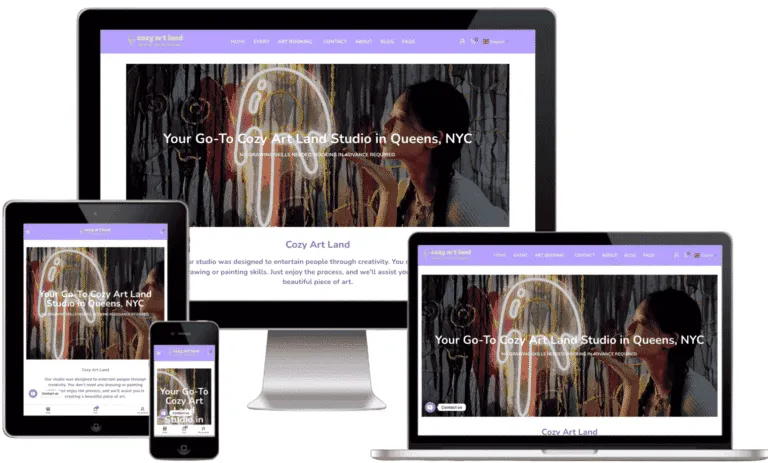
A neighborhood art studio parents research before booking a single class. A documented review cadence with owner responses, a rebuilt profile, and honest photos turned the name search into a booking argument. Whole-engagement numbers, labeled honestly.
- +85% GBP Calls Growth
- +110% Direction Requests
- 17 → 1 Tracked Keyword
-

Reef Side Tattoo
Tattoo Studio | Justin Tyme
A studio people research harder than most doctors: the work is permanent and the reviews get read closely. Answered reviews, portfolio pages, and a tuned profile carried bookings. Whole-engagement numbers, labeled honestly.
- 18 → 56 Weekly Bookings
- +211% Booking Growth
- +96% Direction Requests
-

Original Penguin
Heritage Menswear | NYC Retail
A heritage brand whose store profiles are the front door for foot traffic. Store-level profiles tuned per location with consistent information everywhere a shopper might check. Whole-engagement numbers, labeled honestly.
- 10,400 → 24,600 Store Page Sessions
- 1,280 → 2,840 GBP Actions
- 195k → 410k Impressions
-

TriCity National Bank
Community Banking
A community bank where trust is the entire product and every branch gets checked online before a visit. Reputation work ran inside a program spanning search, paid, and email. Whole-engagement numbers, labeled honestly.
- +90% Organic Traffic
- +77% PPC Conversion Rate
- +80% Email Engagement Lift
-

New York Endodontics
Specialist Dental Practice
A specialist practice patients research at the most anxious moment of their search. Credentialed condition pages, profile work, and review growth made the name search reassuring. Whole-engagement numbers, labeled honestly.
- +110% Organic Sessions Lift
- +132% GBP Discovery Views
- -32% Cost per Lead
What Our Reputation Clients Say
-

Krispen Culbertson
Sr. Partner, Culbertson Law
"Our reviews finally tell the truth about us"
Egochi built a review program that simply asks every client we help, and answered the handful of unfair ones better than I would have. 47 new Google reviews in six months, and qualified calls rose 91% across the whole engagement. Source: CallRail and GBP insights.
-

Maria Antoinette
Founder, Antoinette Realtors
"Buyers check us out and like what they find"
Sellers search my name before they ever call back. Egochi rebuilt my profile, set a review cadence, and made that search work for me. Organic leads went from 4 to 24 monthly across the whole engagement. Source: GA4 and GBP Insights.
-

Justin Tyme
Owner, Reef Side Tattoo
"People walk in already trusting us"
Tattoo clients read everything before they book, so Egochi made sure everything was worth reading: reviews answered, portfolio pages current. Weekly bookings climbed from 18 to 56 in 4 months across the whole engagement. Source: GA4 and GBP Insights.
"The results are just amazing"
"Egochi is the best"
Meet Your Reputation Team
The people who answer the review, build the record, and read the alerts before you know they exist.
-

Jobin John
Chief Executive Officer
-

Justin Brown
Head of Search Engine Optimization
-

Bryan Thomson
Head of Web Design & Development
-

Ina Komins
Head of Social Media Marketing
-

Kierra Pita
Head of Advertising & Content Marketing
-

Patricia Turner
Chief Creative Officer
-

William Carter
Chief Digital Strategy Officer
-

Andrew Miller
Senior SEO Strategist
-

Amy Robinson
Content Marketing Manager
-

Betty Harrison
PPC Campaign Specialist
-

Anthony Carter
Lead Digital Account Executive
-

Amanda Cooper
Social Media Director
-

Carol Parker
Senior Client Success Manager
-

Barbara Bennett
Email Marketing Lead
-

Charles Turner
Technical SEO Analyst
-

Brian Sullivan
Creative Director
-

Christine Walker
Director of Project Management
-

Christopher Brooks
Digital Marketing Strategist
-

Daniel Wright
Senior Analytics Specialist
-

David Henderson
Lead Content Strategist
-

Donna Mitchell
Client Communications Manager
-

Elizabeth Foster
Director of Paid Advertising
-

Emily Baredi
Brand Experience Specialist
-

Emma Scott
Social Media Content Creator
-

George Crawford
Technical Solutions Architect
-

Jacob Evans
Digital Content Coordinator
-

James Anderson
Marketing Automation Specialist
-

Jason Palmer
Junior Copywriter
-

Jeffrey Reynolds
Paid Media Analyst
-

Jennifer Lewis
Community Engagement Specialist
-

Jonathan Murphy
SEO Reporting Specialist
-

Joseph Morgan
Influencer Marketing Coordinator
-

Kenneth Stevens
Digital PR Manager
-

Kimberly Harper
Digital Marketing Intern
-

Kevin Morris
SEO Outreach Specialist
-

Lee Dawson
Junior Web Developer
-

Linda Peterson
Email Campaign Coordinator
-

Lisa Thompson
Social Media Ads Specialist
-

Margaret Bradley
Marketing Operations Lead
-

Mark Richards
Data & Insights Analyst
-

Mary Kennedy
Senior Copyeditor
-

Matthew Clark
Growth Marketing Manager
-

Michelle Sanders
Junior Marketing Designer
-

Michael Foster
Senior Conversion Rate Specialist
-

Nancy Wheeler
Digital Analytics Manager
-

Nicholas Pierce
Affiliate Marketing Specialist
-

Nicole Adams
Outreach Program Coordinator
-

Paul Franklin
Paid Social Campaign Manager
-

Richard Barnes
Reputation Management Specialist
-

Robert Murphy
Lead Solutions Architect
-

Ronald Davis
Marketing Technology Analyst
-

Ryan Bell
Paid Media Buyer
-

Sandra Gregory
Digital Account Coordinator
-

Scott Hopkins
CRM Implementation Specialist
-

Shirley Ellis
Customer Insights Manager
-

Stephanie Cross
Brand Content Designer
-

Steven Greene
Web Analytics Specialist
-

Susan Price
Affiliate Campaign Manager
-

Thomas Fisher
Lead Technical Architect
-

Timothy Nash
Mobile Marketing Strategist
How long does reputation repair take?
Review profiles improve first: a steady asking program adds real reviews within weeks, and the average moves as they accumulate. Outranking a negative page takes longer, usually three to six months of publishing and strengthening truthful content before it climbs above the problem. Severe damage, several negatives ranking for your name, is honestly a six-to-twelve month rebuild.
Online Reputation Management FAQs
What does an online reputation management company do?
An online reputation management company shapes what people find when they search a business or a person: review profiles, search results, business listings, and press. Egochi does the earned version of that work: review growth programs, response standards, listening across platforms, and truthful content built to rank for your name. What we do not do is fake reviews or erasure promises.
Which review platforms do you manage?
Google Business Profile first, because it decides the Map Pack and the panel beside your name search, then the platforms your buyers actually read: Yelp, Facebook, Trustpilot, and the industry sites that matter in your category, from Healthgrades and Avvo to Houzz and TripAdvisor. The audit names the platforms that carry weight for you, so the effort follows the readers.
How do you get more reviews without breaking the rules?
By asking every customer while the experience is fresh, through the channel they will actually act on: an email, a text, a QR code at the counter. No payment, no discounts for stars, and no gating, which Google’s review policy bans. Steady asking beats every shortcut, and the reviews it earns survive the purges that remove the fake ones.
Do you write the review responses or do we?
Either, and most clients land in the middle. We draft responses in your voice from an approved playbook, routine thank-yous go out on schedule, and anything sensitive, a complaint, a legal threat, a former employee, comes to you before a word is published. You own the accounts and see everything. The standard is simple: every review gets an answer.
What is the difference between reputation management and SEO?
Search engine optimization ranks your website for the services you sell; reputation management shapes what ranks for your name. The two share machinery, content, links, and profile work, which is why firms without that muscle struggle to move name searches. At Egochi the same team runs both, so review growth, listings, and name-search results reinforce the rankings work.
Can you help during a reputation crisis?
Yes, with honest limits. In the first days we get a factual response published where people are looking, flag anything that breaks platform rules, brief your team on one consistent message, and start the content that will hold your name search long term. What nobody can do is make a true story vanish in a week, and we will not pretend otherwise.
Do you handle executive and founder name searches?
Yes, when the person is the brand: practice owners, attorneys, founders, advisors. The method is the same earned record applied to a personal name: a real site or profile page, interviews and mentions worth citing, consistent listings. We do not build fake personas or plant flattering coverage; a person’s record has to hold up to the same scrutiny a business does.
What tools do you use for monitoring?
Listening platforms for mentions and sentiment, review tracking across platforms, Google Alerts as the free backstop, and rank tracking on your name searches. The tools are the easy part; the discipline is a person reading the alerts and deciding which mention needs a reply within hours and which is noise. You get the signal in the monthly readout, not a raw feed.
How do I choose a reputation management company?
Ask what they refuse to do, and listen for three answers: no fake reviews, no gated review requests, no promises to erase truthful content. Anyone selling removal of a genuine negative review is selling something the platforms do not allow. Ask who approves sensitive responses before they publish, and how progress gets reported; a monthly name-search snapshot you can verify yourself beats any dashboard. Month-to-month terms are a good sign.
Do you require long-term contracts?
No. Engagements run month-to-month after an initial three-month period, consistent with how all Egochi services work. Three months exists because review growth, response standards, and the first content that ranks need at least that long to show honestly. After that, the retainer gets re-earned by the readout every month, never defended with a lock-in clause.
How do you report reputation progress?
Monthly, in plain numbers: a name-search snapshot showing what ranks and what moved, review counts and averages per platform with the trend, response times against the standard we set, and mention sentiment with sources. When something got worse, the readout says so and names the plan, because a report that only carries good news is not a report.
Free Reputation Audit
Get a plain-language readout of what your name search shows today: what ranks, what hurts, which reviews sit unanswered, and the order we would fix it in. You keep the findings either way, whether or not you hire us.
Ready for a Name Search That Works for You?
Tell us about your business and what your name search shows today. We will send back a plan with real numbers in it: the review growth your category supports, the record worth building, and the fixed monthly fee.
Questions? Call (888) 644-7795 or email care@egochi.com
Egochi Stats
- 250+ Google Reviews
- 5.0 Clutch Rating
- 12+ Years Experience
- $200M+ Revenue Generated
- 4 US Offices
- 190+ Clutch Reviews
Blog Posts
- Aug 12, 2026 GEO vs. SEO: A Comparative Guide for Digital Marketers
- Aug 12, 2026 What is llms.txt? | How to Create llms.txt file for your website
- Aug 12, 2026 What is Semantic SEO? | How to Build Topical Authority That Ranks
- Aug 12, 2026 What is Schema Markup? | How to Add Structured Data to Your Website
- Aug 12, 2026 How to Optimize for Voice Search: A Realistic 2026 Guide