Web Design
Ecommerce Web Design Company
Stores designed on the platform your business actually needs: Shopify, BigCommerce, WooCommerce, or Magento, from an agency fluent in all four and selling none of them.
Get Your Free Proposal Call (888) 644-7795
- Fluent in Shopify, BigCommerce, WooCommerce, and Magento
- Platform picked for your catalog, not our convenience
- Free proposal names the platform and the honest cost
As Featured In






Egochi is an ecommerce web design company building online stores on Shopify, BigCommerce, WooCommerce, and Magento, for product brands that need a store to sell, not just stand there. The work runs from platform selection and catalog architecture through product page and checkout design, payment and shipping wiring, and the speed and trust gates every template skips. Egochi has designed and built websites since 2014, and the ecommerce engagements in our case library span all four platforms, from first stores to national brands. Because we hold no platform allegiance, the recommendation follows your catalog and your team, not our convenience. The next step costs nothing: a free proposal that names the right platform for your store and what the build honestly costs.
How much does ecommerce web design cost?
Ecommerce web design at Egochi is project-priced by platform and catalog size. Theme-based store builds start near $3,500 and run toward $8,000 once real catalog and payment work rides along. Custom store design runs $8,000 to $15,000, and builds carrying B2B features or heavy back-office wiring run $20,000 to $50,000. Ongoing care runs from $150/month. Stores price above brochure sites because checkout is engineering, not decoration.
Egochi has been building ecommerce sites since 2014, from offices in New York, Miami, Milwaukee, and Madison, with 250+ Google reviews and 190+ Clutch reviews at a 5.0 rating behind the work. One honesty up front: a new design removes friction, but it does not change your offer, your prices, or your traffic, so nobody here will promise that a prettier store triples revenue by itself. What stands behind this page is 12+ years of store builds and the ecommerce engagements in our case library, published whole.
What is ecommerce web design?
Ecommerce web design is the design and development of an online store: platform selection, catalog architecture, product page and checkout design, payment and shipping setup, and the speed and trust work that turns visits into orders. Professional work starts one level earlier than themes and colors, at the platform decision everything else lives inside, which is why this page opens with it.
Ecommerce Web Design Services We Offer
Twelve pieces of store work. Discovery decides which ones your build needs, and which it can honestly skip.
-
Custom Ecommerce Design
Ecommerce website design built in Figma against your brand, your catalog, and your buyers, then developed on the platform the discovery phase picked. Custom means designed around what you sell, not a template with your logo dropped in.
-
Shopify Store Design
Stores on the most popular hosted cart in US ecommerce: hosted convenience is real, so are the ceilings, and the platform table below names both. The full Shopify design depth, theme architecture, sections and blocks, checkout reality, lives with our Shopify web design services.
-
BigCommerce Store Design
Stores on the platform that carries the most built-in features per dollar: no per-transaction platform fee, native B2B tooling, and headroom for complex catalogs. Several of the register engagements on this page run on it.
-
WooCommerce Store Design
Content and commerce on one WordPress stack you own outright. The full WooCommerce design depth, product templates, checkout paths, catalog speed discipline, lives with our WordPress web design services, where store builds get their own section.
-
Magento and Adobe Commerce
Enterprise builds for large catalogs, multi-store setups, and B2B requirements that hosted platforms cannot carry: tiered pricing, quote workflows, complex permissions. Real power that comes with real engineering upkeep, and we say so before you sign.
-
Platform Migration
Moves between platforms with the catalog, customers, order history, and rankings carried whole. The migration risks section on this page is the honest preview of that work: URL maps, review portability, and a staged launch.
-
Product Page Design
Product templates built from the anatomy section on this page: galleries that answer what it is, reviews wired where doubt forms, spec-complete copy, and structured data that machines can read. The page that does the selling gets designed like it.
-
Checkout Flow Design
Cart to confirmation with the fewest honest steps: guest checkout by default, shipping math before the last screen, and express payment where your buyers expect it. Designed against the abandonment evidence, not against a hunch.
-
Payment and Express Checkout Setup
Gateways configured and tested end to end: Stripe, PayPal, platform-native processing, plus Apple Pay, Shop Pay, and the express options that let a phone buyer finish in seconds. Payment friction is conversion friction with a receipt.
-
Ecommerce SEO
Every store ships search-ready: clean URL decisions, product schema, and category pages built to rank. The same product data stays readable to AI shopping surfaces, work our AI SEO services carry further. The catalog-scale search program, keyword mapping, faceted navigation, feeds, runs through our ecommerce SEO services.
-
Third-Party App Wiring
Email and SMS (Klaviyo), reviews, subscriptions, shipping, and ERP or inventory systems, connected and tested end to end. Wired in scoped, not sold by the unit: every app is weight and a monthly bill, so the list stays short on purpose.
-
Ongoing Store Maintenance
Updates, monitoring, small fixes, and seasonal changes from $150/month, scaled to platform and catalog. Stores break quieter than brochure sites and cost more per broken hour, so the maintenance plan is part of the design, not an upsell.
Shopify, BigCommerce, WooCommerce, or Magento Is the Real Decision
Every ecommerce quote hides one decision that moves it more than any other: the platform. The design discipline underneath every build, budgets, launch gates, the agency-versus-freelancer question, lives on our web design services page; this table answers the question that page leaves open, the way we answer it in proposals: criteria first, platform second.
| What decides it | Shopify | BigCommerce | WooCommerce | Magento |
|---|---|---|---|---|
| Catalog size and complexity | strong to mid-size; variant limits bite on complex catalogs | complex catalogs and variant-heavy products handled natively | scales with hosting and discipline; you own the ceiling | built for very large catalogs and multi-store setups |
| Margin structure and fees | subscription plus payment fees; app rent accumulates | subscription, no added platform fee per transaction | no platform rent; you pay hosting and upkeep instead | license or hosting plus real engineering payroll |
| Team skills it assumes | a marketer can run the store day to day | a marketer, comfortable with more settings | someone owns WordPress upkeep, in-house or hired | developer access on call, not optional |
| Back-office and B2B wiring | biggest app catalog; B2B on higher tiers | strong native B2B: price lists, quotes, customer groups | anything, via plugins and custom code you maintain | deepest native B2B and ERP muscle of the four |
| Exit costs when you outgrow it | content and products export; theme and URL structure do not | similar hosted trade: data leaves, the build does not | lowest: files and a database you can move anywhere | high either direction; migrations are real projects |
Read the last row first, because nobody selling a platform will read it to you. Hosted platforms trade ownership for convenience, and that is a fair trade for most stores, but it should be made knowingly. An honest proposal names which column fits your catalog, your margins, and your team, and ours will, even when the answer is not the platform you arrived wanting.
What a Store Build Actually Covers
Six areas of work behind every store we ship. They are the difference between installing a theme and designing a business.
-
Store Design and Brand Fit
Homepage, category, and product layouts designed for your catalog and your buyers, with a visual system your brand owns. Category page architecture gets decided by how people actually shop the catalog, not by the theme default.
-
Catalog Architecture
Product data structure, variant logic, filtering, and inventory wiring built so a thousand products stay as navigable as ten. The catalog is the store; most ecommerce design problems are catalog structure problems wearing a design costume.
-
Payment and Checkout
Checkout flows designed for completion: guest checkout, honest shipping math, express payment options, and subscription billing where the business runs on it. The flow section below shows the actual decisions.
-
Mobile Commerce
Most store traffic arrives on phones, so responsive templates get designed there first: thumb-sized targets, galleries that swipe, mobile checkout flows that finish without pinching. Tested on real devices, not a resized browser window.
-
Third-Party App Wiring
Marketing, fulfillment, reviews, and support tools connected and tested end to end, with an app list short enough to audit. Every script a store carries is speed spent; we spend it deliberately.
-
Revenue Tracking
GA4 ecommerce events, conversion tracking, and revenue attribution configured at launch, so you can see what the store earns and where orders come from. A store you cannot measure cannot be honestly improved.
What Every Store Project Ships With
Eight deliverables in every project, not on the options list. Scope changes by platform and catalog; the checklist does not.
-
Discovery and Platform Selection
Catalog, margins, team skills, and growth plans read before any platform gets named. The framework on this page is the working document.
-
Custom Design Mockups
Homepage, category, and product page designs approved in Figma on real products and real photography before development starts.
-
Store Development
The build itself: theme or custom templates, variant logic, and performance discipline measured against Core Web Vitals at catalog size.
-
Catalog Setup
Products, collections, variants, pricing, and inventory configured and spot-checked, with import pipelines for catalogs that live in spreadsheets.
-
Payment and Shipping Setup
Gateways, express checkout, tax settings, shipping zones and rates, all configured and tested with real test orders end to end.
-
Ecommerce SEO Foundation
URL decisions, product and Offer schema, category page structure, and sitemaps set at build time, where they are cheap.
-
Revenue and Event Tracking
GA4 ecommerce events, ad platform pixels, and revenue reporting wired before launch, so day one has a baseline.
-
Training and Handover
Recorded walkthroughs for products, orders, discounts, and content, plus documentation and every account in your name.
Product Page Anatomy Separates What Sells From What Decorates
The product page does the selling, and most store designs treat it as the template that came with the theme. Here is what earns its place on a PDP, judged by one test: does the element answer a doubt a buyer actually has?
-
The gallery answers "what exactly is it"
Photography first: every angle, scale against something familiar, the product in use. Buyers cannot pick it up, so the gallery is the hands. Thin galleries are the most common PDP failure we see, and no layout trick compensates for four photos that should have been ten.
-
Reviews answer "can I trust it", where doubt forms
Ratings summary at the top near the price, full reviews below with the skeptical ones readable. Buyers look for the worst review before the best; a store that buries or launders criticism reads as hiding something, because it is.
-
Specs and copy answer the question that stalls the order
Dimensions, materials, compatibility, sizing: the boring fields are the deal-closers, and spec-incomplete pages leak orders quietly. Copy earns its length when it answers questions, not when it fills the template.
-
Structured data answers the machines
Product and Offer schema, review markup, and a groomed feed are how a product surfaces in Google Shopping tabs and AI shopping answers, which read structure, not screenshots. The retrieval mechanics behind that live with our Shopify SEO services; the design job is making sure the template outputs the data at all.
-
And the decoration test
Badge walls nobody recognizes, auto-playing video, upsell carousels above the fold: each one takes attention and page weight from the elements doing the selling. If an element answers no doubt, it is decoration, and decoration is what gets cut.
Checkout Flow Design, Against the Evidence
Baymard Institute's running average across published checkout studies puts cart abandonment near 70%, and their research names the same causes year after year: surprise costs, forced accounts, and long forms. Checkout flow design is the discipline of removing those before launch. Four decisions we make on every build:
-
Guest checkout is the default, not the reward
Forced account creation is a toll booth in front of the register. Accounts get offered after the order confirms, when the buyer has a reason to want one: order tracking, faster reordering. The store still gets the email either way.
-
Every field costs orders, so every field justifies itself
Name, address, payment, done. Company fields, second phone numbers, and how-did-you-hear-about-us questions each buy a little data with a little abandonment, and at checkout that trade is almost never worth it.
-
Shipping math appears before the last screen
Surprise costs at the final step are the most cited abandonment cause in Baymard’s research, and the fix is layout, not pricing: shipping estimates on the cart, thresholds stated plainly, taxes previewed early. Stores that cannot show shipping early usually have a shipping-rules problem, and we fix that first.
-
Express payment meets buyers where they are
Apple Pay, Shop Pay, and PayPal turn a phone checkout from two minutes of typing into a thumbprint. They sit at the top of the flow for returning-device buyers while the classic form stays for everyone else.
Design gets the flow right at launch; proving that a change beats what it replaced is testing, and that discipline, with real traffic splits and honest sample sizes, runs through our conversion rate optimization services.
Trust Signals That Work, and the Wallpaper That Does Not
Shoppers hand a card number to a site they met minutes ago, and the store design either earns that or it does not. What actually reassures is specificity. What does not is wallpaper. The honest inventory:
-
Policies that are findable and plain
Returns, shipping times, and warranty terms linked from the product page and written in sentences, not legal fog. A generous policy hidden three clicks deep reassures nobody; a plain one beside the buy button closes orders.
-
Reviews you did not launder
Real counts, visible negatives, owner responses that read human. We will not seed, buy, or filter reviews for a store, both because regulators now treat fake reviews as fraud and because buyers smell laundering anyway.
-
Security signals in their place
HTTPS and a recognizable payment sheet are table stakes buyers barely register until they are missing. Third-party trust badges nobody recognizes add nothing; a real card-network mark and a clean checkout do the reassuring.
-
Evidence a human is reachable
A phone number, a real address, an about page with people on it. When something feels off, the buyer looks for proof someone answers if the order goes wrong; stores that hide contact routes pay for it in abandoned carts.
Can you migrate my store to a new platform?
Yes, between Shopify, BigCommerce, WooCommerce, Magento, and others, and the design work is where migrations go wrong. URL structures change between platforms, so every product, category, and content URL gets a one-hop redirect map, review data gets exported and rewired, and rankings get watched through the switch. The migration section below names what breaks and how we keep it whole.
Replatforming Without Losing What You Earned
Replatforming is where good stores lose years of earned search traffic in a weekend, and most of the damage is design decisions made without a preservation plan. The risks, named plainly:
-
URL structures change whether you like it or not
Shopify forces /products/ and /collections/ prefixes; WooCommerce and Magento let you keep almost anything. Every product, category, and content URL gets mapped to a one-hop redirect before launch, because every unmapped URL is a ranking handed back.
-
Reviews do not move themselves
Years of review content is conversion equity and ranking material, and platform-native reviews often export badly or not at all. Review portability gets audited before the platform decision, not discovered after it.
-
The template swap quietly rewrites your pages
New platform, new theme, new default templates: titles, headings, and internal links change en masse unless someone carries them deliberately. Content that earns traffic moves verbatim first and gets improved second.
-
Launch is a sequence, not a switch
Staged catalog checks, redirect verification, rank tracking through the cutover, and the old platform held until the new one proves out. The full preservation discipline, redirect maps, verbatim carry-over, staged launches, lives with our website redesign services and runs on every migration we take.
Why Businesses Pick Egochi for Ecommerce Web Design
-
Four Platforms, No Allegiance
We build on Shopify, BigCommerce, WooCommerce, and Magento, so the platform recommendation follows your catalog and your team instead of the only tool we know. Single-platform shops recommend their platform every time; they have to.
-
$200M+ Client Revenue, Tracked
Egochi engagements have driven $200M+ in tracked client revenue across search, stores, and paid work. The store builds behind this page publish their numbers in the case library, whole engagements, not cherry-picked design wins.
-
Conversion Decisions, Stated Honestly
Every layout decision on a store has a conversion argument behind it, and we will show you ours. What we will not do is promise that design alone lifts revenue: offer, price, and traffic still decide, and the testing that proves changes lives with our CRO team.
-
First Store to Enterprise
The same discipline scales from a first store on a theme to a Magento build with quote workflows. What changes is scope and platform, not care: small builds get the same launch gates as large ones.
-
Speed at Catalog Size
Stores carry more weight per page than any brochure site: image sets, variant scripts, cart logic, app scripts. Product and category templates get measured against Core Web Vitals at catalog size before launch, and failing templates do not ship.
-
A Handover That Hands Over
Your platform account, your payment accounts, your domain, your documentation, your training recordings. Fire us after launch and the store keeps running and keeps selling, which is exactly the standard you should hold any store builder to.
How long does ecommerce web design take?
Honest ranges: a theme-based store on a hosted platform runs four to six weeks, a custom store design eight to twelve, and migrations or B2B builds twelve to sixteen, longer when catalogs need cleanup. Product data is the schedule risk nobody prices in: stores wait on photography, specs, and descriptions more than on code, so we scope catalog content in week one.
Our Ecommerce Web Design Process, Built on VERTEX Core™
Every store build runs inside the same 16-step framework as every Egochi website project, through its stages: Blueprint, Design, Build, Prove, Launch. The six phases below are that framework carrying a catalog.
-
Discovery and the Platform Decision
Catalog size, margins, team skills, back-office systems, and growth plans, read before any platform gets named. The selection framework on this page is the working document, and the proposal shows its math.
-
Store UX and Visual Design
Homepage, category, product, and checkout designs in Figma, on real products and real photography. Lorem ipsum and placeholder gray boxes hide every hard catalog decision, so we do not use them.
-
Build and App Wiring
Theme or custom templates developed, variant logic configured, and the app list wired in and tested end to end, kept short on purpose because every script is speed spent.
-
Catalog, Content, and Search Setup
Products, collections, and content loaded and spot-checked, URL decisions made, product schema output verified, and tracking wired so launch day has a baseline.
-
Speed, Trust, and Test Orders
Core Web Vitals measured on product and category templates at catalog size, payment flows tested with real test orders on real devices, policies and trust signals in place. Failing templates get fixed before launch, not after.
-
Launch, Training, and Handover
A staged cutover with redirects verified and rankings watched, recorded training for products, orders, and discounts, and every account in your name. Ongoing care from $150/month if you want us to keep running what we built.
VERTEX Core™ is the build discipline inside the EGOCHI VERTEX™ Growth System, the operating system behind every Egochi engagement, store builds included.
Is Ecommerce Web Design Right for You?
Who this is for
- You sell products with real margins and the ecommerce store is the business, or becoming it: the build pays for itself in orders, and design decisions deserve the same rigor as inventory decisions.
- You have outgrown a template or a platform: variant limits, app-stack sprawl, a checkout you cannot change, or a catalog your navigation was never designed for.
- You are replatforming and the traffic you earned has to survive the move. The migration section above is the honest preview of that work.
- You run content and commerce together, or want to: buying advice, comparisons, and products on one coherent stack, with the platform chosen to carry both.
When this may not be the right fit
- Pre-revenue stores. Before the first consistent orders, a well-configured platform template serves you better than a custom build, and our launch checklist plus a $3,500-floor theme setup is the honest recommendation. Spend the difference on product and traffic, then come back when the template is what limits you.
- Marketplace-only sellers. If every sale happens on Amazon or Etsy and that is the plan, a custom store becomes an expensive brochure. A clean landing site and marketplace-side work serve that model better, and we will say so.
- Anyone shopping for a guarantee that new design alone will multiply revenue. Design removes friction; offer, price, and traffic still decide. We show conversion arguments for every decision and promise none of them are magic.
Fair Questions Before You Commission a Store
Which ecommerce platform is best?
None of them, universally, and any agency with a one-word answer is describing its own toolbox, not your business. Shopify wins on day-to-day ease, BigCommerce on built-in features per dollar, WooCommerce on ownership and content-plus-commerce, Magento on enterprise depth. The honest answer comes out of the selection framework on this page: catalog size, margin structure, team skills, back-office wiring, and exit costs, weighed for your store. We build on all four precisely so the recommendation can follow the evidence.
Do I need custom design, or is a theme enough?
It is a volume and margin decision, not a taste decision. A theme configured well is the right buy for stores finding their footing: launch fast, learn what sells, keep budget for inventory and traffic. Custom design earns its price when order volume makes small conversion differences worth real money, when your catalog does not fit standard templates, or when the brand is the moat. Plenty of our recommendations are the smaller project, and the proposal says which and why.
Will a redesign lift my conversion rate by itself?
Sometimes, and nobody can honestly promise it. Design removes friction: clearer galleries, honest shipping math, a checkout that finishes. If friction was your bottleneck, conversion moves. If the bottleneck is price, offer, product-market fit, or traffic quality, a beautiful store converts the same wrong visitors at the same rate. That is why our proposals read your analytics before promising anything, and why testing after launch belongs to the CRO discipline rather than to redesign folklore.
Why does an ecommerce site cost more than a regular website?
Because a store is software you transact through, not pages you read. The build carries catalog architecture, variant logic, payment and tax configuration, shipping rules, app wiring, and a checkout that has to work on every device and fail on none, plus test orders to prove all of it. Each of those is real scoped work a brochure site never touches. The cost callout at the top of this page shows the honest bands, and the drivers are catalog complexity and wiring, not page count.
The Ecommerce Engagements Behind This Page
Platform tags come from the case register, and most of these stores ran design and growth work as one program, the way store work should. Every number below is register-fed and covers its engagement whole; no design-only attribution is invented.
-

Grown Brilliance
Lab-Grown Diamonds | Custom Ecommerce
A luxury jewelry store where photography, trust signals, and product architecture carry five-figure orders. Store and search work ran as one engagement, and the registered numbers read across it whole.
- 160K+ Organic Visits
- +80% Conversion Increase
- +100% Non-brand Organic Revenue
-

Brilliant Earth
Fine Jewelry | Custom Ecommerce
A national jewelry brand where product pages sell items most buyers research for weeks. The engagement numbers below cover the program whole, tracked across store and search.
- +428% Organic Traffic
- +186% Revenue
- 3.8% Conversion Rate
-
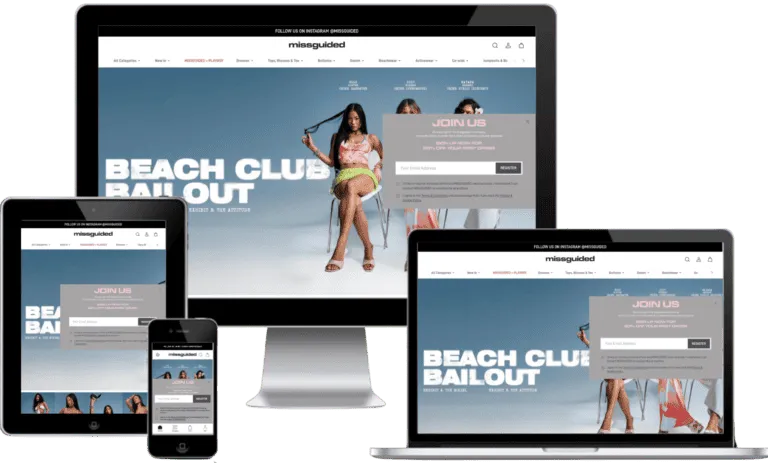
MissGuided
Fashion | BigCommerce
A fashion brand in the most design-competitive corner of ecommerce, where collections move fast and the catalog never sits still. Whole-engagement numbers as published in the case library.
- 100K+ Monthly Visitors
- 4.1% Conversion Rate
- +55% Revenue
-

Steeda
Ford Performance Parts | BigCommerce
A performance parts catalog where fitment data and spec-complete product pages decide the sale. Exactly the catalog-architecture work this page describes, with the engagement tracked whole.
- +102% Organic Traffic
- +95% Sales Growth
- +100K Monthly Visitors
-

Ellie Wilde
Prom and Evening Wear | BigCommerce
A dress brand whose buyers shop by photo, so galleries and mobile browsing carried the design. Store, social, and email ran as one program; published numbers cover it whole.
- 100K+ Monthly Organic Visitors
- 45% User Interaction
- 70% Email Open Rate
-

Toshiba Lifestyle
Consumer Appliances | BigCommerce
A global appliance brand with a spec-heavy catalog, where structured product data does the selling to both people and machines. Engagement numbers as tracked, covering the program whole.
- +185% Organic Traffic
- 2,400+ Rankings Improved
- +67% Revenue Growth
-
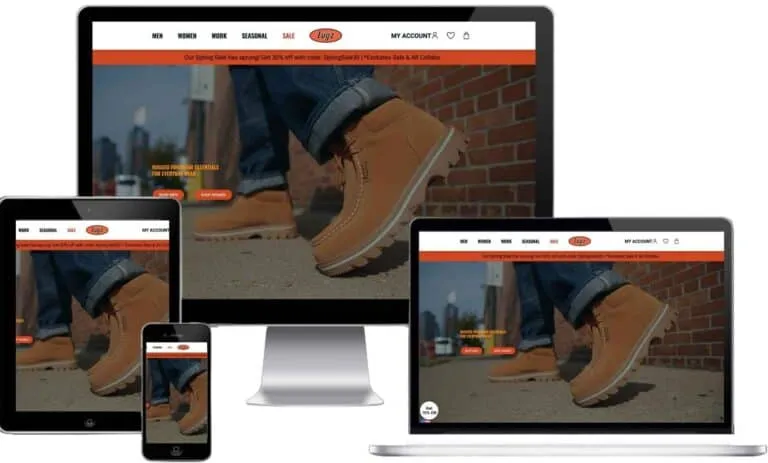
LUGZ Footwear
Footwear Brand | WooCommerce
A heritage footwear brand running content and commerce on one owned WordPress stack, the WooCommerce architecture this page hands to its own spoke. Numbers as published, whole engagement.
- +92% Organic Visibility
- +150K New Amazon Visitors
-

Original Penguin
Apparel Brand | Shopify
A heritage apparel brand on Shopify where store pages and local surfaces fed each other. Percentages compute from the registered base figures; the engagement reads whole.
- +137% Store Page Sessions
- +122% GBP Actions
- +110% Impressions
-

Pro Numb
Topical Anesthetics | Shopify
A Shopify store in a category where trust signals decide everything, sold through search and AI answer surfaces alike. All figures confirmed and covering the engagement whole.
- +340% Organic Traffic
- $2M+ Monthly Revenue
- 47 Featured Snippets
The full write-ups live in the case library, sliced by platform so you can find stores on your stack: BigCommerce case studies, Shopify case studies, WooCommerce case studies, and Magento case studies.
Meet Your Ecommerce Design Team
The designers and developers who build the store, and the search specialists who make sure it earns its keep.
-

Jobin John
Chief Executive Officer
-

Justin Brown
Head of Search Engine Optimization
-

Bryan Thomson
Head of Web Design & Development
-

Ina Komins
Head of Social Media Marketing
-

Kierra Pita
Head of Advertising & Content Marketing
-

Patricia Turner
Chief Creative Officer
-

William Carter
Chief Digital Strategy Officer
-

Andrew Miller
Senior SEO Strategist
-

Amy Robinson
Content Marketing Manager
-

Betty Harrison
PPC Campaign Specialist
-

Anthony Carter
Lead Digital Account Executive
-

Amanda Cooper
Social Media Director
-

Carol Parker
Senior Client Success Manager
-

Barbara Bennett
Email Marketing Lead
-

Charles Turner
Technical SEO Analyst
-

Brian Sullivan
Creative Director
-

Christine Walker
Director of Project Management
-

Christopher Brooks
Digital Marketing Strategist
-

Daniel Wright
Senior Analytics Specialist
-

David Henderson
Lead Content Strategist
-

Donna Mitchell
Client Communications Manager
-

Elizabeth Foster
Director of Paid Advertising
-

Emily Baredi
Brand Experience Specialist
-

Emma Scott
Social Media Content Creator
-

George Crawford
Technical Solutions Architect
-

Jacob Evans
Digital Content Coordinator
-

James Anderson
Marketing Automation Specialist
-

Jason Palmer
Junior Copywriter
-

Jeffrey Reynolds
Paid Media Analyst
-

Jennifer Lewis
Community Engagement Specialist
-

Jonathan Murphy
SEO Reporting Specialist
-

Joseph Morgan
Influencer Marketing Coordinator
-

Kenneth Stevens
Digital PR Manager
-

Kimberly Harper
Digital Marketing Intern
-

Kevin Morris
SEO Outreach Specialist
-

Lee Dawson
Junior Web Developer
-

Linda Peterson
Email Campaign Coordinator
-

Lisa Thompson
Social Media Ads Specialist
-

Margaret Bradley
Marketing Operations Lead
-

Mark Richards
Data & Insights Analyst
-

Mary Kennedy
Senior Copyeditor
-

Matthew Clark
Growth Marketing Manager
-

Michelle Sanders
Junior Marketing Designer
-

Michael Foster
Senior Conversion Rate Specialist
-

Nancy Wheeler
Digital Analytics Manager
-

Nicholas Pierce
Affiliate Marketing Specialist
-

Nicole Adams
Outreach Program Coordinator
-

Paul Franklin
Paid Social Campaign Manager
-

Richard Barnes
Reputation Management Specialist
-

Robert Murphy
Lead Solutions Architect
-

Ronald Davis
Marketing Technology Analyst
-

Ryan Bell
Paid Media Buyer
-

Sandra Gregory
Digital Account Coordinator
-

Scott Hopkins
CRM Implementation Specialist
-

Shirley Ellis
Customer Insights Manager
-

Stephanie Cross
Brand Content Designer
-

Steven Greene
Web Analytics Specialist
-

Susan Price
Affiliate Campaign Manager
-

Thomas Fisher
Lead Technical Architect
-

Timothy Nash
Mobile Marketing Strategist
Ecommerce Web Design FAQs
Which ecommerce platforms do you build on?
Shopify, BigCommerce, WooCommerce, and Magento (Adobe Commerce), plus migrations between them and off platforms like Wix and Squarespace. The four-platform table on this page is the same framework we use in proposals, so you can see the shape of the recommendation you would get before you ever talk to us.
Are you a Shopify Partner?
Yes, and we treat that the way it deserves: a real program credential that means accountable, current Shopify work, not proof that Shopify is right for your store. The platform recommendation runs on your catalog, margins, and team, and plenty of our proposals name a different platform than the one the client arrived expecting.
Can you redesign my existing store without replatforming?
Often, yes, and it is frequently the better project: new product and category templates, checkout flow fixes, and speed work on the platform you already run, without migration risk. The audit reads your store first and recommends rebuild, redesign, or repair on evidence, and the smaller answer is the one we quote when it is true.
Do you set up payment gateways and taxes?
Yes: Stripe, PayPal, Square, Authorize.net, and platform-native processing, plus express options like Apple Pay and Shop Pay, with tax settings configured and verified through real test orders. Payment setup ships in every build because a store that cannot take money reliably is not finished, whatever it looks like.
Do you write product descriptions?
Yes, as scoped content work: spec-complete product copy, category page copy, and buying-advice pages written to answer the questions that stall orders. For large catalogs we build the template and voice, write the flagship products, and document the pattern so your team can carry the long tail without us.
Can you help with product photography?
We do not shoot products ourselves, and we will say that plainly rather than resell a partner shoot with a markup. What we do is specify the shot list the design needs, prepare and compress what you have for web performance, and tell you honestly when thin photography, not layout, is what is holding the store back.
Do you build B2B and wholesale stores?
Yes: tiered pricing, customer groups, quote workflows, quick-order forms, and wholesale portals, on BigCommerce and Magento where those features run natively, or on Shopify when its B2B tier fits the requirement. B2B is where the platform decision matters most, and the selection framework on this page weighs it directly.
Will my store be fast on mobile?
That is a launch gate, not a hope. Product and category templates get measured against Core Web Vitals at catalog size, on real devices, before the store ships, and a failing template gets fixed rather than launched. Stores carry more page weight than any brochure site, which is exactly why the discipline has to be stricter, not looser.
What does ongoing store maintenance cost?
Ongoing care runs from $150/month, scaled by platform and catalog: updates, monitoring, small fixes, and seasonal changes. Hosted platforms carry less upkeep than WooCommerce or Magento, and the honest version of that difference is priced into the recommendation, not discovered after it.
Who owns the store when the project ends?
You do, to the fullest extent the platform allows, and we are precise about that boundary: on WooCommerce you own files and database outright; on Shopify, BigCommerce, and hosted Magento you own your data, content, domain, and accounts while renting the platform. Either way, every account is in your name at handover, and nothing routes through us.
How do I choose an ecommerce web design company?
Ask how many platforms the company builds on; a single-platform shop recommends its platform every time, because it has to. Ask what the launch gates are; the honest answer includes Core Web Vitals measured at catalog size and real test orders through checkout. And check the handover terms: every account in your name, so the store keeps running if you part ways.
Do you market the store after launch?
Yes. Store builds hand off cleanly into ecommerce SEO, paid search and shopping, email programs, and conversion testing, and most of the register engagements on this page ran store and growth work together. The proposal covers the build first and names the growth options honestly, without bundling anything you did not ask for.
What is included in Egochi’s ecommerce web design service?
Store design built against your brand, product page and checkout design, catalog and category structure, clean URL decisions, product schema, platform setup on Shopify, BigCommerce, WooCommerce, or Magento, speed work against Core Web Vitals, and training at handoff. Deliverables are named in the written scope by template and page type, so the quote reads like a checklist, not a slogan.
Ready for a Store Built Around What You Sell?
Tell us about your products and we will send back a proposal with real recommendations in it: which platform fits your catalog and team, what the build honestly costs, and what we would skip. If the answer is a template and a checklist, the proposal will say so.
Questions? Call (888) 644-7795 or email care@egochi.com
Egochi Stats
- 250+ Google Reviews
- 5.0 Clutch Rating
- 12+ Years Experience
- $200M+ Revenue Generated
- 4 US Offices
- 190+ Clutch Reviews
Blog Posts
- Aug 12, 2026 GEO vs. SEO: A Comparative Guide for Digital Marketers
- Aug 12, 2026 What is llms.txt? | How to Create llms.txt file for your website
- Aug 12, 2026 What is Semantic SEO? | How to Build Topical Authority That Ranks
- Aug 12, 2026 What is Schema Markup? | How to Add Structured Data to Your Website
- Aug 12, 2026 How to Optimize for Voice Search: A Realistic 2026 Guide