Ecommerce SEO Services
Category architecture, product schema, and research-phase content that turn non-brand searches into revenue you can see in GA4.
Ecommerce SEO services grow an online store’s unpaid search revenue: category and collection pages built to rank, product pages engineered to convert, faceted navigation kept out of the crawl, and content that reaches shoppers before they type a brand name. Egochi runs this for stores on Shopify, BigCommerce, Magento, and WooCommerce.
Brand traffic arrives anyway. Non-brand revenue is what SEO earns. We report them separately.
As Featured In






What are ecommerce SEO services?
Ecommerce SEO services are the work of earning unpaid search traffic for an online store and turning it into revenue: category and collection pages built to rank, product pages with original copy and valid Product schema, faceted navigation kept out of the crawl, and content that reaches shoppers who are still researching. Progress is measured in non-brand organic revenue, not sessions.
Egochi has been growing online stores since 2014, from offices in New York, Miami, Milwaukee, and Madison, with 250+ Google reviews and 190+ Clutch reviews at a 5.0 rating behind the work. Store engagements here are judged on one number: non-brand organic revenue, the sales from shoppers who did not search your name. Rankings and traffic are how we get there, not what we report as the win. The next step costs nothing: a free store audit that names what caps your catalog before you spend a dollar.
Ecommerce SEO Problems That Hurt Product Rankings
Stores fail in ways service sites never do, because the platform mints URLs faster than anyone writes them. Find your symptom on any card below; the second half is what the audit usually finds behind it.
-
Filter URLs multiply into thousands of duplicates
What you see: Search Console reports tens of thousands of discovered URLs you never created, and new products take weeks to get indexed.
What is usually wrong: Facet crawl explosion. Every price slider, color swatch, and size checkbox mints another URL, and ten filters can generate more combinations than your whole catalog. Googlebot spends its visits there instead of on products.
-
Product pages get indexed but never rank
What you see: Hundreds of products sit in the index without a single impression that matters.
What is usually wrong: Thin or copied descriptions. The manufacturer text on your page sits on a thousand competing stores, so Google filters the near-duplicates and keeps whichever domain it trusts most, which is rarely yours.
-
Rankings vanish when items sell out
What you see: A product that ranked for months disappears from results after a stockout or a discontinued SKU.
What is usually wrong: Out-of-stock URLs handled by deletion. A deleted page returns 404, drops its backlinks, and forfeits the ranking. Temporary stockouts should stay live with updated availability schema; retired products should 301 to the closest substitute.
-
Products past page one of a category never sell organically
What you see: Organic sales concentrate on the products that happen to sit on each category’s first page.
What is usually wrong: Pagination cut off from the crawl. Paginated pages that are noindexed, canonicaled to page one, or loaded only by infinite scroll orphan every product deeper in the series.
-
Two of your own product URLs trade rankings
What you see: Rankings for one product query bounce between near-identical URLs and never settle or climb.
What is usually wrong: Variant cannibalization. Color and size variants generating separate indexable URLs split one query’s signals across copies, so Google alternates between them and neither compounds authority.
-
Competitors show prices and stars in results while you show a blue link
What you see: The same query shows rivals with price, availability, and review stars while your listing is bare.
What is usually wrong: Missing or invalid Product and Offer schema. Without markup that validates and matches the visible page, your products are ineligible for rich results, and shoppers click the listing that answers before the click.
-
Product pages fail Core Web Vitals on phones
What you see: Search Console flags your product templates, and the mobile user experience loses shoppers before the gallery loads.
What is usually wrong: Slow PDPs. Oversized gallery images, app and plugin scripts, and layout shift from late-loading reviews drag site speed on the exact template that closes sales. Fixes belong in the theme, not another speed plugin.
-
Category pages rank below thinner competitors
What you see: Your category page has more products and better prices, and still sits under a rival’s weaker page.
What is usually wrong: Categories treated as afterthoughts. A heading and a product grid give Google almost nothing to rank. The real ranking unit of a store gets no copy, no internal links, and no facet strategy.
Should category pages or product pages be the SEO focus?
Categories rank, products convert. A category page can rank for the high-volume term a thousand individual products never will, because it matches how people search before they know the exact product. Products then win the long tail and close the sale. Stores that invert this, pouring copy into products while category pages stay one heading and a grid, cap their own ceiling.
What Is Inside the Ecommerce SEO Program
Six workstreams, run together, because a store that gets five of them still leaks revenue through the sixth.
-
Category and collection architecture
The category page is the ranking unit of a store, so it gets engineered like one: taxonomy mapped to the keywords shoppers actually search, category copy that earns the term, internal linking that concentrates authority, and subcategories only where queries justify them.
-
Product page engineering
Title formulas tuned per catalog, original descriptions that replace manufacturer copy, variant handling that keeps one canonical URL per product, review markup fed by real reviews, and Product schema that validates and matches the page.
-
Faceted navigation and crawl budget control
Filter parameters mapped, then sorted into three buckets: facets worth indexing as landing pages, facets canonicaled away, and facets blocked from the crawl entirely. Googlebot’s limited attention goes to pages that can sell.
-
Content that captures research-phase shoppers
Comparison pages, sizing and fit answers, and problem-first articles for shoppers who do not know the product name yet. Each piece links into the category it feeds, so research traffic has a paved path to purchase.
-
Digital PR and links for stores
Product roundup placements, seasonal gift-list pitches, supplier and manufacturer links, and data-led PR built from your own catalog. Stores earn links differently than blogs, and outreach that ignores that difference gets ignored back.
-
Non-brand revenue reporting
GA4 ecommerce tracking split by channel and by query class, so brand revenue that would have arrived anyway is never claimed as an SEO result. You see non-brand organic revenue, conversions, transactions, and average order value, monthly, in plain numbers.
When the Shopper Asks an AI What to Buy
Shoppers now ask ChatGPT, Perplexity, Gemini, and Google’s AI Overviews what to buy. Those answers are assembled from product data, reviews, and comparison content the systems can actually read.
No agency controls what an AI assistant recommends, and we will not pretend otherwise. What a store controls is whether it is readable and worth citing: valid Product schema with honest price and availability, original product copy instead of manufacturer text, comparison content that answers “best X for Y” the way an LLM quotes, and a brand footprint of reviews and mentions. That is the same foundation that ranks you in Google and keeps you cited in AI search, which is why it lives inside this program rather than beside it.
- Product and Offer schema with live price and availability data
- Original spec and use-case copy AI systems can quote
- Comparison content for the questions shoppers ask assistants
- Review and rating markup fed by real customer reviews
- Brand mentions and links that make the store worth citing
The wider discipline, from entity groundwork to being cited by answer engines, is its own program: our AI SEO services cover it across every surface, and the ChatGPT Shopping specifics live on our ChatGPT SEO page.
Platform Expertise, at Code Level
Every platform ships its own failure patterns. Knowing them in advance is most of the diagnostic speed on a store audit.
-
Shopify and Shopify Plus
- URL structure is locked: /products/ and /collections/ prefixes cannot be removed, so authority is won inside the structure, not by fighting it.
- Collection-path product URLs (/collections/x/products/y) duplicate every product; the theme’s canonical handling decides whether that is harmless or a cannibalization engine.
- App scripts pile onto product templates one install at a time, and PDP speed debt is usually apps, not Shopify.
-
BigCommerce
- Faceted search mints crawlable filter URLs out of the box; canonical and robots rules per facet are the first job on almost every BigCommerce audit.
- Stencil themes allow real template-level fixes, so schema and speed work can ship in code instead of workarounds.
- Multi-storefront setups share a catalog across domains, and duplicate-content handling between storefronts decides which one ranks.
-
Magento and Adobe Commerce
- Layered navigation is the biggest facet crawl risk on any major platform; unmanaged, it can hand Googlebot millions of parameter URLs.
- Configurable products need deliberate canonicals so simple-product variants reinforce the parent instead of competing with it.
- Performance lives in the stack: Elasticsearch, Varnish, and full-page cache tuning matter more than any front-end tweak.
-
WooCommerce
- Speed debt is plugin-stack debt: page builders, bloated themes, and overlapping plugins drag PDPs long before hosting does.
- Variable products and attribute archives create indexable near-duplicates that need per-store canonical rules.
- ?orderby and filter parameters crawl freely unless blocked, and cheap shared hosting caps crawl rate on large catalogs.
How long does ecommerce SEO take?
Longer than paid ads, faster than most owners fear. Technical and crawl fixes show in Search Console within 30 to 60 days. Category pages on an established domain usually move in three to six months. Non-brand revenue growth that justifies the retainer typically lands in the six to twelve month window, and compounds after it.
Our Ecommerce SEO Process, Built on VERTEX Search™
Store engagements run the same 18-step framework as our full SEO programs, compressed into five ecommerce moves that follow its stages: Discover, Structure, Create, Validate, Amplify.
-
Discover
Store Audit and Demand Map
A full crawl of the catalog, Search Console history, GA4 revenue by channel, and the demand map: keyword research that names which category and product terms carry money in your vertical, and where competitors are beatable. The deliverable is a fix list priced by revenue impact.
-
Structure
Architecture and Crawl Control
Category taxonomy rebuilt against the demand map, facet rules set (index, canonical, or block), pagination opened to the crawl, variant canonicals fixed, and out-of-stock handling turned into a written rule instead of an accident.
-
Create
Product Copy, Schema, and Content
Original product descriptions replacing manufacturer text in priority order, category copy that earns the head term, Product and Offer schema that validates, and research-phase content linked into the categories it feeds.
-
Validate
Revenue Verification
GA4 ecommerce events checked end to end, then the split that keeps us honest: brand versus non-brand organic revenue, reported separately. Whatever did not move gets rediagnosed instead of redeclared done.
-
Amplify
Links, PR, and Scale
Product roundup placements, seasonal list pitches, supplier links, and data-led PR from your own catalog. Winning patterns get rolled across more of the catalog; the monthly report says what changed, in plain numbers.
VERTEX Search™ is the search discipline inside the EGOCHI VERTEX™ Growth System, the operating system behind every Egochi engagement.
Ecommerce SEO vs Standard Website SEO
An ecommerce store is not a website with more pages. Four structural differences change how the work is done, and agencies that miss them run a service-business playbook on a catalog.
| Factor | Standard Website SEO | Ecommerce SEO |
|---|---|---|
| Ranking unit | Service pages and articles, each written by hand | Category and collection pages ranking for head terms, with products winning the long tail |
| Page count | Dozens to a few hundred URLs | Thousands of products, plus every filter combination the platform mints on top |
| Duplicate risk | Low: occasional tag archives and pagination | Structural: facets, variants, sort orders, and collection paths duplicate by default |
| Content model | Write each page once, refresh yearly | Template rules plus per-product copy at scale, under daily price and stock changes |
| Conversion event | A form fill or a phone call | Revenue, with transactions and average order value attributed per channel |
| Reporting that matters | Leads and calls by source | Non-brand organic revenue split from brand, in GA4 |
| Competition | Local and niche rivals | Marketplaces like Amazon and Walmart, big-box retail, and manufacturer-direct on the same queries |
How much does ecommerce SEO cost?
Ecommerce SEO starts at $1,500 monthly for smaller catalogs and typically runs $3,000 to $7,500 for established stores in competitive verticals; large catalogs with heavy technical debt sit at $7,500 and up. A one-time store audit runs $2,500 to $10,000. Catalog size, platform, and competition set the number, and the free audit prices your store before you commit.
Ecommerce SEO Company vs Freelancer vs In-House
Three honest ways to get this work done. Which one fits depends on your catalog size, your vertical, and who you already have, not on who is selling.
| Factor | Ecommerce SEO Company (Egochi) | Freelancer | In-House |
|---|---|---|---|
| Monthly Cost | $1,500 - $15,000, scoped by catalog and competition | $1,000 - $4,000, scope varies widely | $6,000 - $12,000+ salary share plus tools |
| Platform Coverage | Shopify, BigCommerce, Magento, WooCommerce, at code level | Usually one or two platforms | Your platform, known deeply |
| Catalog Content at Scale | Product and category copy shipped in priority order | Bandwidth caps out fast on large catalogs | Possible with writers hired and managed |
| Faceted Navigation and Crawl Control | Facet rules, log-informed, per URL pattern | Rarely offered | Depends entirely on who you hired |
| Schema and Feed Work | Product markup plus Merchant Center feed diagnostics | App-level schema in most cases | Learnable, with a real time cost |
| Non-Brand Revenue Reporting | Brand and non-brand split, standard in every report | Traffic reports in most cases | Direct GA4 access, if the skill is there |
| Links and Digital PR | Roundups, seasonal lists, supplier links, running outreach network | Limited outreach reach | Built from zero, slowly |
| Merchandising Knowledge | Learned from your team, engagement by engagement | Thin on most engagements | Unmatched: they live in the catalog daily |
| Continuity Risk | Team backup and documented playbooks | Single point of failure | Knowledge leaves with a resignation |
| Best For | Catalog scale, competitive verticals, revenue accountability | Small stores needing focused one-time work | Large stores pairing an internal owner with outside specialists |
The Verdict
An in-house marketer knows your margins, your suppliers, and your seasonal calendar better than any agency ever will, and a good freelancer is the right call for a small store that needs one skilled pass. The ecommerce SEO agency case is scale and accountability: facet control, catalog content, links, and revenue reporting are four different skill sets, and a store in a competitive vertical needs all four running at once. Many of our best engagements pair your internal owner with our team.
Is Ecommerce SEO Right for Your Store?
Who this is for
- You run a catalog with real scale: hundreds or thousands of SKUs, where architecture, facets, and templates decide what ranks, not page-by-page effort.
- You are an established store watching marketplaces and manufacturer-direct take non-brand queries you used to own.
- You are replatforming, and you know a store migration is where rankings go to die without a redirect map and a launch plan.
- Your traffic grows while revenue stays flat, and nobody has shown you the brand versus non-brand split that explains it.
When this may not be the right fit
- You sell five SKUs. A focused single-page strategy and paid traffic will beat a catalog SEO program at that size, and we will tell you so in the audit.
- Your real blocker is infrastructure: crawl errors, rendering failures, or a site Google cannot read. Fix the plumbing first, then layer the ecommerce program on a working foundation.
If the blocker is plumbing rather than merchandising, start with our technical SEO services and come back once the crawl is clean.
Fair Questions Before You Hire an Ecommerce SEO Company
My traffic is up but revenue is flat. Why?
Two usual suspects. First, the growth is brand traffic: buyers who already knew you and would have converted anyway, now counted as an SEO win. Second, wrong-intent rankings: informational queries that read and leave, not purchase queries. This is exactly why we report non-brand revenue separately from brand and from traffic. A report that only shows sessions going up can hide a program that earns nothing.
Our old agency redirected every 404 to the homepage. Is that fine?
No. Google treats a redirect to an unrelated page as a soft 404: the redirect is ignored, the old URL’s equity evaporates, and users land somewhere that does not answer their click. The honest pattern takes more work: redirect each retired URL to the closest substitute product or its parent category, and let genuinely dead ends return an actual 404 or 410 with helpful navigation. Blanket homepage redirects are a shortcut dressed up as a fix.
Can I just use the manufacturer’s product descriptions?
You can, and you will rank behind every other store that did the same thing. Google filters near-duplicate pages and keeps the most trusted copy, which is usually the manufacturer or a marketplace. Original descriptions do not need to be long: what the spec sheet omits, who the product fits, what buyers ask before purchasing. Rewrite in priority order, best sellers and best margins first, not alphabetically.
Do blog posts actually sell products?
Not directly, and any report claiming your blog drove last month’s revenue is doing attribution theater. What blog content really does: captures shoppers earlier, before they know the product name, then hands them to the right category through internal links. It also earns the links and topical depth that help category pages rank. Judge it on assisted paths and category movement over quarters, not on last-click revenue.
Store Results, as Published in Our Portfolio
Revenue receipts, not vanity screenshots. Where an engagement was bigger than the search work, the numbers cover the whole engagement, labeled honestly.
-
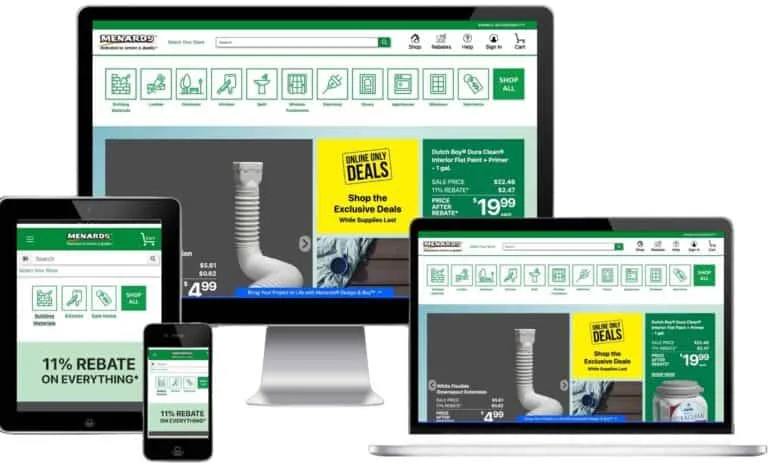
Menards
Home Improvement Retail
A catalog program judged the way every store engagement here is judged: on organic revenue. Architecture and category work across a very large catalog, with the result measured in dollars, not positions.
- +$8.7M Organic Revenue
- +250% Organic Traffic
- +435% Transactions
-

Grown Brilliance
Lab Grown Jewelry | DTC
A jewelry retailer in one of the most contested verticals in ecommerce. The report that mattered was the split: non-brand organic revenue doubled in eight months, tracked separately from the brand demand the company earned elsewhere.
- $2.1M → $4.2M Non-brand Revenue
- 160K+ Organic Visits
- $200M Annual Revenue
-
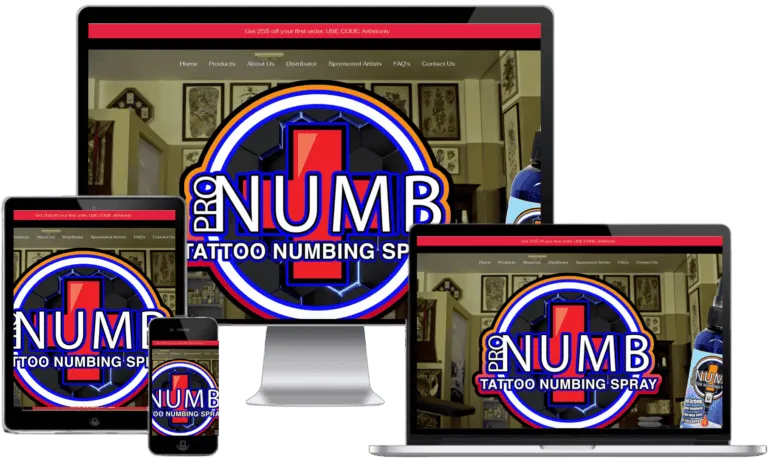
Pro Numb
Shopify Plus | Topical Anesthetics
A Shopify Plus store in a category where a handful of queries carry the revenue. Product and content work built around those terms, with featured snippets won on the research queries that feed them.
- $2M+ Monthly Revenue
- +340% Organic Traffic
- 47 Featured Snippets
-
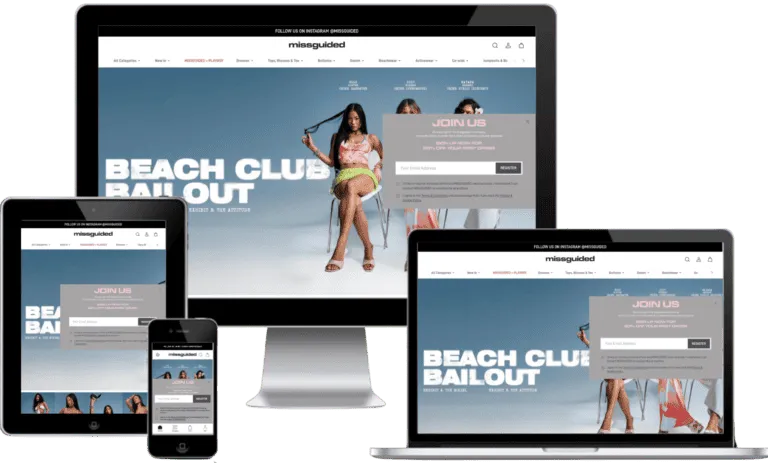
MissGuided
Fashion Ecommerce
A fashion store where seasonal collections and size variants make duplication a structural problem. Search work ran alongside the wider engagement, with sessions and revenue tracked through the same ledger.
- $2M-$3M Monthly Revenue
- 32,000 → 56,000 Organic Sessions
- 28 Featured Snippets
-

DOORS NYC
Fashion Retail | SoHo, NYC
A SoHo fashion retailer up against boutiques with years of search authority. Collection pages built for specific style searches and a Google Business Profile rebuilt with complete product categories turned style demand into sessions, calls, and store visits.
- ↑62% Organic Sessions
- ↑58% Calls
- ↑71% Directions
-

Original Penguin
Heritage Menswear Retail
A heritage menswear brand competing against fast-fashion giants with far bigger budgets. Store-level landing pages carried location-specific inventory and neighborhood context, with each Google Business Profile tuned per store, so search demand landed at the right door.
- 10,400 → 24,600 Store Page Sessions
- 1,280 → 2,840 GBP Actions
- 195k → 410k Impressions
What Our Clients Say
The testimonials below come from clients in our register, quoted with their sources rather than rounded up.
-

Krispen Culbertson
Sr. Partner, Culbertson Law
"Blown away by the results"
Organic sessions grew from 7,200 to 18,400 in 6 months and qualified calls rose 91%. The monthly report always said what changed and why. Source: GA4 and CallRail.
-

Justin Tyme
Owner, Reef Side Tattoo
"Couldn’t be happier"
Weekly bookings climbed from 18 to 56 in 4 months once Egochi rebuilt our portfolio pages and tuned everything behind them. Clients keep telling us they found us on Google. Source: GA4 and GBP insights.
-

Maria Antoinette
Founder, Antoinette Realtors
"Significant increase in leads"
Organic leads went from 4 to 24 monthly in 3 months, and organic traffic grew 70% after Egochi rebuilt our pages one by one. Source: GA4 and GBP insights.
"The results are just amazing"
"Egochi is the best"
Meet Your Ecommerce SEO Team
The people who get your products found, from category pages to AI shopping results.
-

Jobin John
Chief Executive Officer
-

Justin Brown
Head of Search Engine Optimization
-

Bryan Thomson
Head of Web Design & Development
-

Ina Komins
Head of Social Media Marketing
-

Kierra Pita
Head of Advertising & Content Marketing
-

Patricia Turner
Chief Creative Officer
-

William Carter
Chief Digital Strategy Officer
-

Andrew Miller
Senior SEO Strategist
-

Amy Robinson
Content Marketing Manager
-

Betty Harrison
PPC Campaign Specialist
-

Anthony Carter
Lead Digital Account Executive
-

Amanda Cooper
Social Media Director
-

Carol Parker
Senior Client Success Manager
-

Barbara Bennett
Email Marketing Lead
-

Charles Turner
Technical SEO Analyst
-

Brian Sullivan
Creative Director
-

Christine Walker
Director of Project Management
-

Christopher Brooks
Digital Marketing Strategist
-

Daniel Wright
Senior Analytics Specialist
-

David Henderson
Lead Content Strategist
-

Donna Mitchell
Client Communications Manager
-

Elizabeth Foster
Director of Paid Advertising
-

Emily Baredi
Brand Experience Specialist
-

Emma Scott
Social Media Content Creator
-

George Crawford
Technical Solutions Architect
-

Jacob Evans
Digital Content Coordinator
-

James Anderson
Marketing Automation Specialist
-

Jason Palmer
Junior Copywriter
-

Jeffrey Reynolds
Paid Media Analyst
-

Jennifer Lewis
Community Engagement Specialist
-

Jonathan Murphy
SEO Reporting Specialist
-

Joseph Morgan
Influencer Marketing Coordinator
-

Kenneth Stevens
Digital PR Manager
-

Kimberly Harper
Digital Marketing Intern
-

Kevin Morris
SEO Outreach Specialist
-

Lee Dawson
Junior Web Developer
-

Linda Peterson
Email Campaign Coordinator
-

Lisa Thompson
Social Media Ads Specialist
-

Margaret Bradley
Marketing Operations Lead
-

Mark Richards
Data & Insights Analyst
-

Mary Kennedy
Senior Copyeditor
-

Matthew Clark
Growth Marketing Manager
-

Michelle Sanders
Junior Marketing Designer
-

Michael Foster
Senior Conversion Rate Specialist
-

Nancy Wheeler
Digital Analytics Manager
-

Nicholas Pierce
Affiliate Marketing Specialist
-

Nicole Adams
Outreach Program Coordinator
-

Paul Franklin
Paid Social Campaign Manager
-

Richard Barnes
Reputation Management Specialist
-

Robert Murphy
Lead Solutions Architect
-

Ronald Davis
Marketing Technology Analyst
-

Ryan Bell
Paid Media Buyer
-

Sandra Gregory
Digital Account Coordinator
-

Scott Hopkins
CRM Implementation Specialist
-

Shirley Ellis
Customer Insights Manager
-

Stephanie Cross
Brand Content Designer
-

Steven Greene
Web Analytics Specialist
-

Susan Price
Affiliate Campaign Manager
-

Thomas Fisher
Lead Technical Architect
-

Timothy Nash
Mobile Marketing Strategist
Ecommerce SEO FAQs
How do I start ecommerce SEO for my online store?
Start where the leverage is: pick your ten highest-revenue categories, give each real copy and a reviewed title, then fix the structural layer: canonical tags on variants, filter parameters kept out of the crawl, and an XML sitemap of real products only. Add Product schema that matches the page. Most stores get further fixing categories and facets than polishing individual products.
Is ecommerce SEO worth it compared to just running ads?
They answer different problems. Ads buy visibility that stops the day the budget does, and rising cost per click quietly eats margin as you scale. Organic search compounds: a category page that reaches page one keeps producing without a per-click fee. Most stores we work with run both, then shift budget as organic revenue grows. The honest caveat: SEO takes months, not days.
Can I do ecommerce SEO myself?
The on-page layer, yes: original descriptions, sensible titles, image alt text, and a schema app get you real progress. Where owners hit the wall is structural work: facet crawl control, variant canonicals, log analysis, pagination, and feed diagnostics. A workable split we see often: handle product copy in-house, bring in ecommerce SEO experts for architecture, technical fixes, and links.
What is the difference between ecommerce SEO and Amazon SEO?
Ecommerce SEO ranks your own store in Google and other search engines, where backlinks, site structure, content, and schema decide outcomes. Amazon SEO ranks listings inside Amazon’s marketplace, where sales velocity, conversion rate, and review count decide. Different systems, different levers, different teams. We work on your owned store, and the revenue it earns belongs to you, not to a marketplace account.
How do you handle out-of-stock and discontinued products?
By rule, not case by case. Temporarily out of stock: the page stays live with updated availability schema, a restock signup, and related products. Permanently discontinued: a 301 redirect to the closest substitute or the parent category, so earned links keep working. No true substitute: an honest 404 or 410. What we never do is redirect everything to the homepage.
Do you write product descriptions?
Yes, in priority order rather than alphabetically: best sellers, best margins, and highest-opportunity queries first. The copy covers what manufacturer text omits: who the product fits, how buyers choose between variants, and the questions people ask before purchasing. Category pages get their own copy too, since they carry the head terms. Templates keep it consistent; the details stay per-product.
Can ecommerce SEO help me compete with Amazon?
Not head-on for generic head terms; pretending otherwise would be selling you a loss. Where independent stores win: long-tail and use-case queries, comparison and research content where marketplaces are weak, brand-plus-product searches, and depth in one vertical. The margin argument matters too: a sale on your store keeps the customer relationship and skips the marketplace fee.
Do you work with Google Merchant Center and shopping feeds?
Yes. The product feed decides whether products appear in Google Shopping and the Shopping tab’s free listings, so it gets the same treatment as the site: title formulas per attribute, GTIN and MPN fields filled correctly, category mapping, and disapproval fixes. Feed data and on-page schema must agree with each other, since mismatched price or availability can suspend listings.
Which ecommerce platforms do you work with?
Shopify and Shopify Plus, BigCommerce, Magento and Adobe Commerce, and WooCommerce are the daily platforms, and each fails in its own way, from Shopify’s locked URL structure to Magento’s layered navigation crawl risk. Headless and custom builds are welcome when there is developer access. What matters is code-level reach: SEO delivered only through apps stays surface-deep.
How do I choose an ecommerce SEO agency?
Ask how results get reported; the honest answer splits non-brand organic revenue from the brand traffic that arrives anyway. Ask how the agency handles faceted navigation and out-of-stock URLs, since both are rule-level decisions most providers never make. Ask whether work ships at code level on your platform or only through apps. A traffic-only report is the earliest warning sign.
Free Ecommerce SEO Audit
Get a free review of your category architecture, facet crawl waste, product schema, and non-brand revenue picture, with every fix named and priced. You keep the findings either way, whether or not you hire us.
Ready to Grow Non-Brand Revenue?
Ecommerce SEO is one discipline inside our full search engine optimization services, so catalog work, content, and links run as one program instead of three vendors. Tell us about your store and we will send a plan with real numbers in it.
Questions? Call (888) 644-7795 or email care@egochi.com
Egochi Stats
- 250+ Google Reviews
- 5.0 Clutch Rating
- 12+ Years Experience
- $200M+ Revenue Generated
- 4 US Offices
- 190+ Clutch Reviews
Blog Posts
- Aug 12, 2026 GEO vs. SEO: A Comparative Guide for Digital Marketers
- Aug 12, 2026 What is llms.txt? | How to Create llms.txt file for your website
- Aug 12, 2026 What is Semantic SEO? | How to Build Topical Authority That Ranks
- Aug 12, 2026 What is Schema Markup? | How to Add Structured Data to Your Website
- Aug 12, 2026 How to Optimize for Voice Search: A Realistic 2026 Guide