Restaurant Digital Marketing Agency
Egochi is a digital marketing agency for independent restaurants and small restaurant groups that want full dining rooms without handing a cut of every order to a delivery app. Third-party platforms take a commission on every order and keep the customer data; Egochi builds demand you own instead: local search visibility for the moments people pick a place to eat, review velocity that holds your map position, social content that turns dishes into visits, and direct online ordering that keeps margin in the house. Catering and private events, the revenue lines most restaurants never market, get their own plan. Plans start at $1,500 monthly, pricing published up front. Start with a free audit of how your restaurant shows up when your neighborhood gets hungry.
Get Your Free Restaurant Marketing Audit See What's Included
- 250+ Google Reviews
- 190+ Clutch Reviews at 5.0
- Google Premier Partner
As Featured In






What Makes Restaurant Marketing Different
Four economics of the dining room that decide where Egochi points the budget.
Delivery apps are a landlord, not a channel
Every order through a third-party platform pays a commission and surrenders the customer relationship: the app keeps the data, the reviews, and the reorder. Egochi fills tables through channels you own instead, converting that recurring toll into margin, and the asset appreciates instead of taking a larger cut as you grow.
Dining decisions happen in minutes, nearby
Nobody plans lunch a week out. Diners search close to mealtime, on a phone, within a short drive, and pick from whatever the map shows first. Egochi treats your Google Business Profile, photos, and review recency as the storefront, because that version gets judged before anyone sees your actual storefront.
Review velocity beats review count
A restaurant with fresh reviews arriving every week reads stronger, to diners and to the map results, than a higher-rated page that went quiet last year. The fix is operational, a repeatable way to ask happy tables at the right moment, and Egochi builds it into the service rhythm instead of a plea taped to the receipt.
Catering and events are the unmarketed margin
Private dining, catering, and buyouts carry higher tickets and book weeks ahead, yet most restaurants never build a page for them, let alone show up for the searches planners run. A steady office-catering account can out-earn a strong service, and almost nobody nearby competes for it, which is why Egochi gives those lines their own pages and campaigns.

What's Inside a Restaurant Marketing Plan
Six services Egochi runs as one plan, every channel pointed at demand you own.
-
Local Search and Map Visibility
Egochi manages your Google Business Profile, category and photo strategy, and citation cleanup so your restaurant appears when nearby diners search for what you serve.
-
Review Velocity Program
Egochi builds a repeatable system for turning happy tables into fresh reviews, plus public responses that show future diners someone is paying attention.
-
Social Media Presence
Egochi posts dish photography and short video around your service windows, run as a demand channel rather than a diary of the kitchen.
-
Direct Ordering Growth
Egochi plans the shift of repeat customers from commission apps to ordering on your own site, with the prompts, box inserts, and offers that move the habit.
-
Catering and Private Events
Egochi builds dedicated pages and campaigns for the high-ticket revenue lines planners search for weeks ahead, from office lunches to full buyouts.
-
Reporting in Covers, Not Clicks
Egochi ties monthly reporting to calls, direction requests, direct orders, and reservations, so you can see what the marketing actually seated.
How Restaurants Show Up in AI Search
Diners now ask AI assistants what used to take three searches: where to eat tonight, which nearby place handles a gluten allergy, who has a private room for twelve on Saturday. Google AI Overviews, ChatGPT, Gemini, and Perplexity answer from structured menu, hours, location, and review data, so Egochi builds that structure into the same program that wins the map.
Google AI OverviewsChatGPTGeminiPerplexity
-
A menu AI engines can actually read
AI Overviews and ChatGPT cannot quote a PDF. Egochi builds menus as structured HTML with dishes, prices, and dietary notes marked up, so when someone asks an assistant where to find vegan ramen nearby, your kitchen is quotable.
-
One identity across every listing
Egochi keeps your name, address, hours, and menu links consistent across your site, Google Business Profile, Yelp, and the reservation platforms. Gemini and Perplexity resolve which restaurant exists, and whether it is open right now, through exactly those signals.
-
Reviews are what assistants trust
Ask ChatGPT for the best date-night spot in a neighborhood and the answer leans on review volume, recency, and what those reviews actually say. The review velocity program Egochi runs feeds AI answers as directly as it feeds the map.
-
No separate AI invoice
Egochi does not sell AI visibility as an add-on. The structured menus, consistent listings, and fresh reviews that earn citations are the same assets this program already builds, and they get reported together as one set of numbers.
How the Restaurant Program Runs
-
Hungry-hour audit
Egochi searches your market the way a diner does: cuisine terms, neighborhood queries, and map results at lunch and dinner. You see who wins each moment now, what your profile shows, and how much of your revenue routes through apps.
-
Fix the map first
Google Business Profile categories, photos, menu links, and a review ask your staff can run every shift. This is the cheapest visibility in the plan, and it usually moves within weeks.
-
Open the direct path
Egochi points ordering and reservations at your own domain, with the box inserts, prompts, and offers that move regulars off commission apps one order at a time.
-
Fill the soft shifts
Social calendars, paid pushes, and catering pages get aimed at the covers you are missing: weekday lunches, early dinners, private events. The Saturday rush does not need marketing money.
-
Report in covers
Monthly reporting counts calls, direction taps, direct orders, and reservations by channel. Budget follows what seated people, and Egochi shows you the reasoning behind every shift in spend.
Fair Questions Restaurant Owners Ask
Word of mouth built this place. Why pay for marketing now?
Word of mouth still decides, it just happens on screens now: a friend names your restaurant, and the whole table checks the map listing, the photos, and the last few reviews before agreeing. Marketing does not replace your reputation. It makes sure the digital version of it matches the room, because that is the version strangers vote on.
The delivery apps already send us orders. Why fight them?
Keep them for discovery if the math works. The problem is paying a commission on your regulars, the people who would order direct if a direct path existed. Egochi does not pull restaurants off the platforms; we move the repeat customers to your own ordering, where the margin and the customer data stay with you.
Can our manager just handle the marketing in-house?
Posting a photo, yes. The system is what slips: the review ask that dies during a Friday rush, the profile update nobody owns, the catering page that never gets built. In-house works when someone has real hours for it every week. Most restaurants do not have that person, and the gaps cost more than the Egochi plan.
What results are realistic in the first three months?
Profile and review work usually moves map visibility inside the first several weeks, and paid pushes produce covers as soon as they run. Rankings for competitive dining searches and a meaningful shift from app orders to direct take months. Anyone promising a packed dining room in thirty days is selling the pitch, not the plan.
Common Mistakes to Avoid
-
Paying for ads while the Google profile shows outdated hours, stale photos, and unanswered reviews, so the click leaves before it becomes a booking.
-
Letting delivery apps hold the entire online relationship, so the app owns the customer list your reorders depend on.
-
Never building a catering or private events page, leaving the highest-ticket revenue line invisible to the planners searching for it.
-
Marketing the Saturday rush that fills itself while the empty Tuesday covers, the actual problem, get no budget.
-
Grading the program on likes and followers instead of calls, direction taps, and direct orders.
Restaurant Marketing Case Studies
Egochi publishes these receipts from restaurant and food engagements across the client roster, with local-consumer receipts closing the row. Every number restates the client's published case study, and the restaurants lead.
-
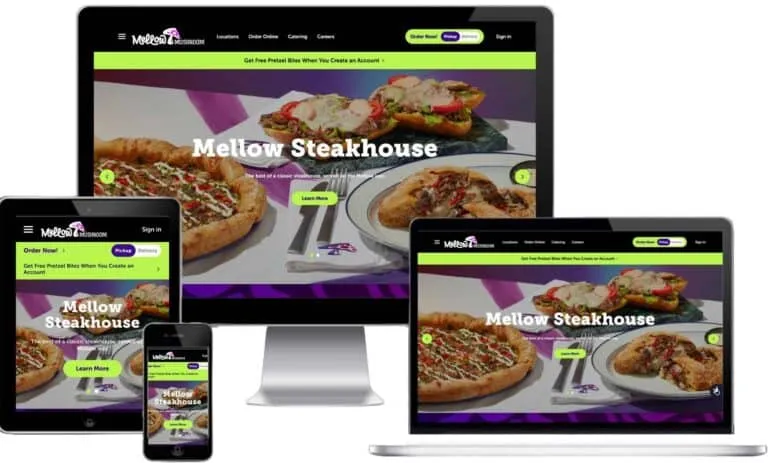
Mellow Mushroom
Pizza Restaurant Group | Multi-Location
A well-known pizza group where every location had to win its own neighborhood. Egochi ran local SEO, paid campaigns, and a rebuilt site as one program, and local traffic turned into online orders.
- +312% Local Traffic
- +245% Online Orders
- Top 3 Local Pack
-
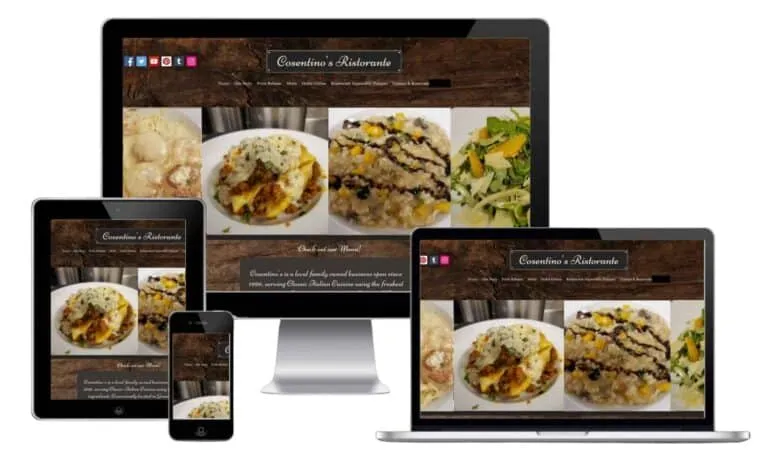
Cosentino's
Italian Restaurant | Geneva, NY
A classic Italian restaurant whose old website undersold its reputation. Egochi rebuilt the site to ADA standard and ran the SEO, content, and social that turned visibility into reservations.
- +78% Organic Traffic Increase
- +66% Local Reservation Growth
- +72% Website Engagement Lift
-
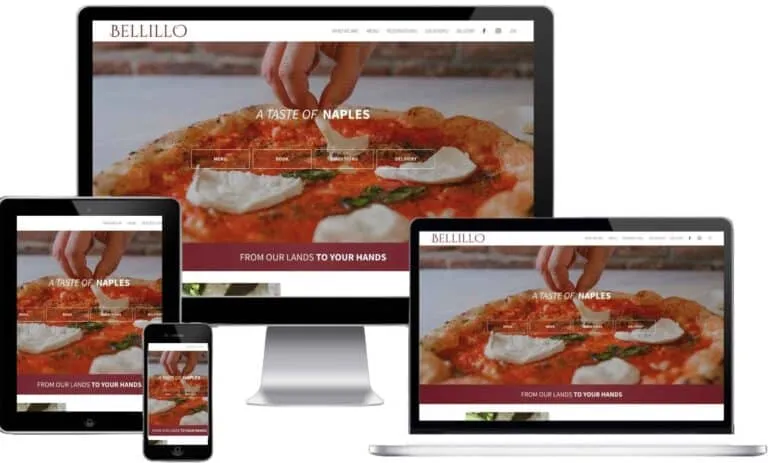
BELLILLO
Pizza Restaurant | Miami, FL
A Miami pizza spot that needed to win "pizza near me" inside a three-mile radius. Egochi rebuilt the Google Business Profile and the menu pages, and calls, directions, and Map Pack presence followed in four months.
- 180 → 290 GBP Calls per Month
- 320 → 520 Driving Directions per Month
- 11.8 → 3.4 Avg Position, "pizza near me"
-
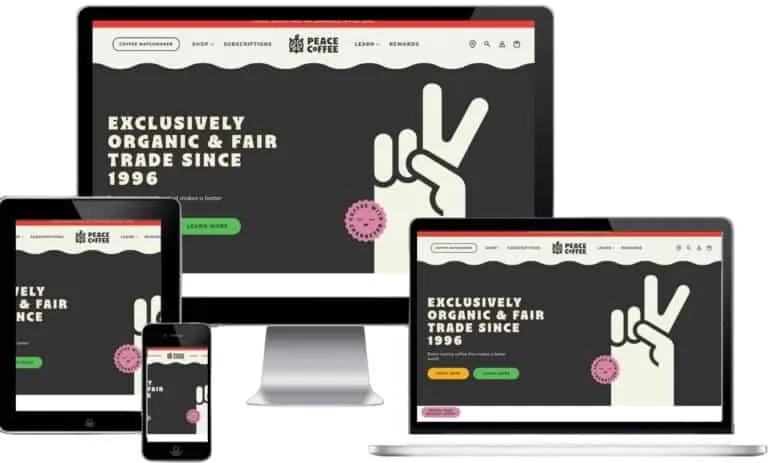
Peace Coffee
Coffee Brand | Food & Beverage Ecommerce
A specialty coffee brand selling its roasts the way a restaurant sells a menu: on appetite and trust. Egochi redesigned the store and ran the SEO that turned search traffic into monthly revenue.
- +85% Organic Traffic Increase
- 3K Monthly Customer Inquiries
- $75K Added Monthly Revenue
-
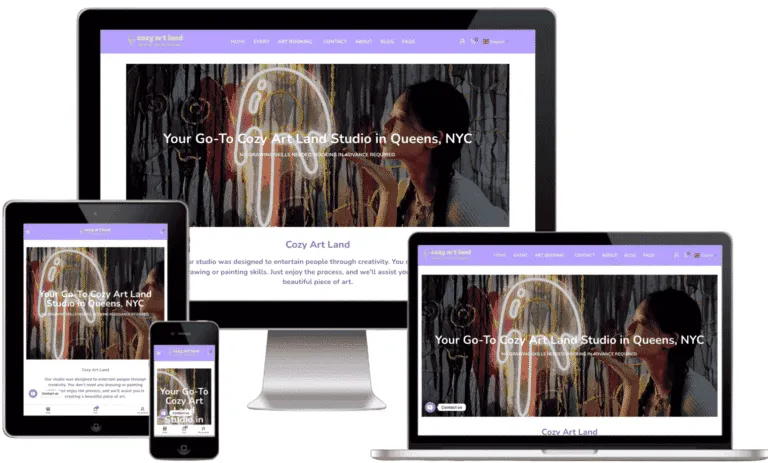
Cozy Art Land
Art Studio | Long Island City, NYC
A neighborhood studio that lives on the same local moments a dining room does: searches, calls, and direction taps. Egochi grew the profile actions that make a local phone ring.
- +85% GBP Calls Growth
- +110% GBP Direction Requests
- +60% Bookings or Form Submits
-

Culbertson Law
Family Law Firm | Local Map Pack
A local professional practice in a different trade, fighting the Map Pack fight every restaurant knows. Egochi took the firm from page two into the pack, and the mechanics transfer one to one.
- 9 → 2 Map Pack Position
- +91% Qualified Calls
- 47 New Google Reviews
See How Egochi Works
A short look at how our team plans, builds, and reports on client work.
Is This Right for You?
This is for you if
- You run an independent restaurant or a small group and want direct orders and reservations, not more commission volume.
- You have empty weekday covers, an unmarketed catering line, or a new location that needs a launch.
- The room is full on weekends; the marketing problem is everything outside the rush.
This may not be the right fit if
- You want a promise of going viral: Egochi builds steady demand systems, and virality is a bonus, not a plan.
- The concept is not open yet and needs naming and branding first; Egochi markets restaurants that are serving.
See the work: Food & beverage case studies · Local SEO case studies
What Clients Tell Us
Our restaurant was struggling to get found online. Egochi fixed our Google Business Profile, got us more reviews, and now we show up whenever someone searches for our type of food. Tables are full every night.
The Complete Restaurant Program
This page is one part of a five-part program. Each piece works alone and works better together.
-
Restaurant SEO
Menu-page rankings and the neighborhood queries that fill tables.
-
Restaurant PPC Agency
Meal-decision targeting that promotes direct orders over app margins.
-
Restaurant Social Media Marketing
Dish content and creator dinners that turn scrolls into reservations.
-
Restaurant Website Design
HTML menus, embedded ordering, and honest pricing up front.
Common Questions About Restaurant Marketing
-
How much does restaurant marketing cost?
Egochi's restaurant marketing plans start at $1,500 monthly and scale with locations and the channels you want covered. Compare that against what delivery platforms take from your orders every month: owned demand replaces rented demand, and unlike commission, the cost does not rise with your sales.
-
How do restaurants show up in AI search results?
Diners ask AI Overviews, ChatGPT, Gemini, and Perplexity where to eat tonight, which spot fits a dietary need, and who has a private room for a party. Those systems answer from structured menu and hours data, consistent listings, and review recency. Egochi builds exactly those signals, so the work that wins the Map Pack earns AI citations too.
-
Is marketing worth it if my restaurant is already busy?
Busy tonight is not the same as busy Tuesday. Most full restaurants still have empty weekday covers, an unmarketed catering line, and a customer list that lives inside a delivery app they do not control. Marketing for a busy restaurant targets those gaps, not the Saturday rush you already win.
-
What marketing works best for independent restaurants?
Local search and reviews first, because they capture people already deciding where to eat. Social second, because photos and video create the desire. Paid ads where you need covers fast, and direct ordering underneath all of it, so demand lands on your own margin instead of an app's. Egochi sequences the fast channels first: profile work moves in weeks, competitive rankings take months.
-
How do I choose a restaurant digital marketing agency?
Ask what they measure. Likes and followers seat nobody; you want calls, direction taps, reservations, and direct orders in the report, which is how Egochi builds every monthly readout. Ask their plan for the delivery apps, which should be moving your regulars to direct ordering rather than adding commission volume, and where the budget goes: soft shifts, not the Saturday rush that fills itself. Anyone promising a packed room in thirty days is selling the pitch.
Awards and Partnerships Egochi Holds in 2026
-

Egochi Named 2026 Top Digital Marketing Agency by Clutch
Clutch, a B2B market research and reviews platform, names Egochi a top digital marketing agency for 2026. The distinction rests on overall market presence and, most importantly, verified client feedback. Egochi holds a 5.0 rating across 190+ reviews on Clutch.
-
Egochi Is a Certified Google Premier Partner
Egochi is a certified Google Premier Partner, a status Google grants to the top 3% of participating advertising agencies each year. The tier is earned on campaign performance, sustained client growth, and advanced Google Ads certification, and Google reviews it annually rather than granting it for life.
The Team Behind the Work
-

Jobin John
Chief Executive Officer
-

Justin Brown
Head of Search Engine Optimization
-

Bryan Thomson
Head of Web Design & Development
-

Ina Komins
Head of Social Media Marketing
-

Kierra Pita
Head of Advertising & Content Marketing
-

Patricia Turner
Chief Creative Officer
-

William Carter
Chief Digital Strategy Officer
-

Andrew Miller
Senior SEO Strategist
-

Amy Robinson
Content Marketing Manager
-

Betty Harrison
PPC Campaign Specialist
-

Anthony Carter
Lead Digital Account Executive
-

Amanda Cooper
Social Media Director
-
Carol Parker
Senior Client Success Manager
-

Barbara Bennett
Email Marketing Lead
-

Charles Turner
Technical SEO Analyst
-

Brian Sullivan
Creative Director
-

Christine Walker
Director of Project Management
-

Christopher Brooks
Digital Marketing Strategist
-

Daniel Wright
Senior Analytics Specialist
-

David Henderson
Lead Content Strategist
-

Donna Mitchell
Client Communications Manager
-

Elizabeth Foster
Director of Paid Advertising
-

Emily Baredi
Brand Experience Specialist
-

Emma Scott
Social Media Content Creator
-

George Crawford
Technical Solutions Architect
-

Jacob Evans
Digital Content Coordinator
-

James Anderson
Marketing Automation Specialist
-

Jason Palmer
Junior Copywriter
-

Jeffrey Reynolds
Paid Media Analyst
-

Jennifer Lewis
Community Engagement Specialist
-

Jonathan Murphy
SEO Reporting Specialist
-

Joseph Morgan
Influencer Marketing Coordinator
-

Kenneth Stevens
Digital PR Manager
-

Kimberly Harper
Digital Marketing Intern
-

Kevin Morris
SEO Outreach Specialist
-

Lee Dawson
Junior Web Developer
-

Linda Peterson
Email Campaign Coordinator
-
Lisa Thompson
Social Media Ads Specialist
-

Margaret Bradley
Marketing Operations Lead
-

Mark Richards
Data & Insights Analyst
-

Mary Kennedy
Senior Copyeditor
-

Matthew Clark
Growth Marketing Manager
-

Michelle Sanders
Junior Marketing Designer
-

Michael Foster
Senior Conversion Rate Specialist
-

Nancy Wheeler
Digital Analytics Manager
-

Nicholas Pierce
Affiliate Marketing Specialist
-

Nicole Adams
Outreach Program Coordinator
-

Paul Franklin
Paid Social Campaign Manager
-

Richard Barnes
Reputation Management Specialist
-

Robert Murphy
Lead Solutions Architect
-

Ronald Davis
Marketing Technology Analyst
-

Ryan Bell
Paid Media Buyer
-

Sandra Gregory
Digital Account Coordinator
-

Scott Hopkins
CRM Implementation Specialist
-

Shirley Ellis
Customer Insights Manager
-

Stephanie Cross
Brand Content Designer
-

Steven Greene
Web Analytics Specialist
-

Susan Price
Affiliate Campaign Manager
-

Thomas Fisher
Lead Technical Architect
-

Timothy Nash
Mobile Marketing Strategist
Certified & Accredited


Keep the Margin. Own the Demand.
Tell us your concept, your locations, and your slow nights. Egochi, a 5.0 rated agency across 190+ Clutch reviews, shows where diners in your market are searching and what direct demand would replace in commission fees.
Egochi Stats
- 250+ Google Reviews
- 5.0 Clutch Rating
- 12+ Years Experience
- $200M+ Revenue Generated
- 4 US Offices
- 190+ Clutch Reviews
Blog Posts
- Aug 12, 2026 GEO vs. SEO: A Comparative Guide for Digital Marketers
- Aug 12, 2026 What is llms.txt? | How to Create llms.txt file for your website
- Aug 12, 2026 What is Semantic SEO? | How to Build Topical Authority That Ranks
- Aug 12, 2026 What is Schema Markup? | How to Add Structured Data to Your Website
- Aug 12, 2026 How to Optimize for Voice Search: A Realistic 2026 Guide