Web Design
Shopify Web Design & Development Company
Custom themes, Online Store 2.0 sections, and checkout flows that finish, from the theme decision to Shopify Plus, built by a team that edits Liquid, not just settings.
Get Your Free Proposal Call (888) 644-7795
- A certified Shopify and BigCommerce partner
- Premium theme builds to Shopify Plus
- Free proposal names the right theme path
As Featured In






Egochi is a Shopify web design and development company building stores merchants can run themselves: theme selection or custom theme builds, Online Store 2.0 sections and blocks your team can recompose without a developer, product templates that sell, and checkout flows configured honestly inside what Shopify allows. Egochi is a certified Shopify and BigCommerce partner and has designed and built websites since 2014, from first stores on premium themes to Shopify Plus builds with B2B wiring. The first decision is never a mockup; it is whether your store needs a custom theme at all, and our proposals regularly say it does not. The next step costs nothing: a free proposal that names the right theme path and what the build honestly costs.
How much does Shopify web design cost?
Shopify web design at Egochi is project-priced by theme path and catalog. A premium theme configured well runs $3,500 to $5,000, theme customization with custom sections runs toward $8,000, and custom theme design runs $8,000 to $15,000. Shopify Plus and B2B builds run $20,000 to $50,000, and ongoing care starts at $150/month. The theme decision moves the quote more than any other line.
Egochi has been building ecommerce sites since 2014, from offices in New York, Miami, Milwaukee, and Madison, with 250+ Google reviews and 190+ Clutch reviews at a 5.0 rating behind the work. One honesty up front: nobody here will sell you a custom theme your volume cannot pay back. The theme framework below is the same one our proposals use, and when the right answer is a premium theme configured well, that is the project we quote. What stands behind this page is 12+ years of store builds and the engagements in our case library, published whole.
Shopify Web Design Services We Offer
Twelve pieces of Shopify work. Discovery decides which ones your store needs, and which it can honestly skip.
-
Custom Shopify Design
Shopify website design built in Figma against your brand, catalog, and buyers, then developed as a Shopify theme. The design discipline underneath every build, budgets, launch gates, ownership standards, lives with our web design services; this page is that discipline applied to Shopify.
-
Shopify Theme Development
Custom themes and section libraries written in Liquid on Online Store 2.0 architecture: JSON templates, reusable sections, app blocks, and metafields surfaced where your team edits. Development your store keeps, documented and versioned.
-
Theme Customization
Premium themes tuned instead of replaced: custom sections added where the theme runs out, layout drift fixed, and settings configured against your real catalog. The honest default for most stores, and we say so in the proposal when it is yours.
-
Shopify Plus Development
Plus-tier builds: checkout extensibility, Shopify Functions for discount and shipping logic, B2B price lists and quick-order flows, and Markets for international storefronts. Real levers we will not sell to stores whose volume does not need them yet.
-
Shopify Migration
Moves onto Shopify from WooCommerce, Magento, BigCommerce, and closed builders, with catalog, customers, and rankings carried whole. The preservation discipline, one-hop redirect maps, verbatim content carry-over, staged cutovers, runs through our website redesign services on every move.
-
Mobile Commerce Design
Most store traffic arrives on phones, so product templates get designed there first: galleries that swipe, thumb-sized targets, express payment where thumbs expect it. Tested on real devices before launch, not in a resized browser window.
-
Product Page Design
Product templates with galleries that answer what it is, review markup wired where doubt forms, spec fields surfaced from metafields, and structured data machines can read. The template does the selling on every product it renders, so it gets designed like it.
-
Checkout Flow Design
Cart to confirmation with the fewest honest steps: guest checkout by default, shipping math before the last screen, express wallets up top. Configured inside what your Shopify plan actually allows, which the checkout section below spells out plainly.
-
App Selection and Wiring
Klaviyo, reviews, subscriptions, shipping, and support tools, chosen at design time and wired into the theme properly as app blocks. Every app is script weight and a monthly bill, so the list is a budget, not a menu.
-
Store Speed Work
Theme weight kept on a budget: image handling, script cleanup, and sections built in code instead of rented from apps, measured against Core Web Vitals at catalog size. Failing templates get fixed before launch, not after.
-
Shopify SEO
Every store ships search-ready: keyword-bearing handles, product and Offer schema in the theme, clean canonicals. The ranking program itself, collections, content, the app-stack audit, Merchant Center, runs through our Shopify SEO services.
-
Ongoing Store Maintenance
Updates, monitoring, small fixes, and seasonal merchandising changes from $150/month. Theme updates are the quiet risk on Shopify: vendor themes evolve, customizations need carrying forward deliberately, and the plan is designed for exactly that.
The First Real Decision Is How Much Theme You Buy
Every Shopify quote hides one decision that moves it more than any other: the theme path. Whether Shopify is the right platform at all is a different question, weighed criteria by criteria in the four-platform framework on our ecommerce web design services page; this table answers the question that comes after it, the way we answer it in proposals.
| What decides it | Premium theme, configured | Theme + custom sections | Custom theme build |
|---|---|---|---|
| Upfront cost | $3,500 to $5,000, theme license included | toward $8,000, priced by section count | $8,000 to $15,000; Plus and B2B builds beyond |
| When it earns its price | finding footing; budget belongs in product and traffic | the theme fits except where it binds; a few sections close the gap | volume makes small conversion gains real money, or the catalog defeats templates |
| Design ceiling | theme settings, plus what a good developer squeezes from them | raised exactly where you need it, section by section | your brand sets the ceiling, not a theme vendor |
| Speed reality | good themes ship fast; the app pile added later is what slows them | custom sections replace app scripts with theme code | you own every kilobyte; no dead code from features you never use |
| Who runs it day to day | a marketer in the theme editor | same editor, more blocks to compose with | still your team, if built OS 2.0-native; a custom theme that needs a developer for a banner change was built wrong |
Read the second row first. A premium theme plus configuration is the right call more often than agencies say out loud, because saying it shrinks the invoice. Custom earns its cost at volume, when margins make quarter-point conversion differences real money, or when the catalog genuinely does not fit standard templates. Our proposal names one of these three paths and shows the math, and the smaller project is the one we quote when it is true.
What a Shopify Build Actually Covers
Six areas of work behind every store we ship. They are the difference between installing a theme and designing a business.
-
Custom Theme Development
Themes built from scratch on Online Store 2.0: Liquid sections, app blocks, JSON templates, metafields. Built OS 2.0-native so your team runs the storefront from the theme editor after we leave, not through us.
-
Mobile-First Commerce
Product templates designed on a phone screen first, because that is where most store traffic lands: swipeable galleries, sticky add to cart, express wallets in thumb reach, type sizes that survive sunlight.
-
Theme Speed Discipline
A weight budget per template, enforced: compressed imagery, scripts that load only where used, sections in code instead of app embeds. Measured against Core Web Vitals at catalog size before launch.
-
Checkout Flow Design
Guest-first flows, honest shipping math, express payment, and the plan-level reality of what Shopify lets anyone customize, spelled out before you pay for it rather than discovered after.
-
App Selection and Wiring
The app list decided at design time and wired in as blocks, not floated over the page. Short on purpose: every app is speed spent and a bill that repeats monthly.
-
Shopify Plus Development
Checkout extensibility, Shopify Functions, B2B wholesale, and Markets for international selling, for stores whose volume earns the tier. We build on Plus and say plainly when you do not need it.
What Every Shopify Project Ships With
Eight deliverables in every project, not on the options list. Scope changes by theme path and catalog; the checklist does not.
-
Discovery and the Theme Decision
Catalog, margins, brand requirements, and team skills read before any theme path gets named. The framework on this page is the working document.
-
Custom Design Mockups
Homepage, collection, and product page designs approved in Figma on real products and real photography before a line of Liquid gets written.
-
Theme Build or Customization
The build itself: a premium theme configured and extended, or a custom theme developed OS 2.0-native, with performance measured at catalog size.
-
Catalog and Collection Setup
Products, collections, variants, pricing, and inventory configured and spot-checked, with metafields structured for the specs templates surface.
-
Payment and Shipping Setup
Shopify Payments or your gateway, express wallets, tax settings, shipping zones and rates, all configured and tested with real orders end to end.
-
App Setup, Scoped
The agreed app list installed, configured, and wired into the theme, with a reason on file for every entry and nothing added on autopilot.
-
SEO Foundation
Keyword-bearing handles, meta templates, product and Offer schema in the theme, and clean canonicals set at build time, where they are cheap.
-
Tracking and Training
GA4 ecommerce events and ad pixels wired before launch, plus recorded walkthroughs for products, orders, discounts, and the theme editor.
We Build Stores Your Team Can Recompose Without a Developer
Online Store 2.0 turned Shopify themes into a component system: JSON templates, sections that work on every page, and blocks your team edits in place. Most builds still ignore it and hardcode layout the old way. Here is what designing for it actually buys you.
-
Sections are a design system, not a page
Every section we build works on any page: the review strip from the product template can carry the homepage, a size-help block can follow the catalog anywhere. Design once, compose everywhere, and the brand stays coherent as the store grows.
-
Blocks put merchandising back in your hands
Promotions, launches, and seasonal swaps happen in the theme editor, by your team, the day you think of them. A store that waits on a developer for a banner change loses the week the idea was worth something.
-
Metafields surface the catalog, not just the copy
Spec tables, size charts, compatibility notes, and materials live as structured product data and render wherever templates need them, so a thousand products stay consistent without a thousand hand-edited pages.
-
JSON templates end template sprawl
Different layouts per collection or product type, landing pages assembled from existing sections, no duplicated theme code to maintain. The template count grows with your merchandising, not with your technical debt.
-
The exit test
The honest measure of a theme build: could another developer, or no developer at all, run this store tomorrow? OS 2.0-native builds pass it. Hardcoded themes fail it, and the failure is priced into every change you ever order afterward.
Checkout Customization, Plan by Plan
Baymard Institute's running average across published checkout studies puts cart abandonment near 70%, and the causes it names, surprise costs, forced accounts, long forms, are mostly design decisions. On Shopify, what you are allowed to change depends on your plan, and agencies rarely draw those lines before quoting. Here they are:
-
What standard Shopify already allows
Your logo, colors, and type on the checkout, guest checkout by default, express wallets like Shop Pay and Apple Pay, and everything around checkout: the cart page, shipping rates shown early, thresholds stated plainly, trust signals where doubt forms. Most abandonment causes in Baymard’s research are fixable right here, on any plan.
-
What Shopify Plus unlocks
Checkout extensibility: custom fields, content, and logic inside the checkout itself through checkout UI extensions and the branding API, plus Shopify Functions for discount and shipping rules the standard tier cannot express. Real power with a real price on it, worth paying when checkout volume justifies engineering the last hundred feet of the sale.
-
What neither plan allows
Rebuilding the checkout flow from scratch, reordering its steps at will, or bolting arbitrary scripts into it. Shopify locked that down deliberately, and the lockdown is part of why its checkout converts and stays compliant. An agency promising a fully custom checkout on a standard plan is describing a different platform.
-
The honest default
Most stores do not need Plus to fix checkout. They need shipping costs visible before the last screen, fewer fields, express payment wired properly, and a cart that tells the truth. That configuration ships in every build here, whatever the plan, because it is design work, not tier work.
Design gets the flow right at launch; proving that a checkout change beats what it replaced is testing, with real traffic splits and honest sample sizes, and that discipline runs through our conversion rate optimization services.
Apps Are a Design Decision, So We Budget Them at Design Time
Every app on a Shopify store is a design decision that outlives the launch: a monthly bill, a script on the product template that closes your sales, and a dependency the theme has to carry. So the app list gets budgeted at design time, the way page weight does.
-
Apps that earn a slot
Capabilities a theme genuinely cannot ship: review collection with real request flows, subscriptions, live carrier rates, support tooling. These get chosen at design time and wired in as app blocks where the theme supports them, so they render where they work instead of floating over every page.
-
Apps a section should replace
Size charts, FAQ accordions, badges, countdown strips, upsell rows: most of these are a custom section written once, weighing kilobytes, with no subscription. The app version injects sitewide scripts and bills you monthly for markup a theme developer writes in an afternoon.
-
The budget, not the menu
Every build ships with an app list short enough to audit and a reason on file for each entry. On live stores, the same logic runs as the three-bucket app audit inside our Shopify SEO program; at build time, we simply refuse to create the bloat that audit exists to remove.
Can you migrate my store to Shopify?
Yes, from WooCommerce, Magento, BigCommerce, Squarespace, Wix, and custom platforms, with products, customers, and order history carried whole. The design risk is URLs: Shopify enforces its /products/ and /collections/ prefixes, so every old URL gets a one-hop redirect mapped before launch, and rankings get watched through the cutover. Review data gets audited for portability before the move, not after it.
Shopify Design for AI Shopping Answers
When shoppers ask ChatGPT, Perplexity, or Google’s AI results what to buy, the answer is assembled from what those systems can read across stores. What they can read from a Shopify store is decided mostly at theme level, which makes it a design deliverable, not a marketing add-on.
-
Schema ships from the theme or not at all
Product, Offer, and review markup rendering from Liquid with live price and availability is a build-time decision. Default themes half-ship it. Ours ship it complete, validated, and matched to the visible page, because markup that contradicts the page gets discounted.
-
Review wiring is theme wiring
Review apps hold the rating data that makes a product citable, and whether it reaches the page as valid markup depends on how the app and the theme are wired together. That is a Liquid job, done once, at build, and skipped by most installs.
-
Structured copy gives machines something to quote
Spec fields, sizing, compatibility, and materials designed into product templates as metafields read cleanly to buyers and machines alike. Manufacturer boilerplate that exists on forty other stores gives an assistant no reason to cite yours.
Whether any of it earns citations is measurable, and measuring and growing that visibility is its own discipline, covered end to end by our AI SEO services.
Why Businesses Pick Egochi for Shopify Web Design
-
Certified Shopify and BigCommerce Partner
That is the whole claim: no invented tiers, no badges we do not hold. Partner status here means current platform knowledge, theme-code fluency, and accountability, not a logo in a footer.
-
Launch Gates, Not Launch Counts
We will not decorate this page with a stores-launched counter. What we publish instead is a case library of named clients with tracked numbers, and the gates every build passes before it ships: speed at catalog size, real test orders on real devices, redirects verified.
-
Conversion Decisions, Argued Openly
Every layout call on a store has a conversion argument behind it, and we will show you ours. What we will not do is promise that design alone multiplies revenue: offer, price, and traffic still decide, and post-launch testing belongs to the CRO discipline.
-
Theme-Code Depth
Our developers work in Liquid, sections, and JSON templates directly, so schema, speed, and layout ship in code. App-only setups stop at the settings screen, and most of what makes a store fast and readable lives past it.
-
Full-Stack Ecommerce
Design, development, search, paid, and email under one roof, so the store and the traffic that feeds it are not built by strangers. Most register engagements on this page ran store and growth work together, the way store work should run.
-
A Handover That Hands Over
Your theme code documented, your accounts in your name, your team trained in the editor. Fire us after launch and the store keeps running and keeps selling, which is exactly the standard you should hold any store builder to.
How long does Shopify web design take?
Honest ranges: a premium theme configured on Shopify runs four to six weeks, a custom theme design eight to twelve, and Shopify Plus builds or migrations twelve to sixteen, longer when catalogs need cleanup. Product data is the schedule risk nobody prices in: stores wait on photography, specs, and descriptions more than on Liquid, so we scope catalog content in week one.
Our Shopify Web Design Process, Built on VERTEX Core™
Every Shopify build runs inside the same 16-step framework as every Egochi website project, through its stages: Blueprint, Design, Build, Prove, Launch. The six phases below are that framework carrying a store.
-
Discovery and the Theme Decision
Catalog size, margins, brand stakes, and team skills, read before any theme path gets named. The framework on this page is the working document, and the proposal shows its math.
-
Store UX and Visual Design
Homepage, navigation, collection, product, and cart designs in Figma, on real products and real photography. Placeholder boxes hide every hard decision about the user experience, so we do not use them.
-
Theme Build and App Wiring
Sections and templates developed in Liquid, the app list wired in as blocks and tested, and everything shipped through a duplicated theme first, never straight to live.
-
Catalog, Content, and Search Setup
Products, collections, and metafields loaded and spot-checked, handles and meta templates set, schema output validated, and tracking wired so launch day has a baseline.
-
Speed, Checkout, and Test Orders
Core Web Vitals measured on product and collection templates at catalog size, real test orders on real devices through the full payment flow, policies and trust signals in place. Failing templates get fixed before launch, not after.
-
Launch, Training, and Handover
A staged cutover with redirects verified and rankings watched, recorded training for products, discounts, and the theme editor, and every account in your name. Ongoing care from $150/month if you want us to stay on.
VERTEX Core™ is the build discipline inside the EGOCHI VERTEX™ Growth System, the operating system behind every Egochi engagement, Shopify builds included.
Is Shopify Web Design Right for You?
Who this is for
- You sell on Shopify, or you are moving there, and the store is the business: templates, collections, and checkout decide revenue, so they deserve design attention instead of theme defaults.
- You have outgrown a premium theme: app sprawl standing in for missing sections, a layout that fights your catalog, a brand the template flattens into everyone else’s store.
- You are heading toward Shopify Plus, or already on it, and need checkout, B2B, or international work that actually uses what the tier costs.
- You are replatforming onto Shopify and the rankings and reviews you earned have to survive the move. The migration answers on this page are the honest preview of that work.
When this may not be the right fit
- Stores under roughly fifty SKUs on a tight budget. A premium theme configured well, plus our launch checklist, serves you better than custom work, and that smaller project starts near $3,500. Spend the difference on product and traffic, then come back when the theme is what limits you.
- Sellers outgrowing Shopify itself: heavy B2B catalogs, complex permissions, or back-office wiring past what the platform carries. That is a platform decision before it is a theme decision, and we will say so rather than sell you a prettier ceiling.
- Anyone shopping for a guarantee that a new theme alone will multiply revenue. Design removes friction; offer, price, and traffic still decide. We show the argument behind every decision and promise none of them are magic.
Fair Questions Before You Commission a Store
Do I need a custom theme, or is a premium theme fine?
A premium theme configured well is the right buy more often than agencies admit, and it is a volume and margin decision, not a taste decision. Custom design earns its price when order volume makes small conversion differences worth real money, when the catalog does not fit standard templates, or when the brand is the moat. Below that line, the honest project is theme plus configuration, and plenty of our proposals say exactly that.
Is Shopify Plus worth the price?
Only when specific levers pay for it: checkout extensibility, Shopify Functions for pricing and shipping logic, native B2B, international Markets, and throughput built for volume. Plus costs several times a standard subscription, so the honest test is whether one of those levers, applied to your order volume, returns the difference. That math is part of our proposal, and when it does not clear, we say so and build on the standard tier.
Will apps slow my store down?
Unbudgeted, yes: every app injects scripts your product template carries whether the page uses them or not, and the pile compounds quietly. That is why the app list is decided at design time on a weight budget, why sections replace app embeds wherever code can do the job, and why the removal-first audit exists for live stores. A slow Shopify store is usually an unaudited app stack wearing a theme costume.
Can you customize the Shopify checkout?
Within what your plan allows, and we will not pretend otherwise. Standard Shopify permits branding, express wallets, and everything around the checkout, which covers most documented abandonment causes. Plus adds checkout extensibility and Functions for logic inside it. Nobody on any plan rebuilds Shopify checkout from scratch, and an agency promising that is describing a different platform. The checkout section above draws the exact lines.
The Store Engagements Behind This Page
Platform tags come from the case register: the Shopify engagements are named as such, and the rest are strong store engagements whose lessons carry. Every number below is register-fed and covers its engagement whole; no design-only attribution is invented.
-

Pro Numb
Shopify Plus | Topical Anesthetics
A Shopify Plus store in a category where trust decides everything. Product templates, answer-formatted content, and schema shipped at theme level; all figures confirmed and covering the engagement whole.
- $2M+ Monthly Revenue
- +340% Organic Traffic
- 47 Featured Snippets
-

Original Penguin
Heritage Apparel | Shopify
A heritage menswear brand on Shopify whose store pages and physical stores feed each other. Percentages compute from registered base figures, and the engagement reads whole.
- +137% Store Page Sessions
- +122% GBP Actions
- +110% Impressions
-

DOORS NYC
Fashion Retail | Shopify, SoHo
A SoHo boutique on Shopify competing with fashion houses for style searches. Collection templates built for how people actually shop the racks turned demand into sessions, calls, and store visits.
- ↑62% Organic Sessions
- ↑58% Calls
- ↑71% Directions
-

Grown Brilliance
Lab-Grown Diamonds | DTC Ecommerce
A jewelry store where photography, trust signals, and product architecture carry five-figure orders. Store and search work ran as one engagement, and the registered numbers read across it whole.
- 160K+ Organic Visits
- +95% Ranking Improvement
- +80% Conversion Increase
-

Brilliant Earth
Fine Jewelry | National Ecommerce
A national jewelry brand whose product pages sell items buyers research for weeks. The engagement numbers below cover the program whole, tracked across store and search.
- +428% Organic Traffic
- +186% Revenue
- 3.8% Conversion Rate
-
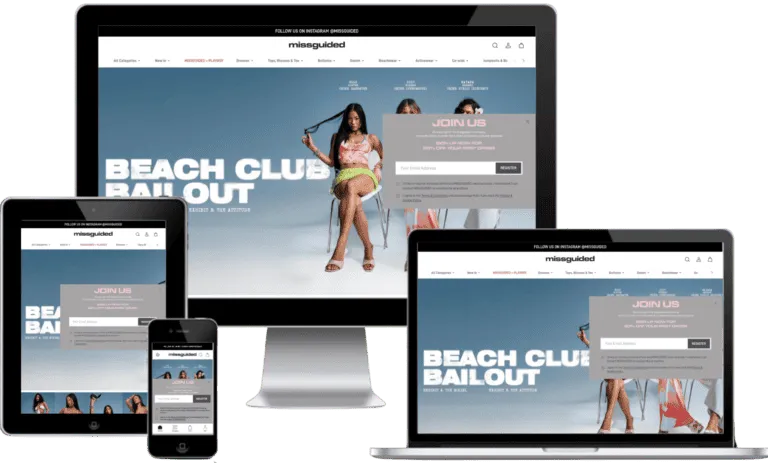
MissGuided
Fashion | Catalog Scale
A fast-fashion catalog where collections turn over weekly and the templates have to keep up. Whole-engagement numbers as published in the case library.
- 100K+ Monthly Visitors
- 4.1% Conversion Rate
- +55% Revenue
-
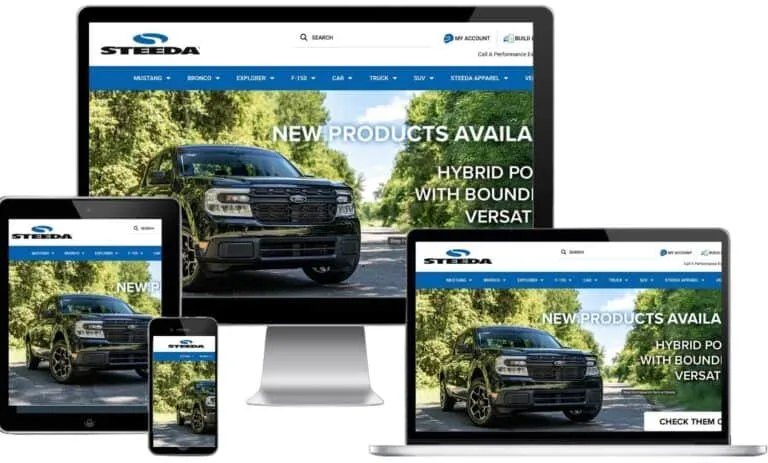
Steeda
Performance Parts | Catalog Ecommerce
A parts catalog where fitment data and spec-complete templates decide the sale, exactly the metafield discipline this page describes. The engagement is tracked whole.
- +102% Organic Traffic
- +95% Sales Growth
- +100K Monthly Visitors
-
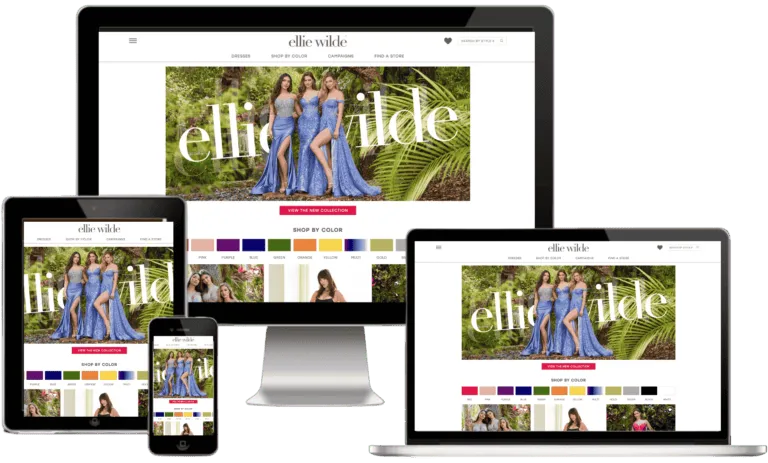
Ellie Wilde
Prom and Evening Wear | Fashion DTC
A dress brand whose buyers shop by photo, so galleries and mobile templates carried the design. Store, social, and email ran as one program; the published numbers cover it whole.
- 100K+ Monthly Organic Visitors
- 45% User Interaction
- 70% Email Open Rate
The full write-ups live in the case library, sliced by platform so you can read the stores on your stack: Shopify case studies.
Meet Your Shopify Design Team
The designers and Liquid developers who build the store, and the search specialists who make sure it earns its keep.
-

Jobin John
Chief Executive Officer
-

Justin Brown
Head of Search Engine Optimization
-

Bryan Thomson
Head of Web Design & Development
-

Ina Komins
Head of Social Media Marketing
-

Kierra Pita
Head of Advertising & Content Marketing
-

Patricia Turner
Chief Creative Officer
-

William Carter
Chief Digital Strategy Officer
-

Andrew Miller
Senior SEO Strategist
-

Amy Robinson
Content Marketing Manager
-

Betty Harrison
PPC Campaign Specialist
-

Anthony Carter
Lead Digital Account Executive
-

Amanda Cooper
Social Media Director
-

Carol Parker
Senior Client Success Manager
-

Barbara Bennett
Email Marketing Lead
-

Charles Turner
Technical SEO Analyst
-

Brian Sullivan
Creative Director
-

Christine Walker
Director of Project Management
-

Christopher Brooks
Digital Marketing Strategist
-

Daniel Wright
Senior Analytics Specialist
-

David Henderson
Lead Content Strategist
-

Donna Mitchell
Client Communications Manager
-

Elizabeth Foster
Director of Paid Advertising
-

Emily Baredi
Brand Experience Specialist
-

Emma Scott
Social Media Content Creator
-

George Crawford
Technical Solutions Architect
-

Jacob Evans
Digital Content Coordinator
-

James Anderson
Marketing Automation Specialist
-

Jason Palmer
Junior Copywriter
-

Jeffrey Reynolds
Paid Media Analyst
-

Jennifer Lewis
Community Engagement Specialist
-

Jonathan Murphy
SEO Reporting Specialist
-

Joseph Morgan
Influencer Marketing Coordinator
-

Kenneth Stevens
Digital PR Manager
-

Kimberly Harper
Digital Marketing Intern
-

Kevin Morris
SEO Outreach Specialist
-

Lee Dawson
Junior Web Developer
-

Linda Peterson
Email Campaign Coordinator
-

Lisa Thompson
Social Media Ads Specialist
-

Margaret Bradley
Marketing Operations Lead
-

Mark Richards
Data & Insights Analyst
-

Mary Kennedy
Senior Copyeditor
-

Matthew Clark
Growth Marketing Manager
-

Michelle Sanders
Junior Marketing Designer
-

Michael Foster
Senior Conversion Rate Specialist
-

Nancy Wheeler
Digital Analytics Manager
-

Nicholas Pierce
Affiliate Marketing Specialist
-

Nicole Adams
Outreach Program Coordinator
-

Paul Franklin
Paid Social Campaign Manager
-

Richard Barnes
Reputation Management Specialist
-

Robert Murphy
Lead Solutions Architect
-

Ronald Davis
Marketing Technology Analyst
-

Ryan Bell
Paid Media Buyer
-

Sandra Gregory
Digital Account Coordinator
-

Scott Hopkins
CRM Implementation Specialist
-

Shirley Ellis
Customer Insights Manager
-

Stephanie Cross
Brand Content Designer
-

Steven Greene
Web Analytics Specialist
-

Susan Price
Affiliate Campaign Manager
-

Thomas Fisher
Lead Technical Architect
-

Timothy Nash
Mobile Marketing Strategist
Shopify Web Design FAQs
What does a Shopify web design company actually do?
The store-shaped version of web design: theme selection or custom theme development, Online Store 2.0 sections and blocks, product and collection templates, checkout configuration, app selection and wiring, speed work, SEO foundation, and tracking. The deliverable is a store your team can run from the theme editor, documented and in your name, not a design file and an invoice.
Are you a Shopify Plus Partner?
No, and we will not blur that line: Egochi is a certified Shopify and BigCommerce partner, and Plus Partner is a separate designation we do not hold. We do design, build, and support Shopify Plus stores, checkout extensibility and B2B included, and the case register carries a Plus engagement. Credentials on this site render exactly as held, which is also how we treat your proof.
Do you build custom Shopify themes from scratch?
Yes, on Online Store 2.0 architecture: JSON templates, reusable Liquid sections, app blocks, and metafields, versioned and shipped through a duplicated theme before anything touches live. Custom is the right call at volume or when the catalog defeats templates; when it is not, we quote the smaller theme-customization project instead and say why.
Can you improve my existing theme without a full rebuild?
Often that is the better project: custom sections where the theme runs out, speed cleanup, checkout configuration, and template fixes on the theme you already run. The audit reads your store first and recommends configure, extend, or rebuild on evidence, and we quote the smallest project that honestly solves the problem.
Which apps do you install on a new store?
As few as the store genuinely needs: typically reviews, email, and shipping or support tooling, chosen at design time on a script-weight budget and wired in as app blocks. Anything a section can do in code, we build instead of rent. The app list ships with a reason on file for every entry.
Do you migrate stores from WooCommerce or Magento?
Yes, and from BigCommerce, Squarespace, Wix, and custom builds: products, customers, order history, and reviews carried over, every old URL mapped to a one-hop redirect inside Shopify’s URL structure, and rankings watched through the cutover. Review portability gets audited before the move, because platform-native reviews often export badly or not at all.
Will my store be fast on mobile?
That is a launch gate, not a hope. Product and collection templates get measured against Core Web Vitals at catalog size, on real devices, and a failing template gets fixed rather than shipped. The theme weight budget, and the short app list it enforces, exists for exactly this.
Do you write product descriptions?
Yes, as scoped content work: spec-complete product copy, collection copy, and buying-advice content written to answer the questions that stall orders. For large catalogs we build the template and the voice, write the flagship products, and document the pattern so your team can carry the long tail without us.
What does ongoing Shopify maintenance cost?
Ongoing care runs from $150/month, scaled by catalog and app stack: updates, monitoring, small fixes, and seasonal merchandising help. The Shopify-specific risk is theme updates: vendor themes evolve, customizations need carrying forward deliberately, and that carrying is exactly what the plan covers.
Who owns the theme when the project ends?
You do: the theme code lives in your store and your repository, the design files are yours, and every account, Shopify, payments, domain, apps, is in your name at handover. Shopify itself stays a subscription you rent, and we are precise about that boundary before you sign, not after.
What should I look for in a Shopify web design agency?
Ask which theme path they recommend and why; a proposal that never mentions a premium theme is selling scope, not fit. Ask whether builds ship OS 2.0-native so your team can edit the store without a developer, and who owns the theme code at handover. Walk away from anyone promising a fully custom checkout on a standard plan, or claiming partner tiers they cannot show.
Do you market the store after launch?
Yes. Store builds hand off cleanly into Shopify SEO, paid search and shopping, email programs, and conversion testing, and most register engagements on this page ran store and growth work as one program. The proposal covers the build first and names the growth options honestly, with nothing bundled uninvited.
What is included in Egochi’s Shopify web design service?
Theme-level store design: a custom or customized theme, Online Store 2.0 sections your team can recompose without a developer, scoped app wiring, checkout configuration, product and collection templates, SEO fundamentals set at build time, and training at handoff. Deliverables are named in the written scope by template and section, so you can hold the launch against the list.
How do I choose a Shopify web design agency?
Ask whether the work is theme-level or app-stacked; a store held together by apps is a store with monthly rent and slower pages. Ask to see live stores they built and check the checkout on your phone. Ask who can edit sections after handoff; the right answer is your team, without a developer. Ask about partner credentials, and ask for the scope in writing by template and section.
Ready for a Shopify Store Built Around What You Sell?
Tell us about your products and we will send back a proposal with real recommendations in it: which theme path fits your catalog and volume, what the build honestly costs, and what we would skip. If the answer is a premium theme and a checklist, the proposal will say so.
Questions? Call (888) 644-7795 or email care@egochi.com
Egochi Stats
- 250+ Google Reviews
- 5.0 Clutch Rating
- 12+ Years Experience
- $200M+ Revenue Generated
- 4 US Offices
- 190+ Clutch Reviews
Blog Posts
- Aug 12, 2026 GEO vs. SEO: A Comparative Guide for Digital Marketers
- Aug 12, 2026 What is llms.txt? | How to Create llms.txt file for your website
- Aug 12, 2026 What is Semantic SEO? | How to Build Topical Authority That Ranks
- Aug 12, 2026 What is Schema Markup? | How to Add Structured Data to Your Website
- Aug 12, 2026 How to Optimize for Voice Search: A Realistic 2026 Guide