International SEO Services
International SEO services that take a business ranking in one country and make it rank in the next: architecture, localization, and links, one market at a time.
Egochi is an international SEO agency that plans and runs this work for businesses expanding beyond their home market: ecommerce brands shipping abroad, SaaS companies acquiring users across regions, and manufacturers serving overseas distributors. The work covers the site-structure decision (ccTLD, subfolder, or subdomain), hreflang strategy, native keyword research per language, localized content, and links earned inside each target market. Egochi has run search engine optimization since 2014 for local firms through national brands, and this page applies the same discipline across borders, in a deliberate sequence: one market proven before the next is funded. The next step costs nothing: a free international visibility review that shows which countries already send you demand and which market deserves your first dollar.
The subfolder decision is authority math: a new market borrows every link the domain ever earned from day one, where a country domain starts from zero. Pay the ccTLD price only when law or operations genuinely demand a separate domain.
As Featured In





How much do international SEO services cost?
Inside monthly programs from $1,500 to $15,000, scope tracks market count: one new market sits mid-range, several push toward the ceiling, because every added country buys its own keyword research, content, and link earning. Standalone international audits run $2,500 to $10,000 by site size. Anyone quoting a flat price before asking how many markets you mean is guessing.
Egochi has been doing this since 2014, from offices in New York, Miami, Milwaukee, and Madison, with 250+ Google reviews and 190+ Clutch reviews at a 5.0 rating behind the work. International engagements here do not open with a translation invoice: they open with your own Search Console country data, which usually already names the market that wants you, and a written architecture decision you can hold us to before any page ships.
What is international SEO?
International SEO, also called global SEO, is the work of making one business rank in more than one country: site architecture that gives each market its own section, hreflang that routes each searcher to the right version, keyword research done natively per language, and links earned inside each market. It splits into multiregional work (same language, different countries) and multilingual work (different languages); most global sites need both.
International SEO Services We Offer
Twelve pieces of market-entry work. The market analysis decides which ones your expansion needs first, and which it can honestly skip.
-
International Site Architecture
The decision this page is named for: ccTLD, subfolder, or subdomain, argued in writing from your link profile, legal footprint, and team capacity, then committed before any market page ships. The framework below is the deliverable, not a slide.
-
Hreflang Strategy and Audits
Which markets get annotations, which language-region pairs exist, where x-default points, and audits that catch the silent failures before they cost a market. Decided at the strategy layer, so the markup serves the map instead of improvising one.
-
Multilingual Keyword Research
Each language gets its own list, built natively from that market’s seed queries rather than translated from English. The discipline follows our keyword research services, run once per market, because translated keywords are rarely the searched ones.
-
Geotargeting Signals
Google retired its manual country-targeting control in 2024, so the remaining signals carry the whole load: architecture, hreflang, per-market sitemaps, Bing Webmaster Tools geotargeting, and local references that place each version in its market.
-
Content Localization
Money pages rebuilt for each market’s buying context: currency, units, shipping and legal realities, and the phrasing local searchers actually type. Translation renders words; localization earns the query.
-
International Link Building
Links earned from publications, directories, and partners inside each target market and language. A US link profile carries little weight in Germany or Japan; each market’s authority gets built where its searchers and its press actually live.
-
Bilingual SEO
Two languages, one country, is its own discipline, and for US businesses serving English and Spanish speakers it is usually the right scope. That work, transcreation craft included, runs through our bilingual SEO services rather than this page.
-
Search Engine Diversification
Work beyond Google where a market demands it: Baidu, Yandex, Naver, Yahoo Japan. Each has its own technical rules and content culture, and the honest section below says which of these we run, which we scope with partners, and which we decline.
-
Technical SEO for Global Sites
CDN and speed work across regions, crawl budget for multiplied page counts, canonical logic across country versions, and international schema. The mechanical depth, hreflang syntax included, runs through our technical SEO services; this page decides what the mechanics serve.
-
International Ecommerce SEO
Multi-currency, multi-language storefronts: product and category versions per market, localized product schema, regional shipping and payment content, and marketplace visibility on Amazon EU and Mercado Libre. Store-side depth runs through our ecommerce SEO services.
-
Enterprise International SEO
Estates with hundreds of thousands of pages across dozens of markets need generated hreflang, templated page logic, and governance for distributed teams. That scale layer, log-file analysis included, is what our enterprise SEO services exist for.
-
International Analytics
GA4 segmented by market, a Search Console property per country version, rank tracking per market and language, and reporting where each country answers for its own rankings, traffic, and revenue instead of hiding inside a global average.
What Breaks International SEO Before It Starts
Most international SEO failures are decided before any tag is written: the wrong structure, translated keywords, duplicated content, and authority that never crossed the border. These are the four we are hired to undo most.
-
Hreflang that fails silently
Google ignores malformed annotations without warning; the only symptom is the wrong country version ranking in the wrong market. We audit the annotation set against the market map and validate after every change, because this failure never announces itself.
-
Markets competing with each other
Without clear signals, your US and UK pages fight for the same queries and split the outcome. Architecture, internal linking, and hreflang settle which version owns which market before Google has to guess.
-
Translated keywords nobody types
A direct German translation of cheap flights gives billige Fluege; German searchers mostly type guenstige Fluege. Multiply that miss across ten markets and a localization budget produces pages that rank for phrasing nobody uses. Native research per market is the fix, not better translation.
-
Authority that stayed home
Links from US sites do little for rankings in Germany or Japan. New markets need links earned in their own language and press, and the architecture decision determines how much of your existing authority each market inherits while that happens.
Arguing the ccTLD, Subfolder, or Subdomain Decision
Every international project starts with one structural decision, and it is expensive to reverse. Here is the framework we argue from, including the honest math the sales decks skip.
-
Subfolders are the default
yoursite.com/de/ inherits every link the domain ever earned, so a new market starts ranking from your existing authority instead of from zero. One domain to maintain, one link profile to grow. The price: geotargeting rests entirely on hreflang and local signals, which have to be done properly.
-
ccTLDs fly the country flag
yoursite.de is the strongest country signal Google reads and the domain local buyers trust most. But every ccTLD starts its authority from zero and multiplies hosting, legal, and maintenance. It wins when the market is a company, not a page: local entity, local operations, or a regulator that requires it.
-
Subdomains are rarely the answer
de.yoursite.com mostly combines the weaknesses: authority consolidation is weaker than a subfolder’s and the country signal weaker than a ccTLD’s. It earns its place when infrastructure forces it, a separate platform or team that cannot share the main domain’s stack.
-
The authority math
Links are the scarcest asset in SEO, and splitting domains splits them. Count the referring domains you have, divide by the markets you want, and ask whether each slice competes locally. For most businesses the answer says subfolders, and we put the recommendation in writing either way.
One Market Proven, Then the Next
The most expensive international SEO mistake is launching six markets at once and proving none of them. We sequence entries deliberately, and the data that picks the next market is usually already in your Search Console.
-
One market, proven first
The first market gets the full build: architecture, native research, localized pages, in-market links. Only when it holds rankings and pays for its content does the model earn the right to be copied. A proven market is a template; six half-built ones are six liabilities.
-
Your GSC already names market two
Search Console’s country report shows where impressions and clicks already come from without you trying: buyers finding an English page from Germany or Mexico are demand you earned by accident. We rank candidate markets from that data before touching a keyword tool, because paid-for demand estimates rarely beat the demand you can already see.
-
The expansion gate
Market N+1 gets funded when market N clears written criteria: target rankings held, organic revenue against content and link cost, and operations that survived real orders or leads. The gate is agreed before entry, so expansion is a decision you make on evidence, not momentum.
Translate, Localize, or Transcreate
Not every page deserves the same language budget. We scope content in three tiers, and putting each page on the right rung is where localization budgets are won or lost.
-
Translation is the fidelity tier
Accurate rendering for text where meaning is the whole job: legal terms, compliance pages, spec sheets, support documentation. Human-reviewed, never machine output published raw. Cheapest tier, and correct for a bigger share of the site than agencies selling word counts like to admit.
-
Localization is the market tier
Money pages rebuilt for the market: currency, units, shipping and payment realities, local proof, and the keyword phrasing native research surfaced. This is the tier that ranks. Category pages, service pages, and product templates live here.
-
Transcreation is the demand tier
Titles, metas, headlines, and campaign copy rewritten natively rather than rendered, because the words that win a click are cultural, not literal. Reserved for the pages that face the most competition. The craft itself is the core of our bilingual SEO practice, and the same native-writer standard applies per market here.
Markets We Build Visibility In
Where we build visibility, and what actually changes from region to region. The map matters less than the honesty about each market’s search reality.
-
North America
The US, Canada, and Mexico, all Google markets. Canada usually means English and French versions; Mexico means Mexican Spanish, not Spain’s. US English-Spanish work is a bilingual case rather than an international one, and we will say so when that is your situation.
-
Europe
The UK, Germany, France, Spain, Italy, the Netherlands, Poland, and the Nordics. Google everywhere, GDPR-aware measurement everywhere, and mature, contested SERPs: European entries win on native phrasing and in-market links, not on volume of translated pages.
-
Asia-Pacific
Australia and Singapore behave like Google markets with local phrasing. Japan splits between Google and Yahoo Japan, Korea runs through Naver, and China means Baidu with hosting and licensing realities. The engine section below is the honest version of this card.
-
Latin America
Brazil is Portuguese, and Brazilian Portuguese specifically; the Spanish-speaking markets vary in phrasing enough that one es version rarely fits all. Marketplace visibility on Mercado Libre matters for product brands as much as the SERP does.
-
Middle East and Africa
The UAE, Saudi Arabia, Israel, and South Africa. Arabic work changes the page itself, right-to-left layout included, not just the words. Regional Google properties reward genuinely local content over dialect-neutral Arabic stamped across six countries.
-
Russia and CIS
Yandex leads Russian-language search and plays by its own technical rules. We advise on Yandex honestly, including the operational and payment realities of the region, and we decline work there when a client’s situation makes it unserviceable.
Where Google Is Not the Market
Some markets are not Google markets, and an agency that claims fluency in all of them is padding a services page. Here is our honest coverage map, engine by engine.
-
Baidu (China)
Real Baidu visibility means China-side realities: local hosting, an ICP license, simplified Chinese written natively, and content rules that surprise Western teams. We run the strategy and architecture side and scope the in-country requirements with China-based partners; when a client is not ready for those costs, we say so before they spend.
-
Naver (Korea)
Naver is a portal more than a crawler: its results favor its own blogs, cafes, and shopping surfaces, and classic web-page SEO earns a narrower slice than it does on Google. Korean entries get planned around that truth, with native Korean content and Naver’s own surfaces in the plan, or they get advised against.
-
Yandex (Russia)
Technically well within reach: Yandex has its own webmaster tools, its own ranking habits, and a documented preference for regional signals. The hard part is operational, payments, partners, and compliance in the current environment, and we assess that with you honestly before scoping anything.
-
Yahoo Japan
The least exotic of the four: Yahoo Japan’s organic results run on Google’s index, so strong Google-Japan work covers most of it. What Japan really demands is native Japanese content and market-fit pages, not a separate engine program, and we scope it that way.
Does AI search change international SEO?
Yes, in one specific way: answer engines localize. ChatGPT, Gemini, and AI Overviews answer in the language and market context of the question, and they assemble those answers from sources written natively for that market. A citation earned in English does not carry into German or Spanish answers, so every market you enter is two contests: its results page and its answer pool.
AI Search Made Language the Border Again
AI assistants have made language the border again. Answer engines localize what they say, and that changes what entering a market means.
-
Answers localize harder than results
A results page can show an English site to a German searcher; an AI answer in German is assembled from German-language sources. The fallback visibility a strong English site used to get abroad is thinner in answer engines, which raises the value of genuinely native market pages.
-
Citations do not cross borders
Being quoted by ChatGPT or AI Overviews in English says little about whether you are cited in Spanish or Japanese answers. Each language pool retrieves its own sources, so AI visibility has to be earned market by market, the same way rankings do.
-
One entity, every market
Consistent schema, matching business facts, and interlinked language versions tell AI systems that every market page describes one trusted company. That entity consistency is what lets a brand get recommended by name in languages its founders do not speak.
Winning the answer pool in your home language is its own discipline, covered end to end by our AI SEO services; this page is where that work gets multiplied across markets.
How long does international SEO take?
Structural work shows first: architecture and hreflang changes register within four to eight weeks as Google recrawls. Meaningful rankings and traffic in a new market typically take three to six months, longer in contested markets like the UK or Germany. The sequencing rule keeps the timeline honest: one market proven before the next is funded, so results compound instead of scattering.
Our International SEO Process, Built on VERTEX Search™
Market expansion runs inside the same 18-step framework as every Egochi search program, repeated per market through its stages: Discover, Structure, Create, Validate, Amplify.
-
Market Opportunity Analysis
Candidate markets ranked from your Search Console country data, native demand research, competitive density, and whether you can actually serve the market. The output is a sequence, not a list: which market first, and what evidence promotes the next one.
-
Architecture and Technical Audit
The current international setup read end to end: structure, hreflang, canonicals, indexation per country. Then the written architecture decision, ccTLD, subfolder, or subdomain, argued from the framework above and committed before pages ship.
-
Native Keyword Research per Market
Each target language gets its own list built from native seed queries, question forms, and local phrasing. Primary, secondary, and long-tail terms mapped to pages across the buying journey, per market.
-
Localization Roadmap
Every page assigned a rung on the ladder: translate, localize, or transcreate, in priority order, starting with the pages that earn revenue. The roadmap is a budget document as much as a content plan.
-
Technical Rollout
Hreflang annotations with correct ISO codes and x-default, per-market sitemaps, Bing Webmaster Tools geotargeting, CDN and speed work per region, then validation crawls, because international markup fails silently.
-
Market-Level On-Page SEO
Titles, metas, headers, and internal links tuned per market version in that market’s phrasing, with schema adapted to local business facts and language.
-
In-Market Link Earning
Mentions and links from each market’s own publications, directories, and partners, earned in the market’s language. Authority gets built where the searchers live, one market at a time.
-
Reporting and the Expansion Gate
Monthly reporting per country: rankings, traffic, conversions, revenue. When the current market clears the agreed gate, the next entry gets funded; when it stalls, the plan says so plainly and fixes it before anything new opens.
VERTEX Search™ is the search discipline inside the EGOCHI VERTEX™ Growth System, the operating system behind every Egochi engagement, at home and abroad.
Industries We Take Across Borders
Nine industries where we have run expansion work, and what international actually changes in each.
-
Ecommerce and Retail
Multi-currency storefronts, per-market product schema, regional shipping content, and marketplace visibility beyond the SERP.
-
SaaS and Technology
Localized product and comparison pages targeting each region’s competitors, plus docs and support content in market languages.
-
Manufacturing and Industrial
B2B distributor markets: technical product content per region and links from each market’s industry press.
-
Legal and Professional Services
Practice content localized per jurisdiction’s terminology, because legal phrasing changes by country even inside one language.
-
Healthcare and Medical
Compliance-aware content for regulated markets, with medical terminology localized by people who know the register.
-
Travel and Hospitality
Source-market SEO: booking and destination pages in the languages your guests search in before they arrive.
-
Financial Services
Regional regulatory terminology and market-by-market lead generation for banks, fintech, and insurers.
-
Real Estate
Overseas-buyer content: location pages and market analysis written for the countries your buyers search from.
-
Fashion and Luxury
Collection and lookbook pages localized per market, where tone and phrasing sell as much as the product does.
The Stack Behind Every Market
Four tool groups, each earning a line about what it decides. The stack serves the market map; it never substitutes for native judgment.
-
Research and Demand
Ahrefs and Semrush for per-country keyword and competitor data, Sistrix for European visibility tracking, and localized volume sources, all read against your own Search Console country data, which outranks every estimate.
-
Crawl and Validation
Screaming Frog and Sitebulb for hreflang and architecture audits at scale, plus per-market Search Console properties and live SERP checks per country, since Google retired its International Targeting report and manual country control in 2024.
-
Localization Workflow
Translation management and terminology bases keep large sites consistent; machine translation drafts internally but never publishes. The judgment layer is vetted native-speaker localization partners per language, working from keyword briefs, not source text alone.
-
Performance per Market
GA4 segmented by country and language, rank tracking per market, CDN performance from each region’s vantage point, and Looker Studio views where every market reports its own line.
Why Businesses Pick Egochi for International SEO
-
Strategy before markup
The architecture decision arrives in writing, with the reasoning, before any market page is built. Most international failures are structural, and structure is decided at the start or paid for at the end.
-
Native judgment per language
Research and copy run through vetted native-speaker localization partners per language, briefed on keywords and intent, not handed source text to render. We do not claim in-house natives for every language; we claim a standard.
-
Validation as a habit
Every hreflang and architecture change ships with a before-and-after crawl and a validation log, because international markup fails without warning and only auditing surfaces it.
-
Honest engine coverage
The non-Google section above names what we run, what we scope with in-country partners, and what we decline. An agency fluent in every search engine on earth is describing its ambitions.
-
Market-level accountability
Each country reports its own rankings, traffic, and revenue line. A stalled market cannot hide inside a healthy global average, and budget moves toward the markets that earn it.
-
Sequenced spend
One market proven before the next is funded, against a gate agreed in advance. We have told clients not to enter markets, and that sentence is on this page on purpose.
Is International SEO Right for You?
Who this is for
- Your domestic model is proven and orders, sign-ups, or inquiries already arrive from abroad through an English-only site.
- Search Console already shows impressions from countries you have never targeted, demand you earned by accident and have not built for.
- You sell online and international buyers currently push through a single-market checkout with the wrong currency, shipping, and phrasing.
- You run a large multi-market estate where country versions compete with each other and nobody owns the architecture.
When this may not be the right fit
- Businesses without a proven domestic model yet. International SEO multiplies whatever exists, including weakness; the honest sequence is to win your home market first, and we will point you at that work instead.
- Single-market sellers who suspect they need international because the phrase sounds like growth. If you cannot ship to, serve, or support a market, rankings there are cost without a market, and the market analysis will say so before you spend.
- US businesses whose real need is English and Spanish for the same customers. That is a bilingual SEO case, not an international one, and scoping it as market expansion would overbuild it.
Fair Questions Before You Cross a Border
Do I need a ccTLD for every country?
Usually no. Subfolders on your existing domain consolidate authority: every new market inherits the links you already earned, which is the single biggest head start available in a new country. ccTLDs earn their cost when a market has its own legal entity, operations, or regulator, because each one starts its authority from zero and adds a domain to maintain. The framework above is the full argument; for most businesses it lands on subfolders.
Is translation enough to rank in another country?
No. Translation renders your words accurately, and accurately rendered words are not what local searchers type: the German market example on this page, billige versus guenstige Fluege, is the whole problem in two words. Ranking abroad takes native keyword research, pages localized to the market’s buying context, and links earned inside that market. Translation has a real place on the ladder, the fidelity tier, but it is the bottom rung, not the strategy.
Does international SEO mean Google only?
No, and it does not mean every engine either. Most Western expansion is still a Google program, and pretending otherwise pads invoices. But China runs on Baidu, Korea on Naver, and Russian-language search on Yandex, each with its own rules, and Yahoo Japan’s organic results run on Google’s index, so Japan is less exotic than it sounds. The engine section above says exactly which of these we run, which we scope with in-country partners, and which we decline.
Can one English page target the US, UK, and Australia at once?
It can rank in all three, and often should: hreflang with en-US, en-GB, and en-AU versions only pays when the versions genuinely differ, in spelling, currency, sizing, shipping, legal language, or the products themselves. Splitting identical pages into three thin copies helps nobody and multiplies maintenance. The honest test is whether a local buyer would notice the difference; if not, one strong page with sensible targeting beats three clones.
The Engagements Behind This Page
International SEO is a discipline inside whole programs, not a line item, so every number below is register-fed and covers its engagement whole, read the way the client read it in the reports. No per-market attribution is invented.
-

Toshiba Lifestyle
Consumer Electronics | Enterprise Scale
A global electronics name where rankings work ran across thousands of pages, the same templated governance a multi-market estate depends on. Whole-engagement numbers, confirmed.
- +185% Organic Traffic
- 2,400+ Rankings Improved
- +67% Revenue Growth
-
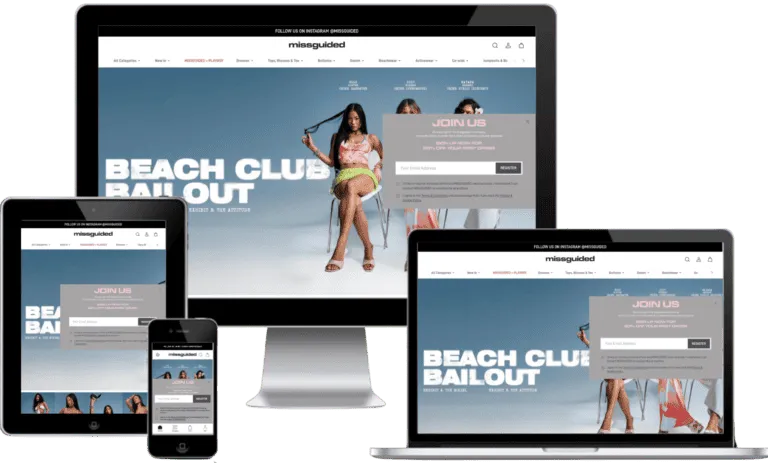
MissGuided
Fashion Ecommerce | Contested SERPs
A UK-born fashion brand competing in fast-moving retail SERPs, where phrasing and freshness decide the click. Numbers as published, covering the engagement whole.
- 32,000 → 56,000 Organic Sessions
- 4.1% Conv. Rate
- $2M-$3M Monthly Revenue
-

Grown Brilliance
Fine Jewelry | Non-Brand Revenue
National ecommerce in a category where page one is expensive and the real question is non-brand revenue, the same yardstick every new market entry answers to. Engagement-whole numbers.
- 160K+ Organic Visits
- $2.1M → $4.2M Non-brand Revenue
- $200M Annual Revenue
-

Daniels Health
Healthcare Compliance | Authority
Referring-domain growth for a compliance brand: the authority base a subfolder hands to every new market it opens. Numbers cover the engagement.
- +520 Referring Domains
- DR 58 Domain Rating
- +73% Search Visibility
-

Brilliant Earth
Fine Jewelry | Ecommerce
A retailer on contested commercial terms, where conversion rate keeps the traffic honest, the discipline that decides whether a market entry pays. Numbers as published, engagement whole.
- +428% Organic Traffic
- +186% Revenue
- 3.8% Conv. Rate
-

Original Penguin
Retail | Rollout Discipline
Store pages and profiles built out location by location, the same one-unit-proven-then-copied rollout an international program runs at country scale. Engagement numbers, reported as tracked.
- 10,400 → 24,600 Store Page Sessions
- 1,280 → 2,840 GBP Actions
- 195k → 410k Impressions
-
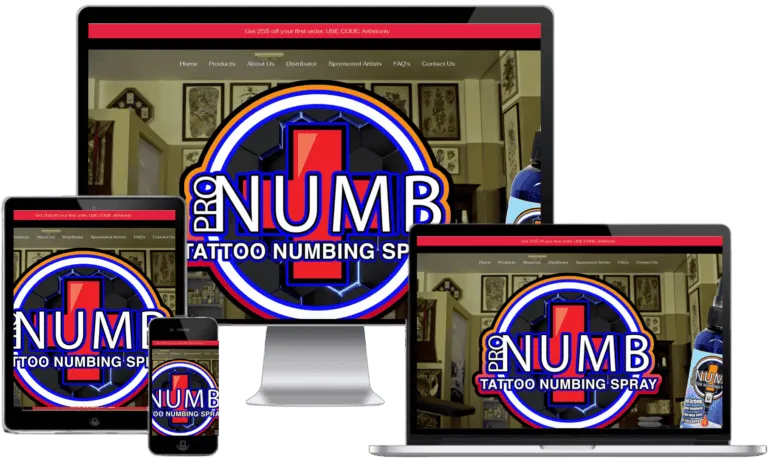
Pro Numb
DTC Ecommerce | Answer Visibility
A product brand whose answer-formatted content now surfaces across AI results for its most competitive term, the retrieval mechanics the AI section above describes per language. Whole-engagement numbers, confirmed.
- +340% Organic Traffic
- 47 Featured Snippets
- $2M+ Monthly Revenue
-
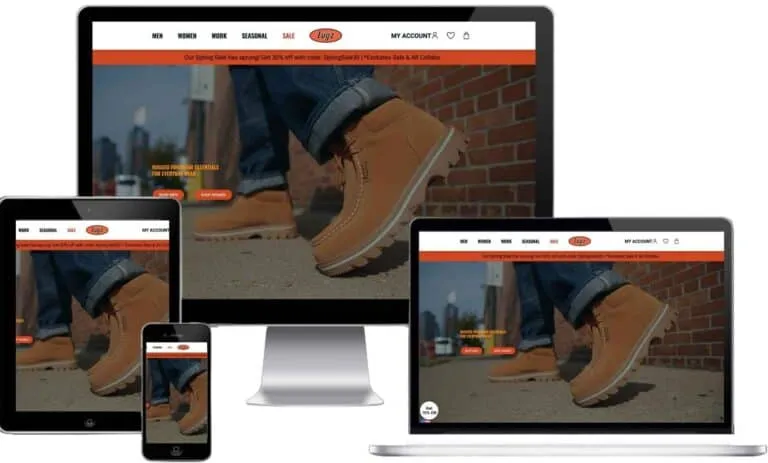
LUGZ Footwear
Footwear | Beyond the SERP
A footwear brand whose visibility work reached past the results page into marketplace surfaces, the multi-surface habit international product brands need. Numbers as published, engagement whole.
- +92% Organic Visibility
- +150K New Amazon Visitors
The full write-ups, sliced by service and industry, live in our case studies library.
Meet Your International SEO Team
The strategists who argue the architecture decision and the specialists who make each market answer for itself.
-

Jobin John
Chief Executive Officer
-

Justin Brown
Head of Search Engine Optimization
-

Bryan Thomson
Head of Web Design & Development
-

Ina Komins
Head of Social Media Marketing
-

Kierra Pita
Head of Advertising & Content Marketing
-

Patricia Turner
Chief Creative Officer
-

William Carter
Chief Digital Strategy Officer
-

Andrew Miller
Senior SEO Strategist
-

Amy Robinson
Content Marketing Manager
-

Betty Harrison
PPC Campaign Specialist
-

Anthony Carter
Lead Digital Account Executive
-

Amanda Cooper
Social Media Director
-

Carol Parker
Senior Client Success Manager
-

Barbara Bennett
Email Marketing Lead
-

Charles Turner
Technical SEO Analyst
-

Brian Sullivan
Creative Director
-

Christine Walker
Director of Project Management
-

Christopher Brooks
Digital Marketing Strategist
-

Daniel Wright
Senior Analytics Specialist
-

David Henderson
Lead Content Strategist
-

Donna Mitchell
Client Communications Manager
-

Elizabeth Foster
Director of Paid Advertising
-

Emily Baredi
Brand Experience Specialist
-

Emma Scott
Social Media Content Creator
-

George Crawford
Technical Solutions Architect
-

Jacob Evans
Digital Content Coordinator
-

James Anderson
Marketing Automation Specialist
-

Jason Palmer
Junior Copywriter
-

Jeffrey Reynolds
Paid Media Analyst
-

Jennifer Lewis
Community Engagement Specialist
-

Jonathan Murphy
SEO Reporting Specialist
-

Joseph Morgan
Influencer Marketing Coordinator
-

Kenneth Stevens
Digital PR Manager
-

Kimberly Harper
Digital Marketing Intern
-

Kevin Morris
SEO Outreach Specialist
-

Lee Dawson
Junior Web Developer
-

Linda Peterson
Email Campaign Coordinator
-

Lisa Thompson
Social Media Ads Specialist
-

Margaret Bradley
Marketing Operations Lead
-

Mark Richards
Data & Insights Analyst
-

Mary Kennedy
Senior Copyeditor
-

Matthew Clark
Growth Marketing Manager
-

Michelle Sanders
Junior Marketing Designer
-

Michael Foster
Senior Conversion Rate Specialist
-

Nancy Wheeler
Digital Analytics Manager
-

Nicholas Pierce
Affiliate Marketing Specialist
-

Nicole Adams
Outreach Program Coordinator
-

Paul Franklin
Paid Social Campaign Manager
-

Richard Barnes
Reputation Management Specialist
-

Robert Murphy
Lead Solutions Architect
-

Ronald Davis
Marketing Technology Analyst
-

Ryan Bell
Paid Media Buyer
-

Sandra Gregory
Digital Account Coordinator
-

Scott Hopkins
CRM Implementation Specialist
-

Shirley Ellis
Customer Insights Manager
-

Stephanie Cross
Brand Content Designer
-

Steven Greene
Web Analytics Specialist
-

Susan Price
Affiliate Campaign Manager
-

Thomas Fisher
Lead Technical Architect
-

Timothy Nash
Mobile Marketing Strategist
International SEO FAQs
What is the difference between multilingual and multiregional SEO?
Multiregional SEO targets different countries that may share a language, like the US, UK, and Australia. Multilingual SEO targets different languages regardless of country, like Spanish speakers in three markets. Most global businesses need both at once, which is why the architecture decision comes first: it is the frame both kinds of targeting hang on.
Do hreflang tags improve rankings?
Not directly, and anyone selling them as a ranking lever is overselling. Hreflang is routing: it tells Google which version of a page belongs to which market, so the right one appears in the right country. The ranking benefits are downstream, no duplicate confusion, no versions competing, better engagement because searchers land on their own market’s page.
How do we choose which market to enter first?
Start from evidence you already own: Search Console’s country report shows where impressions and sales inquiries already originate. Then weigh native search demand, competitive density, and the operational question agencies skip, whether you can actually ship, serve, and support that market. The first market should be the one where demand and your operations already overlap.
Can you work with our in-country teams and translators?
Yes, and it usually produces the best work: your people know the market, ours know what search demands of it. We supply keyword briefs, intent maps, and page templates per market; your team or translators work inside them; we review against native research before anything ships. The division of labor is set in the roadmap, so nothing falls between chairs.
Will adding country versions hurt our existing rankings?
Done properly, no. In a subfolder structure your existing pages keep their URLs and authority, and new market sections are additions, not replacements. The real risk is self-competition from missing or broken hreflang, two versions chasing one query, which is exactly what the validation habit exists to catch. Every rollout here ships with before-and-after crawls.
Do you handle Baidu, Yandex, and Naver?
Honestly and partially. We run strategy and architecture for all three, scope China-side Baidu requirements with in-country partners, plan Korean entries around Naver’s portal reality, and assess Yandex work case by case given the operational environment. What we will not do is claim fluent in-house delivery for every engine; the engines section above is the full map.
Do we need new content for every market?
No, and treating every page equally is how localization budgets die. The ladder decides: legal and support text gets translated, money pages get localized to the market’s currency, phrasing, and buying context, and only the most contested pages get transcreated outright. A typical entry rebuilds a fraction of the site deeply rather than all of it thinly.
What should I look for in an international SEO agency?
Ask for the architecture recommendation in writing, with reasoning, before any pages are scoped. Ask who does keyword research in each target language; translated English lists are the classic failure. Ask how many markets they would enter first, and treat any answer other than one as a warning. Then ask for pricing scoped per market before the call ends, and for month-to-month terms.
Do you guarantee rankings in new markets?
No, and nobody honest does: rankings are decided by Google, local competitors, and time. What you get instead is a written architecture decision, native research you can inspect, a sequenced entry plan with an agreed expansion gate, validation logs for every technical change, and monthly reporting where each market answers for itself. Evidence over promises, market by market.
How do I choose an international SEO agency?
Ask them to explain hreflang failure modes in plain English; anyone selling international SEO should name return-tag errors without notes. Ask how they decide between subdirectories, subdomains, and country domains for your case. Ask who handles translation and whether it is localization or word swapping. Ask which markets they would advise against entering. And ask how success gets reported per market, not as one blended number.
Ready to Rank in Your Next Market?
International work runs on the same discipline as our full search engine optimization services, applied one border at a time. Tell us about your site and we will send back a plan with real findings in it: which countries already send you demand, what the architecture decision should be, and what your first market entry would honestly cost.
Questions? Call (888) 644-7795 or email care@egochi.com
Egochi Stats
- 250+ Google Reviews
- 5.0 Clutch Rating
- 12+ Years Experience
- $200M+ Revenue Generated
- 4 US Offices
- 190+ Clutch Reviews
Blog Posts
- Aug 12, 2026 GEO vs. SEO: A Comparative Guide for Digital Marketers
- Aug 12, 2026 What is llms.txt? | How to Create llms.txt file for your website
- Aug 12, 2026 What is Semantic SEO? | How to Build Topical Authority That Ranks
- Aug 12, 2026 What is Schema Markup? | How to Add Structured Data to Your Website
- Aug 12, 2026 How to Optimize for Voice Search: A Realistic 2026 Guide