Google Analytics Services
Google Analytics services that make the numbers worth trusting: GA4 configured correctly, every lead and sale tracked once, and dashboards your team actually reads.
Egochi sets up, audits, and repairs Google Analytics 4 for businesses that spend real money on marketing and need the reporting to tell the truth. The work covers GA4 and Google Tag Manager builds, conversion and call tracking, ecommerce measurement, Looker Studio dashboards, and cleanup of migrations rushed through the 2023 deadline and never trusted since. Egochi holds Google Premier Partner certification and has run measurement for local firms through national brands since 2014; more to the point, every number our own search and ad programs report runs through setups like these, so the tracking has to hold. The next step costs nothing: a free audit that names what your property counts twice, what it never counts, and what that does to your decisions.
A broken property rarely looks broken: the dashboards fill and the lines go up. The tell is disagreement, GA4 against your ads account against your order system, and the fix starts with an audit, not another dashboard.
As Featured In






How much do Google Analytics services cost?
Two honest shapes. Inside a monthly program from $1,500 to $15,000, measurement rides along with the marketing it measures: tracking, dashboards, and reporting are part of the engagement. Standalone GA4 work, a setup, an audit, or a cleanup, is scoped as a one-time project and quoted after we see the property, priced by event complexity, platform count, and how broken the current data is.
Egochi has been doing this since 2014, from offices in New York, Miami, Milwaukee, and Madison, with 250+ Google reviews and 190+ Clutch reviews at a 5.0 rating behind the work. Analytics engagements here do not lean on a certificate wall: every setup ships with a validation log showing each event tested before launch, a measurement plan written in your team’s language, and documentation that survives staff turnover.
What is Google Analytics 4 (GA4)?
Google Analytics 4 is Google’s current analytics platform, the one that replaced Universal Analytics in July 2023. It measures every visit as a stream of events rather than sessions, follows users across websites and apps, and exports raw data to BigQuery. It is free, genuinely capable, and almost never accurate on its default settings, which is where professional setup earns its keep.
Google Analytics Services We Offer
Six pieces of measurement work. The audit decides which ones your property needs first, and which it can honestly skip.
-
GA4 Setup and Configuration
Property and data streams created correctly the first time: enhanced measurement reviewed toggle by toggle, data retention raised from the 2-month default, key events defined, and Search Console and Google Ads connected before anyone asks why they were not.
-
GA4 Property Audit and Cleanup
Most properties still carry scars from the 2023 migration deadline: events mapped to the wrong names, duplicate tags counting one lead twice, conversions that were never recreated. The audit finds every gap, the cleanup repairs it, and the report shows before and after.
-
Conversion Tracking
Forms, phone calls, purchases, and sign-ups marked as key events with real values attached, then imported where they earn money: clean conversion data is what our PPC management services bid on.
-
Google Tag Manager
Every tag in one versioned GTM container, so tracking changes ship without touching site code and roll back cleanly when something misfires. Naming conventions and a change log included, because an undocumented container is the next audit finding.
-
Ecommerce Tracking
Item-scoped events from view_item through purchase on Shopify, WooCommerce, BigCommerce, Magento, and custom stores, reconciled against the order system, so GA4 revenue is a number your accountant would recognize.
-
Looker Studio Dashboards
GA4, Search Console, and ad platform data in one view, built around the questions your team actually asks. The same numbers feed testing: our conversion rate optimization services read from these dashboards before anything gets tested.
GA4 Is Not Accurate by Default
None of these is a bug. GA4 defaults are tuned for privacy and Google’s scale, not for your reporting, and every one of them quietly bends the numbers until someone corrects it. These are the five we fix most.
-
Consent and blocked tags
Consent banners, ad blockers, and browser tracking protection stop a slice of visits from ever being measured. Consent mode, wired correctly, lets GA4 model the gap honestly; left unwired, the property undercounts and nobody knows by how much.
-
The filter that ships in testing
GA4’s internal traffic filter defaults to a testing state, which means it is defined but not applied. Until someone activates it, your own team’s visits count as customers, and small sites can owe a startling share of their traffic to themselves.
-
Thresholding hides rows
With Google signals enabled, reports withhold rows that could identify individuals. Low-traffic segments simply vanish from view, and the report never announces what it removed. Knowing when thresholding is acting on your data is part of reading GA4 honestly.
-
Sampling in explorations
Standard reports are unsampled, but explorations, the tool for real analysis, sample once queries pass their quota. Two people can pull the same date range and present different numbers, both generated in good faith.
-
Referral hijack
Payment gateways and cross-domain hops steal attribution: the customer arrives from search, detours through checkout, and the sale credits the gateway domain. Referral exclusions and cross-domain tracking put the credit back where the visit began.
A professional setup corrects each of these and documents the correction, so the next person who inherits the property knows what was fixed and why the numbers can be believed.
What Is Included in Our Google Analytics Services
Eight deliverables inside every analytics engagement. The audit decides which ones your property needs first.
-
Analytics audit
The current setup read event by event: gaps, duplicates, misconfigurations, and which reports are quietly wrong, documented before anything gets changed.
-
Property configuration
Data streams, enhanced measurement reviewed toggle by toggle, retention raised from the 2-month default, and user permissions set to sane tiers.
-
Event naming plan
A written taxonomy tied to business questions, so generate_lead means one thing everywhere and the property stays readable after the person who built it moves on.
-
Cross-domain tracking
Multi-site journeys stitched into one, with referral exclusions set so your own checkout or booking domain does not steal the credit for the sale.
-
Conversion setup
Every form, call, purchase, and sign-up marked as a key event, with values attached where they are real and omitted where they would be guesses.
-
Filtering and hygiene
Internal traffic defined and the filter activated rather than left in testing, plus bot and spam referral cleanup, so the audience in reports is actually your audience.
-
Custom reports
Explorations and Looker Studio views built for your KPIs, replacing the default report collection that answers Google’s questions instead of yours.
-
Training and documentation
A written setup document and a working session with your team, so the property outlives the engagement and the staff who commissioned it.
The Measurement Plan Comes Before the Tags
The most common analytics failure is not technical. It is a property full of auto-collected events nobody named, answering questions nobody asked. We write the measurement plan before any tag ships, and it rests on three rules.
-
Events are named for questions
Every event exists because someone will ask a question in a meeting: which pages produce consultations, which campaigns produce phone calls, where do checkouts die. If no business question needs the event, it does not ship, no matter how easy it is to collect.
-
One definition of a lead
A form fill, a call over 60 seconds, a booked consult: whatever a lead means in your business, it means exactly that in GA4, in the ads account, and in the dashboard. Most reporting arguments are two teams using one word for two definitions.
-
The report decides the design
Each event is designed for the report that will read it, with the parameters that report needs, named to a written convention. The deliverable is a plain sheet mapping question to event to report, readable by the next hire without a handover call.
Server-Side Tagging, Priced Honestly
Server-side tagging routes your tags through a tagging server you control instead of firing everything in the visitor’s browser. It is genuinely useful and heavily oversold, so here is the decision the sales pages skip.
-
What it actually is
A second GTM container running on a server between the browser and your vendors. The browser sends one stream to your domain; the server forwards events to GA4, ad platforms, and anything else, under rules you write.
-
When it pays
When ad blockers and browser privacy features are eating your client-side signal, when you need to strip or control what leaves for third parties, and when a page slowed by vendor scripts needs the weight moved off the browser. Recovered conversions feed smarter bidding, which is where the money is.
-
What it costs
A hosting bill every month, a second container that needs maintaining, and debugging that gets harder because the browser no longer shows the whole story. It is infrastructure, and infrastructure without an owner decays.
-
The honest rule
Worth it for ecommerce and lead-gen businesses with meaningful ad spend, where a recovered fraction of conversions covers the cost many times over. Overkill for a local site with modest traffic: that budget belongs in fixing the client-side basics first, and we will say so.
Can GA4 show traffic from ChatGPT and AI search?
Yes, once someone builds for it. Visitors who click through from ChatGPT, Perplexity, Gemini, or Copilot arrive as referrals from domains like chatgpt.com and perplexity.ai, and GA4 files them under generic referral traffic until the segment exists. We wire a custom channel group for AI sources, so you can see whether AI answers send visitors and whether those visitors convert.
What AI Search Traffic Looks Like in GA4
A growing slice of first visits now starts in an AI answer instead of a results page. GA4 can see part of that story, and pretending it sees all of it is how agencies oversell AI dashboards.
-
Where it shows up
Clicks from AI assistants arrive as referrals from their domains: chatgpt.com, perplexity.ai, gemini.google.com, copilot.microsoft.com. Untouched, GA4 files them under generic referral traffic, mixed in with every other site that links you.
-
What it cannot see
When an AI answer cites your content and the reader never clicks, no analytics tool records anything. AI influence is undercounted by design, so we treat referral numbers as the floor of AI visibility, never the whole of it.
-
How we report it
A custom channel group that separates AI sources from ordinary referrals, plus a landing-page view showing which pages AI systems send visitors to and how those visitors convert against organic search. Sensible questions get answered; hype does not get a tab.
Measuring the clicks is this page’s job. Earning the citations that produce them is its own discipline, covered end to end by our AI SEO services.
The Analytics Stack We Work In
The stack is deliberately boring: Google’s own measurement tools wired together properly, plus the two connections most setups skip.
-
Google Analytics 4
Core measurement: events, key events, audiences, and the reports every other tool reads from.
-
Google Tag Manager
Every tag in one versioned container, so changes ship without code edits and roll back when they misfire.
-
Looker Studio
Dashboards that put GA4, Search Console, and ad data in one view your team will actually open.
-
Search Console
The search-side truth: queries, impressions, and positions GA4 cannot see, joined into reporting.
-
BigQuery
Raw event export for questions reports cannot answer: multi-year cohorts, custom joins, CRM matching. Enabled when scale earns it.
-
Google Ads
Key events imported for bidding, so smart bidding learns from real leads instead of raw clicks.
-
Ecommerce platforms
Shopify, WooCommerce, BigCommerce, and Magento wired so GA4 revenue reconciles with the order system.
-
Call tracking
CallRail or CallTrackingMetrics feeding GA4, so phone leads count beside form fills instead of vanishing.
How long does GA4 setup take?
A single-site build with forms and calls typically runs one to two weeks including validation. Ecommerce with checkout funnels and a Merchant Center feed runs two to four. Audits and cleanup of an existing property land in the same window. The honest constraint is history: GA4 reports from the day tracking is fixed, so every week of broken data is a week you never get back.
Our Google Analytics Setup Process
Six steps, run in order, with the measurement plan signed off before any tag ships and a validation log before anything is called done.
-
Discovery and Audit
The current property read end to end against your business goals: what fires, what fires twice, what never fires, and which reports have been steering decisions wrong. Documented as a findings list priced by impact.
-
Measurement Plan
Events, key events, and parameters defined from business questions, one written definition of a lead, and a naming convention the next hire can read. Signed off before a single tag ships.
-
Tagging and Setup
GA4 and GTM built to the plan: data streams, event tags, key events, consent mode, cross-domain tracking, referral exclusions, and connections to Search Console, Google Ads, and call tracking.
-
Testing and Validation
Every event fired and checked in DebugView and realtime before launch, forms submitted, calls placed, test orders run, and the results kept as a validation log. Nothing ships untested.
-
Dashboard Build
Looker Studio views assembled around the measurement plan’s questions, with GA4, Search Console, and ad platform data in one place and the vanity rows left out.
-
Training and Handoff
A working session with your team, the written setup document, and account access confirmed in your name, not ours. Ongoing monitoring is available; dependency is not the business model.
Measurement is the eXtract Intelligence phase of the EGOCHI VERTEX™ Growth System in practice: the reporting and attribution loop that every Egochi engagement closes each month.
Is Professional Analytics Right for You?
Who this is for
- You spend real money on marketing and cannot say with confidence which channel produced last month’s leads. Measurement pays exactly where spend already exists.
- You migrated to GA4 under the 2023 deadline and never trusted it since: numbers that disagree with the ads account, conversions that vanished in the move, events nobody can explain.
- You sell online and GA4 revenue does not match the order system, which means every report built on it inherits the gap.
- Your leads arrive by phone as much as by form, and only the forms are being counted, so half the story is missing from every decision.
When this may not be the right fit
- Sites with no traffic yet. Analytics measures visitors, and with none to measure, a basic property install is all you need; the budget belongs in the work that creates demand first, and we will point you there instead.
- Teams that want dashboards without acting on them. A report nobody owns becomes furniture within a quarter. If there is no one on your side who will read the numbers and change something, we would rather say so before you pay for the build.
Fair Questions Before You Buy Analytics Help
Is GA4 accurate out of the box?
No, and anyone selling analytics who says otherwise is selling dashboards, not measurement. Fresh properties undercount consented traffic, count your own team as customers, hide low-volume rows behind thresholding, and hand sale credit to payment gateways. The defaults section above names the five we correct most. Accuracy in GA4 is configured, not installed, and if a default-settings dashboard drove a decision this quarter, the audit comes first.
Do I need BigQuery?
Only when scale or the question demands it: retention cohorts across years, machine-learning work on raw events, joining analytics to CRM revenue. The export is free to switch on and storage costs little; the analysis is the real expense. Most businesses need clean events and one dashboard people read long before they need a data warehouse, and we will tell you which side of that line you are on.
Can analytics prove marketing ROI by itself?
No. Attribution models estimate, and data-driven attribution is still a model, not a receipt. Web analytics sees the browser; it does not see the signed contract or the customer who researched on a phone and called from a desk. The honest stack is GA4 for behavior, call tracking for phones, and the CRM for what closed and what it was worth. We wire all three, because any one alone flatters or slanders a channel.
Why do GA4 and Google Ads report different conversion numbers?
By design. The two systems use different attribution windows, different models, and different count dates: Ads credits the click date, GA4 the conversion date, and consent modeling fills gaps differently in each. Both are right by their own rules. The fix is not forcing them to match; it is knowing which number serves which decision: Ads figures for bidding, GA4 for reading the whole funnel.
The Engagements Behind This Page
Analytics is rarely sold alone here: it is the measurement layer inside whole engagements, so every number below is register-fed and covers its engagement whole, read the way the client read it, in the reports.
-

Culbertson Law
Family Law Firm | Calls and Forms
A law firm whose leads arrive by phone first. CallRail wired into GA4 meant every call and form carried its source, and the engagement, search work included, is measured whole below.
- +91% Qualified Calls
- 52 → 148 Calls
- 35 → 98 Form Leads
-

Corcoran Group
Real Estate | Multi-Market
A real estate name where neighborhood pages and speed work carried the program, all of it read through GA4. Numbers cover the engagement whole.
- +120% Organic Traffic
- +288% Lead Growth
- 13.8 → 4.2 Avg. Position
-

Pro Numb
Topical Anesthetics | DTC Ecommerce
A DTC brand where item-scoped tracking from product view through purchase made revenue attributable by page and query. Figures confirmed and covering the engagement whole.
- +340% Organic Traffic
- $2M+ Monthly Revenue
- 47 Featured Snippets
-

Grown Brilliance
Fine Jewelry | Revenue Attribution
A jewelry retailer where the question was never traffic, it was non-brand revenue, which is an attribution question before it is a marketing one. Numbers as published, engagement whole.
- 160K+ Organic Visits
- $2.1M → $4.2M Non-brand Revenue
-
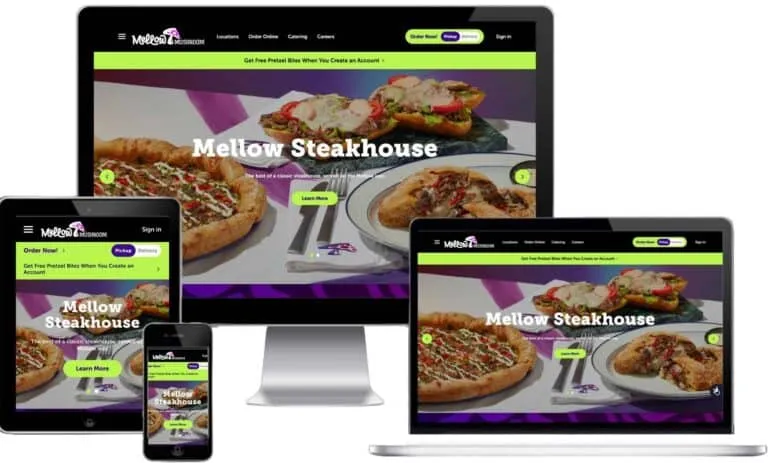
Mellow Mushroom
Restaurant Group | Local Search
A multi-location restaurant brand whose location pages, profiles, and ordering flows all report into one property, so the map wins below are measured, not remembered.
- +312% Local Traffic
- +245% Online Orders
- Top 3 Local Pack
-

TriCity National Bank
Community Bank | Cross-Channel
A community bank running search, paid, and email against the same funnel, the case where one measurement layer either unifies the story or three tools tell three. Numbers cover the engagement whole.
- +90% Organic Traffic
- +77% PPC Conversion Rate
- +80% Email Engagement
-

Brilliant Earth
Fine Jewelry | Ecommerce
A retailer competing on contested commercial terms, where conversion rate is the metric that keeps the traffic honest. Numbers as published, engagement whole.
- +428% Organic Traffic
- +186% Revenue
- 3.8% Conv. Rate
-

Menards
Home Improvement | Retail Scale
A retail catalog where the revenue figure is the point: organic revenue attributed in the reporting, over fourteen months, at a scale where estimates stop being acceptable.
- +$8.7M Organic Revenue
- +250% Organic Traffic
- +435% Transactions
The full write-ups, sliced by service and industry, live in our case studies library.
Meet Your Analytics Team
The analysts and tag specialists who build your measurement, and the strategists whose own reporting depends on it being right.
-

Jobin John
Chief Executive Officer
-

Justin Brown
Head of Search Engine Optimization
-

Bryan Thomson
Head of Web Design & Development
-

Ina Komins
Head of Social Media Marketing
-

Kierra Pita
Head of Advertising & Content Marketing
-

Patricia Turner
Chief Creative Officer
-

William Carter
Chief Digital Strategy Officer
-

Andrew Miller
Senior SEO Strategist
-

Amy Robinson
Content Marketing Manager
-

Betty Harrison
PPC Campaign Specialist
-

Anthony Carter
Lead Digital Account Executive
-

Amanda Cooper
Social Media Director
-

Carol Parker
Senior Client Success Manager
-

Barbara Bennett
Email Marketing Lead
-

Charles Turner
Technical SEO Analyst
-

Brian Sullivan
Creative Director
-

Christine Walker
Director of Project Management
-

Christopher Brooks
Digital Marketing Strategist
-

Daniel Wright
Senior Analytics Specialist
-

David Henderson
Lead Content Strategist
-

Donna Mitchell
Client Communications Manager
-

Elizabeth Foster
Director of Paid Advertising
-

Emily Baredi
Brand Experience Specialist
-

Emma Scott
Social Media Content Creator
-

George Crawford
Technical Solutions Architect
-

Jacob Evans
Digital Content Coordinator
-

James Anderson
Marketing Automation Specialist
-

Jason Palmer
Junior Copywriter
-

Jeffrey Reynolds
Paid Media Analyst
-

Jennifer Lewis
Community Engagement Specialist
-

Jonathan Murphy
SEO Reporting Specialist
-

Joseph Morgan
Influencer Marketing Coordinator
-

Kenneth Stevens
Digital PR Manager
-

Kimberly Harper
Digital Marketing Intern
-

Kevin Morris
SEO Outreach Specialist
-

Lee Dawson
Junior Web Developer
-

Linda Peterson
Email Campaign Coordinator
-

Lisa Thompson
Social Media Ads Specialist
-

Margaret Bradley
Marketing Operations Lead
-

Mark Richards
Data & Insights Analyst
-

Mary Kennedy
Senior Copyeditor
-

Matthew Clark
Growth Marketing Manager
-

Michelle Sanders
Junior Marketing Designer
-

Michael Foster
Senior Conversion Rate Specialist
-

Nancy Wheeler
Digital Analytics Manager
-

Nicholas Pierce
Affiliate Marketing Specialist
-

Nicole Adams
Outreach Program Coordinator
-

Paul Franklin
Paid Social Campaign Manager
-

Richard Barnes
Reputation Management Specialist
-

Robert Murphy
Lead Solutions Architect
-

Ronald Davis
Marketing Technology Analyst
-

Ryan Bell
Paid Media Buyer
-

Sandra Gregory
Digital Account Coordinator
-

Scott Hopkins
CRM Implementation Specialist
-

Shirley Ellis
Customer Insights Manager
-

Stephanie Cross
Brand Content Designer
-

Steven Greene
Web Analytics Specialist
-

Susan Price
Affiliate Campaign Manager
-

Thomas Fisher
Lead Technical Architect
-

Timothy Nash
Mobile Marketing Strategist
Google Analytics FAQs
What does a Google Analytics agency actually do?
Sets up, audits, and maintains the measurement layer under your marketing: GA4 properties, Tag Manager containers, conversion and call tracking, ecommerce events, dashboards, and the documentation that keeps it all readable. The deliverable is numbers your team can act on and defend, not a login to a tool nobody configured.
Will you fix a GA4 setup someone else built?
Yes, and it is a large share of the work. Most properties were migrated in a rush before the 2023 deadline: events mapped to wrong names, tags firing twice, conversions never recreated. The audit documents what is broken, the cleanup repairs it without starting over, and your history from the fix forward is trustworthy.
Is my old Universal Analytics data gone?
If it was never exported, yes. Universal Analytics stopped processing data in July 2023 and Google deleted the properties the following year. There is no recovering it now, and anyone promising otherwise is mistaken. What we do instead: benchmark cleanly from today, and lean on Search Console history, which reaches back independently of GA4.
Can you track phone calls?
Yes. CallRail or CallTrackingMetrics wired into GA4, with number pools that preserve the source of each call, so a phone lead carries its campaign and keyword the same way a form fill does. For businesses that live on the phone, this single connection changes what every report says.
Do you set up Google Tag Manager too?
Yes, on nearly every engagement. GTM puts every tag in one versioned container, so tracking changes ship without site-code edits and roll back cleanly when something misfires. We add a naming convention and change log, because an undocumented container is where the next broken number comes from.
What platforms do you support?
All of them, honestly: WordPress, Shopify, WooCommerce, BigCommerce, Magento, Squarespace, Wix, and custom builds. GA4 and GTM sit above the platform, so the difference is in the wiring, ecommerce events on stores, booking events on service sites, and we have shipped both.
Do you build custom dashboards?
Yes, in Looker Studio, combining GA4, Search Console, and ad platform data in one view. The build starts from the measurement plan’s questions rather than a template, which is why ours tend to have fewer charts than you expect and get opened more often than dashboards usually do.
Who owns the accounts when we work together?
You do, without exception. The GA4 property, the GTM container, and every connected account live under your ownership; we work through user access that you can revoke any day. Agencies that hold your analytics hostage are holding your history hostage, and we think that practice should embarrass the industry.
How do I pick a Google Analytics agency?
Ask three things before signing. Whether the property, the Tag Manager container, and every connected account stay under your ownership, because losing them means losing your history. Whether every event ships with a validation log and written documentation the next hire can read. And how they handle consent and default settings; anyone claiming total data accuracy is promising what consent banners and ad blockers make impossible.
How do I choose a Google Analytics consultant?
Ask whether the work happens in your property, under your ownership, with admin access that stays yours. Ask how they verify tracking against reality, since a dashboard of wrong numbers is worse than none. Ask what gets documented at handoff: events, conversions, naming conventions. Ask how they handle consent and privacy settings. And ask for a fixed scope in writing, because analytics projects expand quietly when nobody defines done.
Ready to Trust Your Numbers Again?
Analytics is the reporting layer under our full search engine optimization services and every other program we run, so the people wiring your tracking answer for the results it measures. Tell us about your site and we will send back a plan with real findings in it: what your property counts twice, what it never counts, and what we would fix first.
Questions? Call (888) 644-7795 or email care@egochi.com
Egochi Stats
- 250+ Google Reviews
- 5.0 Clutch Rating
- 12+ Years Experience
- $200M+ Revenue Generated
- 4 US Offices
- 190+ Clutch Reviews
Blog Posts
- Aug 12, 2026 GEO vs. SEO: A Comparative Guide for Digital Marketers
- Aug 12, 2026 What is llms.txt? | How to Create llms.txt file for your website
- Aug 12, 2026 What is Semantic SEO? | How to Build Topical Authority That Ranks
- Aug 12, 2026 What is Schema Markup? | How to Add Structured Data to Your Website
- Aug 12, 2026 How to Optimize for Voice Search: A Realistic 2026 Guide