Link Building Services
Earned editorial placements, a safe anchor profile, and a monthly report that names every URL: links you can inspect, not a number on an invoice.
Link building services from Egochi earn backlinks from publications, news outlets, and industry associations with real readers and editorial standards. Every placement lands in a monthly report that names the URL and the anchor, so you can verify the work in your own tools. Built for sites whose content deserves more authority than it has.
If an agency will not show you the URLs, you are not buying links. You are buying a story.
As Featured In





What are link building services?
Link building services acquire links from other websites to yours, so search engines see independent sources vouching for your pages. The work covers prospect research, content worth citing, outreach to editors and journalists, and verification of every placement. Done well, it raises the authority behind every page you publish; done cheaply, it is the fastest way to earn a penalty.
Egochi has been earning links for clients since 2014, from offices in New York, Miami, Milwaukee, and Madison, with 250+ Google reviews and 190+ Clutch reviews at a 5.0 rating behind the work. The discipline is the same for a local firm and a national brand: placements a publisher chose to give, anchors that keep the profile natural, and a report you can audit line by line. The next step costs nothing: a free backlink analysis that shows your current profile and the gap between you and the sites outranking you.
The Backlink Types That Move Rankings
Not all links count the same, and the ones easiest to get are the ones Google has learned to ignore. The six types below are the ones worth the work, each with the quality signal that actually matters: real traffic, topical fit, and an editor who said yes.
-
Editorial and earned media links
Links a journalist or writer gave because your site was the best source for their point. The quality signal is the choice itself: nobody was paid, nobody traded, the editor decided. These carry the most trust precisely because they are the hardest to manufacture.
-
Digital PR and data stories
Original research, surveys, and data angles pitched to reporters who need a citable source. The signal that matters is newsroom standards: a publication that fact-checks before it links is exactly the kind of site whose link Google weighs. Covered in depth further down this page.
-
Resource and industry lists
Curated pages that collect the best tools, references, and reading in a niche, plus the classic follow-on plays, broken link building and niche edits: replacing dead links with your working page, or earning a spot an editor left open. The signal to check first is whether the list itself gets organic traffic.
-
Local and association links
Chambers of commerce, professional associations, community sponsorships, and local news. Individually modest, collectively hard to fake, because each one implies a relationship that exists offline too. For businesses ranking in a city, these do double duty alongside the map pack.
-
Guest contributions, done honestly
Guest posts written for publications your buyers actually read, accepted through a real editorial review. The honest version has a byline, original substance, and a contextual link that earns its place. The dishonest version is a marketplace transaction, and Google has seen millions of those.
-
Unlinked mention reclamation
Places already talking about your brand, products, or people without linking. The easiest earned link there is, because the editorial decision to cite you was already made; someone just has to ask. Mention monitoring keeps this running in the background of every campaign.
Are paid links against Google’s rules?
Paid placements that pass ranking credit violate Google’s link spam policies, and the sponsored and nofollow attributes exist precisely so paid links can be honest. What we do: earn placements editorially, disclose anything sponsored with the correct attribute, and decline the gray middle where a payment is dressed up as an earned mention. That middle is where penalties live.
Tactics We Avoid, and What We Do Instead
Every tactic on the left still gets sold for the same two reasons: it is cheap to deliver and it demos well, a spreadsheet full of rows by week two. Real outreach is genuinely hard. Backlinko and Pitchbox analyzed 12 million outreach emails and found only 8.5% earned any reply, and the shortcut industry exists to sell around that difficulty.
PBNs and link farms
Why it still sells: Instant placement and unlimited volume, because the sites exist only to sell links.
What it costs: Google’s link spam updates are built to recognize exactly this inventory. Best case the links get silently ignored and the money bought nothing; worst case the pattern earns a manual action.
Earned editorial placements
Placements on sites with their own readers, their own rankings, and an editor who said yes. Slower, and worth it, because these links survive every update aimed at the fake ones.
Bulk guest-post marketplaces
Why it still sells: Menu pricing and a catalog to browse, which feels like shopping instead of gambling.
What it costs: A site listed in a catalog has told the whole market, Google included, that its links are for sale. Devaluation hits the seller sitewide and takes every buyer’s links down with it.
Vetted publications with editorial review
Contributions pitched to real editors, written with substance, accepted or rejected on merit. If a publication takes everything, that is the signal to walk away.
Sitewide footer and sidebar links
Why it still sells: One deal produces hundreds of linked pages, so the link count jumps overnight.
What it costs: A pattern Google flattened years ago: repeated boilerplate links carry almost no weight and, at scale, look like the scheme they usually are.
In-content citations
One link inside a relevant paragraph on a page with traffic beats a thousand footers. Context is the ranking signal; placement inside the argument is the point.
Exact-match anchor spam
Why it still sells: It used to work, and it demos as precision: every link "targets" your money keyword.
What it costs: The most mechanical penalty trigger in link spam detection, because natural citation never behaves that way. Profiles saturated with money anchors get filtered or flagged.
A natural anchor mix
Branded names, plain URLs, and topic phrases doing most of the work, exact match kept rare. The full anchor logic gets its own section below.
Paid links dressed up as earned
Why it still sells: Some publishers quietly offer it, and the placement looks editorial to a casual reader.
What it costs: A direct violation of Google’s spam policies for both sides. When the publisher gets caught, and disclosure-hunting is now automated, every undisclosed buyer is in the blast radius.
Disclosure and judgment
If money is involved, the link carries a sponsored attribute or we decline the placement. Judgment is the actual service: knowing which opportunities are not worth their risk.
Anchor Text Is the Balance That Avoids Penalties
Anchor text is the clickable text of a link, and it tells search engines what the linked page is about. That makes it powerful and dangerous in equal measure: real citations mostly use brand names, plain URLs, and everyday phrases, so a profile stuffed with money keywords announces itself as manufactured. Anchor saturation has been the classic link penalty trigger since Google started filtering link spam, and it still is.
- Branded
Your company name as the link text. The backbone of a natural profile, because it is how real editors cite a business.
- Naked URL
The address itself. Common in citations, directories, and press mentions; its presence is a naturalness signal in its own right.
- Generic
Phrases like "this analysis" or "their findings". Individually unimpressive, collectively part of how real linking behaves.
- Partial match
The keyword inside a longer natural phrase. Carries topical signal without the saturation pattern exact match creates.
- Exact match
The target keyword verbatim. The smallest slice on purpose: useful in moderation, the classic penalty trigger when it crowds out the rest.
We do not build to a stock ratio chart, because the right mix depends on the profile you already have. The audit measures your current distribution against the competitors who outrank you, finds what is missing or overdone, and every new placement is chosen to move the profile toward natural, never away from it.
Digital PR Earns Links Through Stories
The highest-authority links are earned from journalists, and the only way to earn them is to have something a journalist wants. Most content never gets there on its own: Ahrefs studied over one billion pages in 2020 and found 66.31% had zero referring domains. Digital PR closes that gap by manufacturing newsworthiness honestly: original data, a real expert, an angle an editor can defend to their readers.
-
Data studies
Original research and survey findings that give reporters a number to cite. The study becomes the citable source in your niche, and every story that uses it links back.
-
Expert commentary
Your executives positioned as sources when news breaks in your industry, through direct journalist relationships and reporter query services. Speed and genuine expertise decide who gets quoted.
-
Trend reports
Recurring reports on where your industry is moving. The compounding play: once reporters cite the first edition, the next one starts with an audience waiting for it.
-
Story angles
The local hire, the unusual customer, the contrarian take backed by your data. Newsrooms run stories, not press releases, and pitching is knowing the difference.
One thing worth saying plainly: PR links arrive in bursts around newsworthy moments, not as a steady monthly drip. A campaign that lands earns a cluster of high-authority citations in a week, then goes quiet while the next story is built. Anyone selling digital PR as a fixed number of links per month is describing something else.
There is a second payoff now. AI answer engines assemble responses from retrieval pools, and the sources that fill those pools are disproportionately the ones other sites cite and mention. The same earned coverage that moves rankings makes your brand more likely to be retrieved and quoted in AI answers. How that visibility gets built and measured is its own discipline: our AI SEO services cover it end to end.
Our Link Building Process, Built on VERTEX Search™
Link building runs the same 18-step framework as our full SEO programs, compressed into five moves that follow its stages: Discover, Structure, Create, Validate, Amplify.
-
Discover
Backlink Audit and Competitive Gap
A full export of your existing profile: referring domains, anchor distribution, spam patterns, links lost to migrations. Then the gap analysis: which sites cite the competitors outranking you and not you. Sites linking to several rivals are proven linkers in your topic, and they seed the target list.
-
Structure
Prospect Qualification and Target List
Every prospect earns its place or gets cut: real organic traffic of its own, editorial standards that reject weak pitches, genuine topical fit, and a clean profile on their side. Sites that link to anyone with a budget are removed no matter their authority score. The survivors get sequenced by expected value.
-
Create
Assets and Personalized Outreach
Where the target list demands something citable, we build it: original data, reference pages, tools worth pointing at. Then outreach, written one editor at a time: a specific reason this link serves their readers, sent to a named person. Mass templates get deleted, and deserve to.
-
Validate
Placement Verification and the Disclosed Report
Every placement is verified before it is reported: correct URL, agreed anchor, followed or sponsored status as expected, and still live a month later. The report names all of it, URL by URL, anchor by anchor. Removals get chased, and anything that fails verification never counts as delivered.
-
Amplify
Digital PR and Compounding Relationships
Story-led campaigns run alongside the steady outreach, timed to moments worth covering. Publisher relationships from every placement carry forward, so the second link from an editor costs half the effort of the first. Each quarter, the gap analysis reruns and the target list reprices itself by expected ROI.
VERTEX Search™ is the search discipline inside the EGOCHI VERTEX™ Growth System, the operating system behind every Egochi engagement.
How much do link building services cost?
Link building here runs inside retainers from $1,500 to $15,000 monthly, scoped by the competitive gap and how much digital PR the program carries. The honest market note: a real editorial placement costs real money in research, writing, and outreach time. Links priced like a commodity are a commodity, and Google has gotten very good at ignoring commodities.
Link Building Agency vs Freelancer vs In-House
Three honest ways to build links, and each one genuinely wins somewhere. Which fits depends on your niche, your gap, and how much risk your domain can afford to learn on.
| Factor | Link Building Agency (Egochi) | Freelancer | In-House |
|---|---|---|---|
| Monthly Cost | Runs inside retainers from $1,500 to $15,000, scoped by the gap analysis | Per-placement or hourly; ranges as widely as the skill does | A salary plus tools before the first link lands |
| Publisher Relationships | Working contacts across verticals, built engagement by engagement | Often strong in one niche, thin outside it | Built from zero on company time |
| Safety and Anchor Judgment | Risk calls and anchor decisions made against penalty patterns daily | Varies by person; exact-match-heavy anchors are the common failure | A learning curve paid for on your own domain |
| Digital PR Capability | Data stories and journalist outreach in the same program | Rarely offered alongside outreach | Possible with a separate PR hire |
| Subject Expertise | Learned per engagement; we borrow yours by interviewing your experts | Strong when they already work your niche | Unmatched: they live in the subject every day |
| Reporting Transparency | Every URL, anchor, and link status named monthly | Varies by person; ask for a sample report first | Direct oversight of everything |
| Continuity | Team backup and documented publisher relationships | A single point of failure | The contact list leaves with a resignation |
| Best For | Competitive gaps that need outreach, PR, and safety judgment at once | Focused outreach in a niche the freelancer already knows | Organizations with deep expertise and patience to build contacts |
The Verdict
Fair credit where it is due: an in-house builder wins on subject expertise, and nothing an agency does replaces someone who lives the topic daily. A good freelancer is genuinely fine for focused outreach in a niche they already know. The gap in the middle is publisher relationships and safety judgment: knowing which sites answer, which anchors are safe this year, and which opportunities to decline. That judgment is expensive to build on your own domain, because the tuition for anchor mistakes is a penalty. We get hired for the relationships, the PR capability, and the report that makes all of it checkable.
How many backlinks do I need?
Honestly, it is the wrong question. Link counts say nothing about whether the links came from pages with traffic, relevance, and editorial standards. The right question is the gap: which sites link to the competitors that outrank you and not to you. A competitive gap analysis turns that into a target list, and the target list sets the pace.
Is Link Building Right for Your Site?
Who this is for
- Your content already converts the visitors it gets, and your pages sit just behind better-linked competitors. Authority is the confirmed constraint, not quality.
- A competitive gap analysis shows sites citing your rivals that have never cited you, so the target list writes itself and every link building campaign is measurable against it.
- You have something citable: original data, genuine expertise, or a story trade and local press would run. Digital PR needs raw material, and you have it.
- You have been burned by a link vendor before and want every placement disclosed, so it cannot happen the same way twice.
When this may not be the right fit
- There is nothing worth citing yet. Outreach cannot sell what does not exist, so the honest sequence is content first, links second, and the analysis will say exactly that rather than take the retainer.
- You are shopping for a DR guarantee or a fixed links-per-month quota. We decline that work, because the only way to hit a quota every month is to stop caring where the links come from.
Link building stops where the pages themselves are the problem. Editors cite assets, not requests, and when a site has nothing worth citing yet, the next layer is not more outreach: our content writing services build the assets that make outreach work.
Fair Questions Before You Hire a Link Building Company
Why not just buy the cheap bulk link package?
Because of what it is actually selling: a spreadsheet. Cheap packages demo beautifully, dozens of rows by week two with an authority score next to each, and that is exactly why they keep selling. The sites are built to sell links, so placement is instant and volume is unlimited. The cost arrives later. Google’s link spam updates are trained on precisely this inventory, so at best the links get silently ignored, which means the money bought nothing, and at worst the pattern draws a manual action that costs more to clean up than earned links would have cost in the first place.
My competitor has spammy links and ranks anyway. Why should I care?
Sometimes true, and worth taking seriously instead of waving away. Two honest points. First, survivorship: you see the spammy site that ranks, not the many that got filtered or hit, and you cannot see how much of that competitor’s position comes from the spam versus everything else they do well. Second, risk asymmetry: they already absorbed the risk and may still pay for it, while copying them means buying the downside without their head start. In practice the gap analysis usually finds a cleaner route to the same positions, and that is the route we will propose.
Do links still matter in AI search?
Yes, measured honestly. AI answer engines build responses from retrieval pools, and the sources that fill those pools are disproportionately the ones other sites cite and mention, which is why earned links and unlinked mentions both feed AI visibility. What we will not claim is a formula: nobody can promise your brand a citation in a specific AI answer, and anyone who does is selling confidence, not mechanism. What holds up is the mechanism itself: the same earned authority that moves rankings makes a brand more likely to be retrieved, trusted, and quoted.
Can you remove bad links pointing at my site?
Rarely necessary, which surprises people. Google has said its systems already ignore most spammy links, so a scary-looking backlink export is not, by itself, a reason to act, and disavow-file subscriptions are mostly theater. The tool exists for the real cases: a manual action naming unnatural links, or a paid-link history that needs a documented cleanup. When that is the situation, we document the pattern, request removals where realistic, file the disavow, and keep the evidence. When it is not, we say so and save you the engagement.
Authority Growth, as Published in Our Portfolio
Every case study here is a receipt from an engagement where links carried the work. Where an engagement was bigger than link building alone, the numbers cover the whole engagement, labeled honestly.
-

Daniels Health
Healthcare Compliance | National
The engagement this page exists to point at. Digital PR positioned company experts as sources on healthcare compliance, earning citations from medical publications, industry associations, and coverage of regulatory change.
- +520 Referring Domains
- DR 58 Domain Rating
- +73% Search Visibility
-

Grown Brilliance
Ecommerce Jewelry | National
A national ecommerce brand in a category where authority decides page one. Earned placements in publications its buyers read carried the ranking work, reported against organic visits rather than link counts.
- 160K+ Organic Visits
- +95% Ranking Improvement
- $200M Annual Revenue
-

Culbertson Law
Law Firm | Local Authority
Authority built the local way: bar and association links, community citations, and review velocity moving together. The map pack position moved with the profile, and the calls followed it.
- 9 → 2 Map Pack Position
- 47 New Google Reviews
- +91% Qualified Calls
-
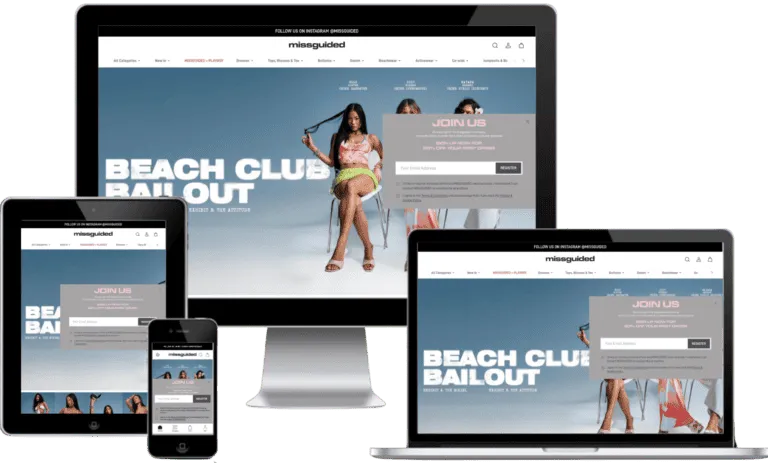
MissGuided
Fashion Ecommerce | National
A fast-fashion brand competing against household names for the same shoppers. Geo-targeted links from fashion publishers and lifestyle sites built the authority, and structured content turned that authority into featured snippet wins.
- 32,000 → 56,000 Organic Sessions
- 28 Featured Snippets
- +55% Revenue
-

DOORS NYC
Fashion Retail | SoHo, NYC
A SoHo retailer that needed geographic authority, not just listings. Earned mentions from NYC fashion press and style publications did what directories alone cannot, and the calls and direction requests followed the profile.
- ↑58% Calls
- ↑71% Directions
- ↑62% Organic Sessions
-

Original Penguin
Heritage Menswear | NYC Retail
A heritage menswear brand whose profile grew the local way: press mentions and event coverage earned from NYC lifestyle publications, layered over citations standardized across 60+ directories. Individually modest links, collectively hard to fake.
- 10,400 → 24,600 Store Page Sessions
- 1,280 → 2,840 GBP Actions
- 195k → 410k Impressions
More engagements, sliced by service, industry, and platform, live in our SEO case studies.
What Our Clients Say
These testimonials come from programs where links were one part of the work, and the numbers are reported the way our link reports are: sourced, specific, checkable.
-

Krispen Culbertson
Sr. Partner, Culbertson Law
"Blown away by the results"
Organic sessions grew from 7,200 to 18,400 in 6 months and qualified calls rose 91%. Every month the report said what changed and why. Source: GA4 and CallRail.
-

Justin Tyme
Owner, Reef Side Tattoo
"Couldn’t be happier"
Weekly bookings climbed from 18 to 56 in 4 months once Egochi rebuilt our portfolio pages and tuned everything behind them. Clients keep telling us they found us on Google. Source: GA4 and GBP insights.
-

Maria Antoinette
Founder, Antoinette Realtors
"Significant increase in leads"
Organic leads went from 4 to 24 monthly in 3 months, and organic traffic grew 70% after Egochi rebuilt our pages one by one. Source: GA4 and GBP insights.
"The results are just amazing"
"Egochi is the best"
Meet Your Link Building Team
The outreach and digital PR team that earns the links this page describes.
-

Jobin John
Chief Executive Officer
-

Justin Brown
Head of Search Engine Optimization
-

Bryan Thomson
Head of Web Design & Development
-

Ina Komins
Head of Social Media Marketing
-

Kierra Pita
Head of Advertising & Content Marketing
-

Patricia Turner
Chief Creative Officer
-

William Carter
Chief Digital Strategy Officer
-

Andrew Miller
Senior SEO Strategist
-

Amy Robinson
Content Marketing Manager
-

Betty Harrison
PPC Campaign Specialist
-

Anthony Carter
Lead Digital Account Executive
-

Amanda Cooper
Social Media Director
-

Carol Parker
Senior Client Success Manager
-

Barbara Bennett
Email Marketing Lead
-

Charles Turner
Technical SEO Analyst
-

Brian Sullivan
Creative Director
-

Christine Walker
Director of Project Management
-

Christopher Brooks
Digital Marketing Strategist
-

Daniel Wright
Senior Analytics Specialist
-

David Henderson
Lead Content Strategist
-

Donna Mitchell
Client Communications Manager
-

Elizabeth Foster
Director of Paid Advertising
-

Emily Baredi
Brand Experience Specialist
-

Emma Scott
Social Media Content Creator
-

George Crawford
Technical Solutions Architect
-

Jacob Evans
Digital Content Coordinator
-

James Anderson
Marketing Automation Specialist
-

Jason Palmer
Junior Copywriter
-

Jeffrey Reynolds
Paid Media Analyst
-

Jennifer Lewis
Community Engagement Specialist
-

Jonathan Murphy
SEO Reporting Specialist
-

Joseph Morgan
Influencer Marketing Coordinator
-

Kenneth Stevens
Digital PR Manager
-

Kimberly Harper
Digital Marketing Intern
-

Kevin Morris
SEO Outreach Specialist
-

Lee Dawson
Junior Web Developer
-

Linda Peterson
Email Campaign Coordinator
-

Lisa Thompson
Social Media Ads Specialist
-

Margaret Bradley
Marketing Operations Lead
-

Mark Richards
Data & Insights Analyst
-

Mary Kennedy
Senior Copyeditor
-

Matthew Clark
Growth Marketing Manager
-

Michelle Sanders
Junior Marketing Designer
-

Michael Foster
Senior Conversion Rate Specialist
-

Nancy Wheeler
Digital Analytics Manager
-

Nicholas Pierce
Affiliate Marketing Specialist
-

Nicole Adams
Outreach Program Coordinator
-

Paul Franklin
Paid Social Campaign Manager
-

Richard Barnes
Reputation Management Specialist
-

Robert Murphy
Lead Solutions Architect
-

Ronald Davis
Marketing Technology Analyst
-

Ryan Bell
Paid Media Buyer
-

Sandra Gregory
Digital Account Coordinator
-

Scott Hopkins
CRM Implementation Specialist
-

Shirley Ellis
Customer Insights Manager
-

Stephanie Cross
Brand Content Designer
-

Steven Greene
Web Analytics Specialist
-

Susan Price
Affiliate Campaign Manager
-

Thomas Fisher
Lead Technical Architect
-

Timothy Nash
Mobile Marketing Strategist
Link Building FAQs
What does a link building company actually do?
A link building service covers prospect research, content worth citing, outreach to editors and publishers, placement verification, and reporting. In practice most of the work is judgment: which sites are worth an hour of effort, which anchors keep the profile natural, and which opportunities to decline. You hire the relationships and the judgment as much as the hours.
How long does link building take to show results?
Individual links start counting once Google recrawls the linking page, usually within weeks. Ranking movement you can attribute to authority growth typically takes three to six months of steady acquisition, and competitive keywords can take longer. Links compound: the placements earned this quarter keep working next year, which is why steady beats sporadic.
Is link building still important for SEO?
Yes. Links remain one of the strongest signals search engines use to decide which of two similar pages deserves the ranking, and the same citations feed the source pools AI answer engines draw from. What has changed is the tolerance for shortcuts: low-quality links that once moved rankings now get ignored or penalized.
What is white hat vs black hat link building?
White hat earns links a publisher chose to give: editorial coverage, cited research, honest contributions. Black hat manufactures them: bought placements passing ranking credit, private blog networks, automated spam. The distinction that matters is disclosure and choice. If the publisher made a real editorial decision, the link is safe; if money or software made it, it is not.
What makes a quality backlink?
Four signals, in order: the linking page has real organic traffic of its own, the site has editorial standards and declines bad pitches, the topic genuinely relates to yours, and the link sits inside content rather than a footer or sidebar. Authority scores are a shorthand for these signals, not a substitute for checking them.
Do you promise a set number of links per month?
No, and we would be careful with anyone who does. Editorial decisions belong to publishers, so a fixed quota forces a choice between missing the number and filling it with junk. What you get instead is a scoped target list, steady outreach, and a monthly report naming every placement, so the work is judged on what actually shipped.
How do I choose a link building company?
One ask settles most of it: show me last month’s report for a real client, redacted, with every URL and anchor named. A vendor who will not has something to hide. Then ask which opportunities they refuse and why, since the refusals reveal the standards. A fixed links-per-month quota or menu pricing by domain rating are the walk-away signs.
Can link building hurt my site?
Bad link building can. Google’s link spam systems devalue manipulative links algorithmically, and manual actions still exist for profiles that cross the line: bought placements, networks, anchor stuffing. The protection is boring discipline: earned placements, natural anchors, and full disclosure of every URL, so nothing in the profile needs explaining later.
What is digital PR vs traditional link building?
Traditional link building pitches existing pages to sites that curate resources or accept contributions. Digital PR creates something newsworthy, original data, expert commentary, a story angle, and pitches it to journalists. PR placements usually carry higher authority and arrive in bursts around a story; traditional outreach is steadier. Strong programs run both.
How do you report link building results?
The monthly report names every placement: the URL, the anchor text, whether it is followed or sponsored, and whether it is still live. Around that sit referring domain trends, rankings for the target keywords, and referral traffic. Everything is checkable in Ahrefs, Semrush, or Search Console, and we expect you to check.
How is link building different from content marketing?
Content marketing creates pages that attract attention; link building earns citations pointing at pages that already exist. They feed each other: outreach fails without something worth citing, and good content earns less than it should without anyone pitching it. Where a site has nothing citable yet, we say so and start with content.
Free Backlink Analysis
Get a free review of your backlink profile: referring domain trends, anchor distribution, spam patterns worth watching, and the gap between you and the sites outranking you. You keep the findings either way, whether or not you hire us.
Ready for Links You Can Verify?
Link building is one discipline inside our full search engine optimization services, so content, technical work, and authority grow as one program with one owner. And if the analysis says your site needs content before links, that is what the plan will say. Tell us about your site and we will send a plan with real numbers in it.
Questions? Call (888) 644-7795 or email care@egochi.com
Egochi Stats
- 250+ Google Reviews
- 5.0 Clutch Rating
- 12+ Years Experience
- $200M+ Revenue Generated
- 4 US Offices
- 190+ Clutch Reviews
Blog Posts
- Aug 12, 2026 GEO vs. SEO: A Comparative Guide for Digital Marketers
- Aug 12, 2026 What is llms.txt? | How to Create llms.txt file for your website
- Aug 12, 2026 What is Semantic SEO? | How to Build Topical Authority That Ranks
- Aug 12, 2026 What is Schema Markup? | How to Add Structured Data to Your Website
- Aug 12, 2026 How to Optimize for Voice Search: A Realistic 2026 Guide