Web Design
Small Business Web Design Services
Small business web design with the launch gates, documentation, and ownership standards our enterprise builds get, scoped and priced for a business that answers its own phone.
Get Your Free Proposal Call (888) 644-7795
- Project-priced, theme or custom named up front
- Launch gates and documentation on every build
- Free proposal names the right-sized project
As Featured In






Egochi is a small business web design company building websites that turn searches into calls, quotes, and booked work: a short set of pages with one job each, lead capture where decisions happen, and local visibility wired in at build time. Egochi has designed and built websites since 2014, and the honest first decision on a small-business project is scope: a configured premium theme where the budget demands it, custom design where it earns its cost, and a proposal that says which is which. The next step costs nothing: a free proposal that names the right-sized project and what it honestly costs.
How much does a small business website cost?
Small business web design at Egochi is project-priced. Most builds land between $3,500 and $5,000 on a configured premium theme, run toward $8,000 when custom design earns its cost, and reach $15,000 only on larger custom scopes. Ongoing care starts at $150/month and stays optional. Page count, content writing, and how much design is genuinely custom move the number more than anything else.
Egochi has been building websites since 2014, from offices in New York, Miami, Milwaukee, and Madison, with 250+ Google reviews and 190+ Clutch reviews at a 5.0 rating behind the work. One thing to know up front: we are not a small-business-only web design agency, and that is the point. The same team that ships builds for enterprise brands like Menards and Toshiba Lifestyle builds these projects, which is exactly why a five-page site for a law office gets enterprise-grade discipline: launch gates, documentation, and every account in your name, at small-business scope and small-business prices. What stands behind this page is 12+ years of builds and the small-business engagements in our case library, published whole.
What is small business web design?
Small business web design is the planning, design, and build of a website scoped to how a small business actually wins customers: a short set of pages that each answer one search, lead capture placed where decisions happen, local visibility wired in at build time, and a site the owner can update without keeping a developer on retainer.
Small Business Web Design Services We Offer
Twelve pieces of work. Discovery decides which ones your business needs, and which it can honestly skip.
-
Custom Website Design
Design built in Figma against your brand, your customers, and the searches that bring them, custom where it earns its cost. The design discipline underneath every build, budgets, launch gates, ownership standards, lives with our web design services; this page is that discipline right-sized for small business scope.
-
WordPress Development
Most of these builds ship on WordPress: a configured premium theme where the budget demands it, custom work where the project earns it, and a site you own outright either way. The theme and builder depth, and the full ownership argument, live with our WordPress web design services.
-
Local SEO Setup
Every build ships search-wired for your service area: Google Business Profile linked and consistent, LocalBusiness schema with your exact name, address, and phone, and location pages where you genuinely serve more than one place. The ongoing ranking program, reviews, links, map visibility, runs through our local SEO services.
-
Website Refresh or Redesign
Plenty of small businesses need a redesign, not a rebuild: the rankings, reviews, and URLs you have already earned are assets a new site must carry over, not casualties of it. That preservation discipline, redirect maps, content parity, staged cutovers, runs through our website redesign services on every replacement build.
-
Mobile-First Layouts
Most of your visitors arrive on a phone, often standing in the problem your business solves, so pages get designed there first: thumb-sized tap targets, click-to-call in reach, forms short enough to finish one-handed. The user experience gets tested on real devices before launch, not in a resized browser window.
-
Conversion-Focused Layouts
Call buttons, forms, and proof placed where deciding actually happens, with a conversion argument behind every layout call. Proving that a change beats what it replaced is testing with real traffic, and that discipline runs through our conversion rate optimization services.
-
Site Speed Work
Compressed images, lean code, and pages measured against Core Web Vitals before launch. Speed is a ranking signal and a patience budget: a slow site spends yours before a visitor reads a word, and small-business themes drowned in plugins are the usual cause.
-
Content Writing
Service pages written to answer what customers actually search, in your voice, with the questions that stall a call answered on the page. You review everything; nothing publishes sounding like a brochure wrote it.
-
Brand Identity and Photography Direction
Logo refinement, color and type choices that survive a phone screen, and direction on the photography worth paying for. Real photos of your team and work convert; stock photos of handshakes read as filler, and visitors have learned to skip them.
-
Lead Capture and Booking Forms
Contact forms, quote requests, and appointment booking built short, tested end to end, and wired to notify you instantly. Every form submits to a confirmation you can verify, because a form that fails silently is worse than no form at all.
-
Training and Documentation
Recorded walkthroughs made on your actual site, a short manual naming every login and what it controls, and a person to call when something looks wrong. Built for a team of one, because that is who runs most small business websites.
-
Ongoing Maintenance
Updates, monitoring, backups, and small fixes from $150/month, and it stays optional: the site is in your name and keeps running if you cancel. The maintenance section below covers what quietly breaks when nobody owns updates.
What a Small Business Web Design Budget Actually Buys
Every small business website design quote hides the same question: what does the number actually buy? Here is the honest version, in the bands our proposals use. No band is an upsell ladder; each is the right project for a different business, and the last row says which.
| What you are buying | $3,500 to $5,000 | Toward $8,000 | $8,000 to $15,000 |
|---|---|---|---|
| Design source | a premium theme, configured well against your brand | theme base plus custom design on the templates that sell | custom design across the site, built to your brand alone |
| Pages | five to eight, the lead-gen core | eight to twelve, with location pages where honest | twelve or more, custom templates per content type |
| Content | you supply it, we structure and edit | core service pages written for you | full copywriting plus photography direction |
| Search wiring | GBP link, NAP schema, tracking: every band gets these | plus per-area location pages and review capture | plus content mapped to every service and area you serve |
| Timeline | four to six weeks | six to eight weeks | eight to twelve weeks |
| Who it honestly fits | first professional site; spare budget belongs in visibility | established businesses the starter template now flattens | competitive markets where design is part of the moat |
Read the first column without embarrassment: it is where most small-business builds belong, and the site it buys is professional, fast, and yours outright. The dishonest move in this market is selling the third column to a business whose growth lives in the first, then billing the difference. Our proposal names one band and shows what would genuinely move you out of it.
What Every Small Business Build Ships With
Six pieces of foundation in every project, not on the options list. Scope changes by band; this checklist does not.
-
Mobile-Responsive Design
Mobile-friendly layouts that work on every screen, designed on the phone first because that is where local customers decide. Touch-friendly navigation, readable type, and click-to-call where a thumb expects it.
-
Lead Capture Systems
Forms, booking, and quote requests placed where decisions happen and tested end to end before launch. Each submission lands in your inbox and your tracking, so no lead disappears unnoticed.
-
Local SEO Foundation
Google Business Profile wiring, LocalBusiness schema with exact NAP, and location pages where they are honest. The build ships search-ready; the ranking program is its own engagement. The same clean structure keeps your pages readable to search engines and to ChatGPT and Google AI Overviews, where customers now ask first.
-
Speed and Core Web Vitals
Image handling, caching, and code kept lean, measured against Core Web Vitals before launch. A failing template gets fixed, not shipped, because this site sells for you at the speed it loads.
-
Security and SSL
HTTPS everywhere, hardened logins, automatic backups, and update discipline. Small business sites get attacked by bots, not rivals, and the defense is boring consistency, which we set up to survive without you thinking about it.
-
Analytics and Call Tracking
GA4 configured for the events that matter, calls, form submits, direction requests, not vanity pageviews. You see which pages produce customers, which is the only report a small business needs monthly.
How a Lead-Capture-First Small Business Website Earns Its Pages
Most small business websites get built page-count-first: pick a package, fill the pages. Ours get built lead-path-first: start from the searches that produce customers and design the shortest honest route from each one to your phone. Here is what that changes.
-
Every page gets one job
One page, one search, one next step. A plumber gets a water-heater page and a drain page, not a services blur that ranks for neither. The page that matches the search wins the click, and the visitor lands one step from contact instead of three.
-
The home page routes and service pages sell
Searchers rarely enter through the front door: they land on the page that matches what they typed. So the home page is built to route people fast, and each service page is built to close alone, with proof, pricing context, and a next step on the page.
-
Proof sits where doubt forms
Reviews, completed work, and credentials render next to the decision they support, not on an orphan testimonials page nobody visits. A quote form with three review snippets beside it converts; the same reviews two clicks away might as well not exist.
-
The vanity pages stay unbuilt
Mission statements, stock-photo galleries, a news section that dies after three posts: each one costs build budget, then keeps costing attention. We will name these in the proposal and price the site without them, because an unread page is a small ongoing tax on the pages that sell.
-
The lead path is measured, not assumed
Calls, form submits, and direction requests get tracked from launch day, per page. Within a quarter you know which pages produce customers and which need work, and the site earns its next dollar of investment with measured results instead of instinct.
How many pages does a small business website need?
Usually six to ten: a home page, one page per core service, an about page, a proof page for reviews and completed work, and a contact page built to convert. Add location pages only where you genuinely serve more than one area. Every page past that needs a job to justify it; unread pages spend budget and dilute the pages doing the selling.
Template or Custom? The Honest Answer Is Right-Sizing
Agency pages love the line "custom design, not templates." Our own old page led with it, and it deserves a more honest treatment: at small-business budgets, custom-everything is often the wrong buy, and template-everything is often the wrong result. The honest position is right-sizing, and it looks like this.
-
What a configured premium theme honestly delivers
Professional design, fast pages, and your brand applied properly, near $3,500 instead of $8,000. For a business whose site exists to catch local demand, the difference belongs in content and visibility, the things that decide whether anyone arrives at all.
-
Where custom design earns its cost
On the templates that sell, first: a custom home and service-page design over a theme base when the market is crowded and the theme flattens you into it. Full-site custom earns its price when brand is genuinely part of how you win work, and we will say plainly when it is not.
-
What "configured well" actually means
Not installing a demo and swapping the logo. It means stripping the modules you will never use, applying real brand type and color, rebuilding layouts around your actual content, and passing the same speed gates as a custom build. A theme installed lazily looks like a template; a theme configured well looks like your business.
-
The test our own proposals pass
Would this budget produce more customers spent differently? When the honest answer is a smaller build plus a visibility program, that is the proposal we send, and the invoice shrinks with it. The same theme-first default runs across our WordPress and Shopify work, so no Egochi page will ever quote you two different philosophies.
Designed for a Team of One to Maintain Without a Marketing Department
Most small business websites are run by a team of one: the owner, at night, between everything else. We design for that truth instead of pretending a marketing department will materialize, and it changes what the project ships with.
-
Training is a deliverable, not a favor
Recorded walkthroughs made on your actual site: change hours, swap a photo, post an update, add a review. Recorded, because you will not remember a one-hour handover call in October, and the video does not mind being asked twice.
-
Documentation outlives memory
A short site manual listing every account in your name, domain, hosting, email, analytics, what each one controls, and what to do first when something looks wrong. When you hire help someday, this document is the difference between an afternoon of onboarding and a month of archaeology.
-
What breaks when nobody owns updates
Software drifts: plugins age, certificates lapse, and forms fail silently. The classic small-business failure is a contact form that stopped delivering in March, discovered in June, and priced in leads nobody can count. Update discipline exists to make that story impossible, whoever holds the duty.
-
The honest maintenance floor
Ongoing care runs from $150/month: updates, monitoring, backups, and small fixes, scaled to the site. And the ownership truth that frames it: our maintenance is optional because everything is in your name, while a rented site builder is a subscription your website cannot survive canceling.
When Wix or Squarespace Beats Hiring Us
The most useful thing an agency can tell a small business is when not to hire one. Wix and Squarespace are real competition for every shop on this search result, and sometimes they should win. Here is the dividing line we actually use, including to decline projects.
-
When DIY genuinely serves you better
Pre-revenue and testing an offer; booked solid through referrals with search as an afterthought; or more time than budget and the patience to learn a builder. In those cases a tidy Squarespace site plus a complete Google Business Profile beats a financed custom build, and we will say so on the call.
-
The real dividing line is search, not looks
Modern builders look fine, so looks are not the argument. The line is whether search visibility decides your growth: competitive local terms, several services or areas needing their own pages, and the structural control that work demands. When rankings pay your invoices, the platform ceiling starts costing real money.
-
What we hand you when we decline
A short DIY checklist: the six pages to build, the Google Business Profile steps, how to title pages so they match searches, and which settings matter. Free, no strings, because the businesses we decline honestly come back when they outgrow it, and they come back trusting the advice.
Why Small Businesses Pick Egochi for Web Design
-
Enterprise Discipline at Small-Business Scope
The in-house team building your six-page site ships work for national brands, and the discipline transfers whole: launch gates, speed budgets, documentation, accounts in your name. You get the standards without the enterprise invoice, because the scope is honest.
-
Right-Sized Proposals, Argued Openly
Our old page said "custom design, not templates." The truer sentence is: custom where it earns its cost, a well-configured premium theme where it does not, and a proposal that shows which and why. The smaller project is the one we quote when it is true.
-
Lead Capture Is the Design Brief
Every layout decision traces to the same question: does this shorten the path from search to call? Pages get one job each, proof sits beside decisions, and forms get tested end to end. Pretty is a side effect; the phone ringing is the spec.
-
Local Visibility Wired at Build
Google Business Profile wiring, LocalBusiness schema, clean NAP, and location pages ship inside the build, where they cost least. A site built search-blind needs the same work retrofitted later at twice the price, usually after months of missed calls.
-
Built for a Team of One
Recorded training on your actual site, a manual that names every login, and updates simple enough to do after close. A site only an agency can operate is a leash; we build the kind you can run yourself and call us only when you want to.
-
A Handover That Hands Over
Domain, hosting, analytics, and the site itself in your name at launch, with documentation to prove it. Fire us the week after and everything keeps working, which is exactly the standard you should hold anyone building your website to.
How long does a small business website take?
Honest ranges: four to six weeks for a configured premium theme build, six to ten when custom design or content writing widens the scope. The schedule risk is rarely design; it is content and photography, which owners fit around running the business. So we scope both in week one and write around the gaps instead of waiting on them.
Our Small Business Web Design Process, Built on VERTEX Core™
Every build runs inside the same 16-step framework as every Egochi website project, through its stages: Blueprint, Design, Build, Prove, Launch. The six phases below are that framework carrying a small-business project.
-
Discovery and the Right-Size Decision
Your services, service area, competitors, and the searches that produce customers, read before any scope gets named. The budget-bands table on this page is the working document, and the proposal shows its math.
-
Content and Page Planning
The page list, argued page by page: which services earn their own page, where location pages are honest, and which vanity pages stay unbuilt. Content gets scoped here too, because words are the schedule risk, not design.
-
Visual Design
Theme configuration or custom design in Figma against your real content and photography, per the right-size decision. You approve what the site will look like before a line of it gets built.
-
Build and Lead-Capture Wiring
The site built clean, fast, and accessible to WCAG standards, the benchmark behind ADA compliance, forms and booking wired and tested end to end, click-to-call in reach on every page. Everything ships through a preview link you can poke at, never straight to live.
-
Local Search, Speed, and Testing
Google Business Profile linked, schema and NAP verified, GA4 and call tracking wired, and every template measured against Core Web Vitals on real devices. Failing pages get fixed before launch, not after.
-
Launch, Training, and Handover
Launch with redirects verified where an old site existed, recorded training on your actual pages, the site manual delivered, and every account in your name. Ongoing care from $150/month if you want us to stay on, optional because ownership is real.
VERTEX Core™ is the build discipline inside the EGOCHI VERTEX™ Growth System, the operating system behind every Egochi engagement, whatever the size of the business it carries.
Is Small Business Web Design Right for You?
Who this is for
- Your customers find businesses like yours by searching: local services, professional practices, studios, restaurants, trades. The site exists to catch that demand and turn it into calls, and it should be built like it.
- You have outgrown a DIY build or an aging site: it flattens your business into a template, loads slowly, or embarrasses you in front of customers who saw you on their phone first.
- You run lean, maybe a team of one, and need a site you can update yourself, with training and documentation treated as deliverables instead of favors.
- You offer several services or serve several areas, and you need the page structure that lets each one rank and sell on its own instead of blurring together.
When this may not be the right fit
- Pre-revenue, idea-stage businesses. Validate the offer first; a landing page and a Google Business Profile cover the proving stage, and the build money is worth more as runway.
- Businesses whose customers genuinely do not search: referral-only practices, relationship-driven B2B with five buyers who already know you. A modest site serves as a business card there, and we will say so rather than sell you architecture you do not need.
- Owners with more time than budget who can honestly run a DIY builder. The dividing-line section above is for you, and the checklist we hand out is free; hire us later, when search visibility starts deciding your growth.
The build stops at launch, and launch is where getting found begins. Showing up when nearby customers search, month after month, is ongoing work, and the local SEO program named in the service cards above owns that layer. This page gives those searches a site that turns them into calls.
Fair Questions Before You Hire a Web Designer
Why not just use Wix or Squarespace?
Sometimes you should, and we say so a section above this one. If you are pre-revenue, referral-fed, or richer in time than budget, a tidy DIY site plus a complete Google Business Profile is the right call. The line is search: when competitive local visibility decides your growth, page structure, speed control, and ownership start paying for themselves, and a builder starts costing you rankings you cannot see.
Do I have to pay a monthly fee forever?
No, and be suspicious of anyone whose answer is yes. Our builds ship on software you own, with hosting, domain, and every account in your name; maintenance from $150/month is genuinely optional, and the site keeps running if you cancel. Rent-a-site subscriptions and DIY builders work the other way: stop paying and the website disappears. Ownership is the difference, and it is the same no-lock-in standard our WordPress builds are named for.
Why do quotes for the same small website run from $500 to $20,000?
Because "website" hides the scope. The $500 quote is a theme installed as-is with your logo swapped in; the $20,000 quote often includes custom design, full copywriting, photography, and search wiring a small business may not need yet. The honest middle is the budget table above: most small-business builds land between $3,500 and $5,000, and the right question for any quote is what, specifically, the number buys.
Will a new website bring in customers by itself?
No, and a shop promising otherwise is selling you the easy half. A website converts demand; visibility earns it. The build ships with the local search foundation wired, GBP, schema, location pages, which is real leverage, but rankings in a competitive market come from the ongoing program: reviews, content, links, months of them. We will show you both halves priced separately, so you never mistake one for the other.
The Small Business Engagements Behind This Page
Platform tags come from the case register: the WordPress and Shopify builds are named as such, and the rest render exactly as recorded. Every number below is register-fed and covers its engagement whole; no design-only attribution is invented.
-

Culbertson Law
Family Law | WordPress, Greensboro NC
A small law office whose site had one job: turn crisis searches into consultations. The WordPress refresh and the search program ran as one engagement, and the registered numbers cover it whole.
- +91% Qualified Calls
- +156% Organic Sessions
- 8 → 41 monthly Signed Cases
-
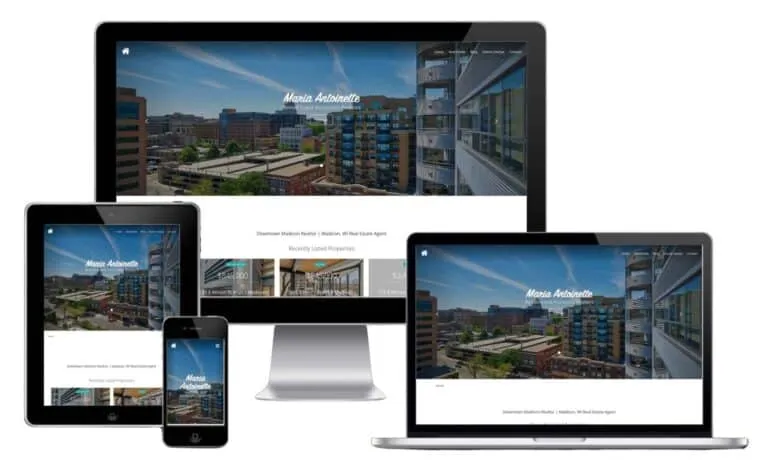
Maria Antoinette
Real Estate | WordPress, Madison WI
An independent realtor competing with brokerage giants for the same searches. A WordPress build sized to a business of one, backed by local search and email work; the engagement reads whole.
- 4 → 24 monthly Organic Leads
- 70% Organic Traffic Growth
- 50% Email Open Rate
-
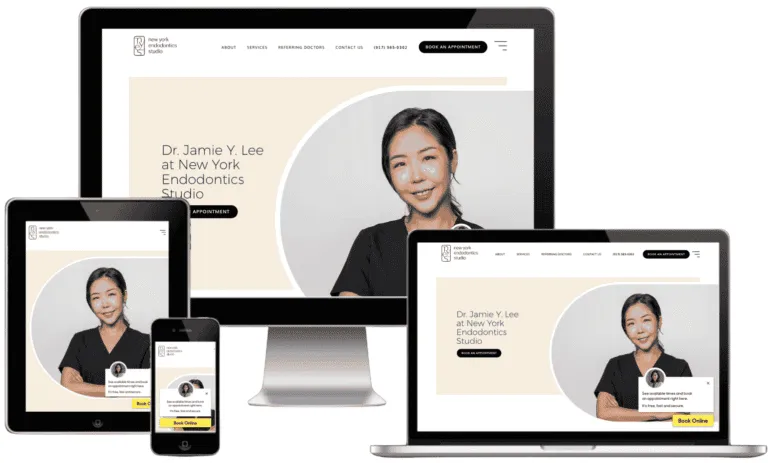
NY Endo Studio
Endodontics | WordPress, Midtown Manhattan
A single-doctor specialty practice whose patients arrive in pain and choose fast. A WordPress site built around booking, paired with local search and paid work; numbers cover the whole program.
- 110% Organic Sessions Lift
- 132% GBP Discovery Views
- 32% Lower Cost per Lead
-
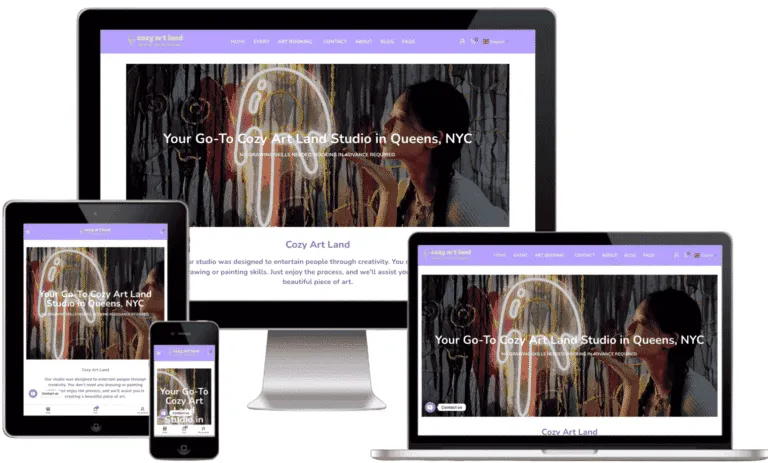
Cozy Art Land
Art Studio | Local Bookings
A family art studio that lives on classes and parties booked online. Local search, content, and GBP work carried the growth, with the site as the landing surface; the engagement is tracked whole.
- +120% Organic Sessions
- +85% GBP Calls
- +60% Bookings and Forms
-
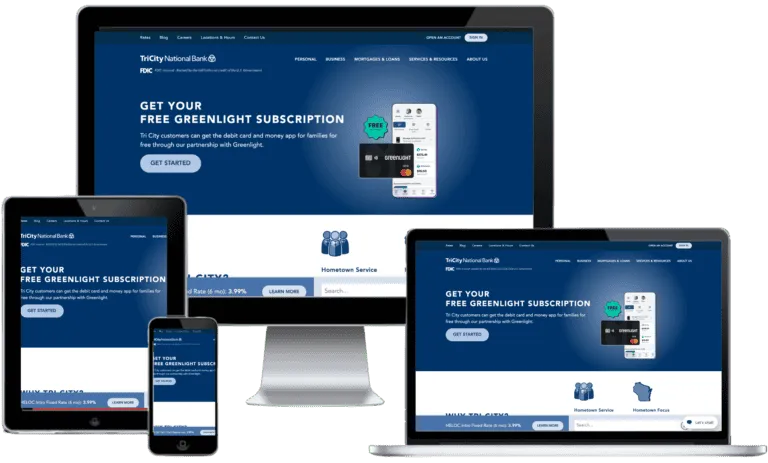
TriCity National Bank
Community Bank | Custom Build, Wisconsin
A community bank competing locally against national names, exactly the inversion this page describes. Web, search, paid, and email ran together; the registered numbers read across the engagement.
- +90% Organic Traffic
- +77% PPC Conversion Rate
- +80% Email Engagement
-
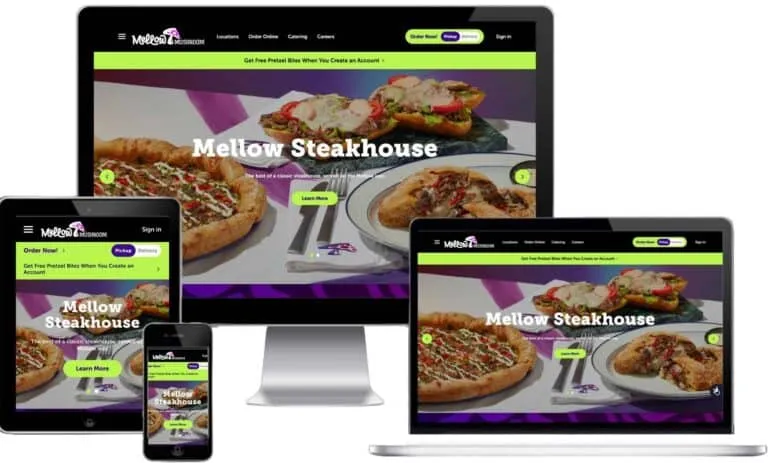
Mellow Mushroom
Restaurants | Custom Build, Multi-Location
A restaurant brand whose locations each fight their own local search battle, the location-page architecture this page recommends, at scale. Whole-engagement numbers as published in the case library.
- +312% Local Traffic
- +245% Online Orders
- Top 3 Local Pack
-
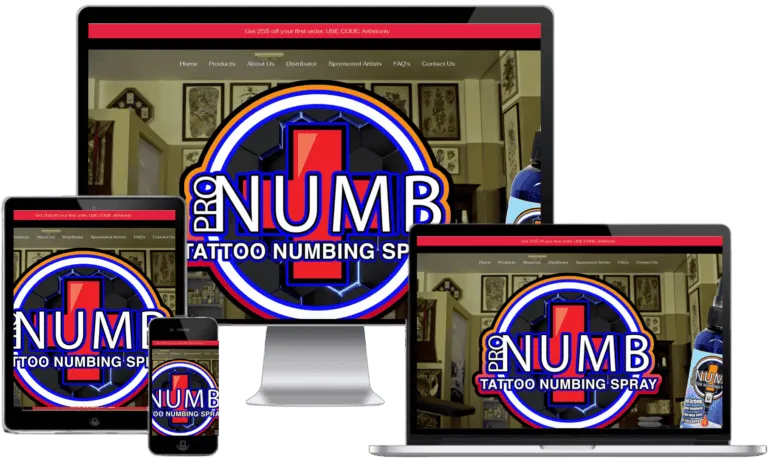
Pro Numb
Topical Anesthetics | Shopify DTC
A small brand that grew into a category leader, proof the discipline scales in both directions. Store, content, and search ran as one program; all figures confirmed and covering the engagement whole.
- $2M+ Monthly Revenue
- +340% Organic Traffic
- 47 Featured Snippets
The full write-ups live in the case library, sliced so you can read the builds closest to yours: web design case studies.
Meet Your Small Business Web Design Team
The designers and developers who build the site, and the search specialists who make sure it earns its keep.
-

Jobin John
Chief Executive Officer
-

Justin Brown
Head of Search Engine Optimization
-

Bryan Thomson
Head of Web Design & Development
-

Ina Komins
Head of Social Media Marketing
-

Kierra Pita
Head of Advertising & Content Marketing
-

Patricia Turner
Chief Creative Officer
-

William Carter
Chief Digital Strategy Officer
-

Andrew Miller
Senior SEO Strategist
-

Amy Robinson
Content Marketing Manager
-

Betty Harrison
PPC Campaign Specialist
-

Anthony Carter
Lead Digital Account Executive
-

Amanda Cooper
Social Media Director
-

Carol Parker
Senior Client Success Manager
-

Barbara Bennett
Email Marketing Lead
-

Charles Turner
Technical SEO Analyst
-

Brian Sullivan
Creative Director
-

Christine Walker
Director of Project Management
-

Christopher Brooks
Digital Marketing Strategist
-

Daniel Wright
Senior Analytics Specialist
-

David Henderson
Lead Content Strategist
-

Donna Mitchell
Client Communications Manager
-

Elizabeth Foster
Director of Paid Advertising
-

Emily Baredi
Brand Experience Specialist
-

Emma Scott
Social Media Content Creator
-

George Crawford
Technical Solutions Architect
-

Jacob Evans
Digital Content Coordinator
-

James Anderson
Marketing Automation Specialist
-

Jason Palmer
Junior Copywriter
-

Jeffrey Reynolds
Paid Media Analyst
-

Jennifer Lewis
Community Engagement Specialist
-

Jonathan Murphy
SEO Reporting Specialist
-

Joseph Morgan
Influencer Marketing Coordinator
-

Kenneth Stevens
Digital PR Manager
-

Kimberly Harper
Digital Marketing Intern
-

Kevin Morris
SEO Outreach Specialist
-

Lee Dawson
Junior Web Developer
-

Linda Peterson
Email Campaign Coordinator
-

Lisa Thompson
Social Media Ads Specialist
-

Margaret Bradley
Marketing Operations Lead
-

Mark Richards
Data & Insights Analyst
-

Mary Kennedy
Senior Copyeditor
-

Matthew Clark
Growth Marketing Manager
-

Michelle Sanders
Junior Marketing Designer
-

Michael Foster
Senior Conversion Rate Specialist
-

Nancy Wheeler
Digital Analytics Manager
-

Nicholas Pierce
Affiliate Marketing Specialist
-

Nicole Adams
Outreach Program Coordinator
-

Paul Franklin
Paid Social Campaign Manager
-

Richard Barnes
Reputation Management Specialist
-

Robert Murphy
Lead Solutions Architect
-

Ronald Davis
Marketing Technology Analyst
-

Ryan Bell
Paid Media Buyer
-

Sandra Gregory
Digital Account Coordinator
-

Scott Hopkins
CRM Implementation Specialist
-

Shirley Ellis
Customer Insights Manager
-

Stephanie Cross
Brand Content Designer
-

Steven Greene
Web Analytics Specialist
-

Susan Price
Affiliate Campaign Manager
-

Thomas Fisher
Lead Technical Architect
-

Timothy Nash
Mobile Marketing Strategist
Small Business Web Design FAQs
What does a small business web design company actually do?
The full path from plan to launch: page architecture built around the searches that produce customers, design right-sized to your budget, the build itself, lead capture wired and tested, local search foundation, speed and security gates, then training and documentation so you can run the site yourself. The deliverable is a working lead channel in your name, not a design file and an invoice.
Do you use templates or design from scratch?
Both, honestly assigned. A configured premium theme is the right buy for most first professional sites, and we configure it properly: unused modules stripped, real brand type and color, layouts rebuilt around your content, speed gates passed. Custom design comes in on the templates that sell when the market demands it. The proposal names which path and why, and the budget table on this page is the same math.
Can I update the website myself?
Yes, and the build assumes you will. Pages, photos, hours, prices, and posts are all editable without touching code, and you get recorded walkthroughs made on your actual site plus a short manual naming every account. Owners who were burned by a site only the old developer could touch tend to ask this first, and the honest fix is structural, not a promise.
Do you write the content and handle photos?
Writing, yes: service pages built to answer what customers search, in your voice, reviewed by you before anything publishes. Photography we direct rather than shoot: a shot list of the images worth paying a local photographer for, because real photos of your team and work outsell stock every time. Content is the usual schedule risk, so it gets scoped in week one.
Who owns the website, the domain, and the hosting?
You do, from launch day: domain registrar, hosting, analytics, Google Business Profile, and the site itself, every account created in your name with credentials handed over and documented. We keep access only while we work for you. If an agency resists that arrangement, ask what the resistance is for; ownership is the whole point of paying to build rather than rent.
Can you build an online store for a small business?
Yes, sized to the catalog. A service business selling a few products or gift cards usually gets WooCommerce inside the same WordPress build, no second platform to run. A business that is genuinely a store first belongs on store infrastructure, and we build those too. The same right-sizing rule applies: nobody needs enterprise commerce plumbing to sell twelve items.
What does website maintenance cost?
From $150/month: software updates, security monitoring, backups, and small content fixes, scaled up only when the site genuinely needs more. It stays optional and month-to-month because the site is yours, and some owners handle updates themselves after training. What we ask either way is that somebody owns the job; the maintenance section above shows what quietly breaks when nobody does.
Will my website show up on Google?
The build ships with the foundation: clean structure, honest page titles matched to real searches, LocalBusiness schema, a linked Google Business Profile, and location pages where they are truthful. Indexed, yes. Ranking against established competitors takes the ongoing work, reviews, content, links, over months, and we price that separately so the build never hides a subscription inside it.
Do you only work with small businesses?
No. Egochi builds for local businesses through corporate and enterprise brands, and the case cards above run from a solo realtor to national names. That range is what this page is selling: the discipline learned on large builds, launch gates, documentation, ownership standards, applied at a scope and price that fits a business where the owner answers the phone.
My site already exists. Can you fix it instead of rebuilding?
Often yes, and it is frequently the better spend: structure fixes, speed work, lead-capture wiring, and content improvements on the site you have. When the site has earned rankings and reviews, replacing it carelessly destroys assets, so replacement builds run under redirect maps and content parity from day one. The audit reads your site first and recommends refresh, redesign, or leave it alone, on evidence.
How do I choose a small business web design company?
Ask what the quote specifically buys, page by page, and whether a smaller project would serve you better; a shop that never proposes one is selling scope. Ask who owns the domain, hosting, and site at launch, and walk away if the answer is them. Training, documentation, and optional month-to-month maintenance are fair asks. So is being told when a DIY builder honestly fits.
What is included in Egochi’s small business web design service?
A lead-capture site with one page per service, mobile-responsive build, local SEO wiring, contact and quote forms, accessibility to WCAG 2.2 AA practice, training so you can run the site yourself, and full ownership at launch: domain, hosting, and site in your name. Deliverables are listed in the written quote page by page, so you can see exactly what the price buys.
Ready for a Website Built Around How You Win Customers?
Tell us about your business and we will send back a proposal with real recommendations in it: the right-sized band, the page list argued page by page, and what we would skip. If the honest answer is a DIY builder and our checklist, the proposal will say so.
Questions? Call (888) 644-7795 or email care@egochi.com
Egochi Stats
- 250+ Google Reviews
- 5.0 Clutch Rating
- 12+ Years Experience
- $200M+ Revenue Generated
- 4 US Offices
- 190+ Clutch Reviews
Blog Posts
- Aug 12, 2026 GEO vs. SEO: A Comparative Guide for Digital Marketers
- Aug 12, 2026 What is llms.txt? | How to Create llms.txt file for your website
- Aug 12, 2026 What is Semantic SEO? | How to Build Topical Authority That Ranks
- Aug 12, 2026 What is Schema Markup? | How to Add Structured Data to Your Website
- Aug 12, 2026 How to Optimize for Voice Search: A Realistic 2026 Guide