Dental Web Design
A dental website has one job: get a visitor from "maybe" to a booked appointment before their nerve or their patience runs out. Egochi designs practice sites around that path. The insurance question gets answered up top, because "do they take my plan" decides more visits than any design flourish. Booking, whether online scheduling or tap-to-call, stays under the thumb on every page and every device. Each procedure that matters to your production gets its own page with honest cost context and financing answers, and the photography is your actual team and operatory, because nervous patients scan for what the chair looks like and can spot stock smiles instantly. Site builds are quoted per project; ongoing plans that include design work start at $1,500 monthly. Get a free quote.
Get Your Free Website Quote See What's Included
- 250+ Google Reviews
- 190+ Clutch Reviews at 5.0
- Google Premier Partner
As Featured In





What a Dental Website Has to Get Right
Four decisions Egochi makes differently that separate a site that books patients from a brochure.
The insurance question decides the visit
Most visitors arrive with one filter: does this office take my plan? Sites that bury coverage in a FAQ lose those visitors to whoever answers first. Egochi puts accepted plans in the header area and gives each major plan its own page, which also happens to rank for the plan-name searches almost no practice builds for.
Booking is the whole site
Online scheduling or a tap-to-call button belongs within reach on every page, at every screen size, because the decision to book is fragile and any hunt for a phone number gives fear time to win. New-patient forms live online too, so the commitment made at 11pm survives until morning.
A page per procedure, with honest cost context
An implant researcher and a parent pricing braces ask different questions and carry different anxieties. The separate pages Egochi builds carry real cost ranges and financing answers that pre-qualify the consult, and since one accepted case can be worth 20 to 80 cleanings, those pages justify more depth than any other part of the site.
Design for the scared visitor
A meaningful share of your visitors are afraid: of pain, of cost, of judgment. Photos of the real team and the real operatory, comfort and sedation options stated plainly, and consent-cleared before-and-after cases, the same proof dental social media runs on, answer fear the way stock photography never will. Egochi designs for that visitor first.
What's Inside a Dental Website Build
Six deliverables Egochi builds, all in service of the visitor deciding whether to book.
-
Booking-First Architecture
Egochi places online scheduling and tap-to-call within reach on every page, with new-patient forms online so the decision to book never has to wait for office hours.
-
Insurance & Plans Section
Egochi puts accepted plans up top and builds a page per major plan, answering the visit-deciding question and ranking for the searches that come with it.
-
Procedure Page System
Egochi builds a page for each treatment that matters to production, with honest cost context, financing answers, and the questions patients research before calling.
-
Real Photo Workflow
Egochi sets a simple capture routine for your team and handles the editing, so the site shows your actual people and operatory instead of stock strangers in white coats.
-
Static-Fast Build
Egochi ships a modern static build with green Core Web Vitals, no plugin bloat, and load times that hold up on a phone between meetings.
-
Proof Placement
Egochi places your real reviews and consent-cleared cases at decision points: beside booking buttons, on procedure pages, wherever hesitation happens.
How a Dental Website Earns AI Search Citations
Patients now put their pre-visit questions to AI Overviews, ChatGPT, Gemini, and Perplexity, and those systems answer by reading websites. Egochi builds dental sites in the shape machines can quote: one clean answer per page, structured data behind it, and an identity that checks out everywhere.
Google AI OverviewsChatGPTGeminiPerplexity
-
Pages built one answer at a time
AI systems cite pages that resolve a single question cleanly. The procedure and insurance pages Egochi builds each carry one topic, honest cost context, and the treating doctor by name, which is the exact shape AI Overviews lift answers from.
-
Schema under every page
Egochi marks up the dentist, the procedures, the locations, and the FAQs in structured data as part of every build. Gemini and Google resolve who you are and what you treat from those signals before a citation is possible.
-
Speed and structure machines reward
A static-fast build with clean headings and green Core Web Vitals is easier for crawlers to read fully and often. The same build quality Egochi ships for nervous patients on weak phone signals serves the systems deciding what to quote.
-
A site that matches its public record
ChatGPT and Perplexity cross-check a site against profiles and reviews before trusting it. Egochi builds the site to agree with your Google Business Profile and directory records to the letter, so verification strengthens the recommendation instead of killing it.
How a Dental Site Gets Built
-
Teardown of the current site
Egochi, the team that will build the new one, reviews your existing site the way a nervous visitor does: how fast the insurance answer appears, how many taps it takes to book, what loads on a weak signal, and which procedures have no page at all.
-
Architecture and page map
You approve an Egochi sitemap before design starts: procedure pages weighted by case value, insurance pages, the booking paths, and the new-patient flow, so nothing important gets bolted on after launch.
-
Design around trust and booking
Egochi lays out coverage, comfort, and the booking action where the first scan lands, with real photography placed against every claim the copy makes, so trust never rests on words alone.
-
Static build and speed pass
Egochi ships the site as a modern static build, tested on slow connections and mid-range phones, with Core Web Vitals held in the green before launch rather than patched after it.
-
Launch, tracking, and handoff
Egochi turns on call and form tracking with the launch, preserves the rankings the old pages earned with redirects, and hands you a simple way to add reviews, photos, and team changes without breaking anything.
Fair Questions About Dental Websites
Our patients come from referrals. Does the website really matter?
Referred patients still check the site before calling, and what they find either confirms the recommendation or quietly erodes it. A referral arrives warm; a site with no insurance answer, no photos of the actual office, and a buried phone number cools it back down. The site rarely creates referral patients, but it regularly loses them.
Why not use one of the big dental template platforms?
Template platforms are fine at producing a site quickly and poor at producing one that converts your patients. The layouts are shared across thousands of practices, the insurance answer is wherever the template put it, and leaving often means losing the site you paid for. A custom build from Egochi, an agency you can leave without losing the site, costs more up front and is yours outright, built around your procedure mix.
What does a good dental website actually change?
Two numbers: the share of visitors who book, and the quality of what they book. An insurance answer up top stops the silent exits, booking within reach converts the fragile moment of decision, and procedure pages with honest cost context bring consults in pre-qualified instead of sticker-shocked. Those effects compound with every visitor the site gets.
How long does a build take, and what do you need from us?
A focused practice site typically runs a few weeks from kickoff, longer if photography needs gathering or many procedure pages are in scope. Egochi needs the plan list, your procedure priorities, real photos or a morning of capture, and about an hour of questions. Practices that supply photos early cut the timeline more than anything else.
Common Mistakes to Avoid
-
Hiding accepted insurance plans in a FAQ, failing the first check most visitors run before reading a single word of copy.
-
Making the visitor hunt for the phone number or scheduling link, giving fear the extra seconds it needs to win.
-
Filling the site with stock photography, which anxious patients recognize instantly and quietly hold against you.
-
Cramming thirty treatments onto one services page, so the implant researcher finds nothing worth reading and Google finds nothing worth ranking.
-
Rebuilding the site without redirects and losing the rankings the old pages had quietly earned over years.
Dental Web Design Case Studies
Egochi, the agency behind each engagement below, publishes these receipts with the dental practices in front. Every number restates the client's published case study, and the roster builds show the same site discipline measured at larger scale.
-
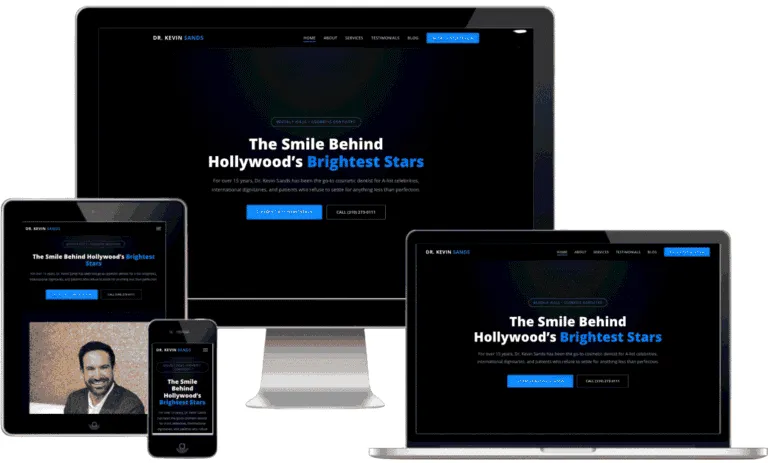
Cosmetic Dentistry Beverly Hills
Cosmetic Dentistry | Beverly Hills, CA
An elective practice whose old pages lost researchers in a bounce. Egochi rebuilt the service pages around the questions veneer and implant patients bring, and time on page rose while bounces fell.
- 41% More Time on Service Pages
- 22% Bounce Rate Reduction
- 64% Local Organic Sessions
-
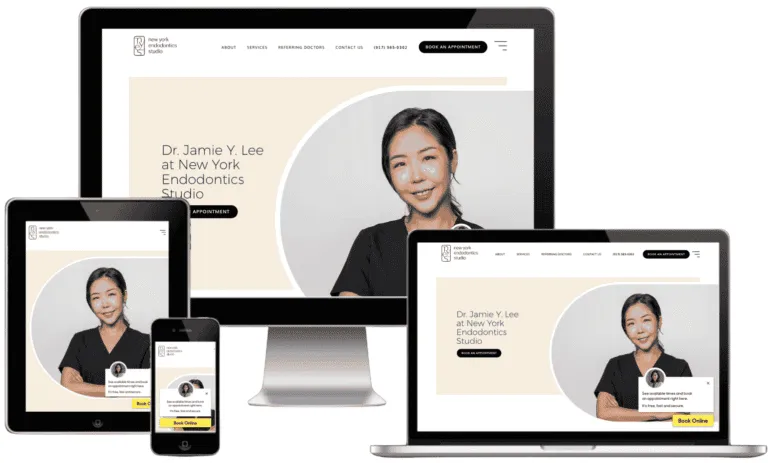
NY Endo Studio
Endodontics Studio | New York City
A specialty studio whose site had to serve patients and referring dentists at once. Egochi rebuilt the practice pages and profile together, and sessions and new users climbed in a brutal market.
- 110% Organic Sessions Lift
- 96% New Users Increase
- 132% GBP Discovery Views
-
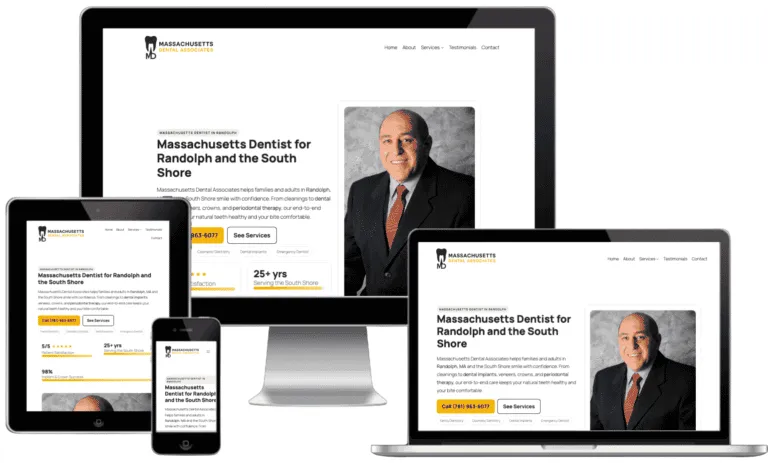
Massachusetts Dental
Dental Practice | Randolph, MA
A practice site Egochi rebuilt to turn nearby searches into appointments the practice owns. Booked appointments rose with the sessions, patients no insurance list gets credit for.
- 68% Booked Appointments Rise
- 120% Organic Sessions Lift
- 112% GBP Actions Growth
-
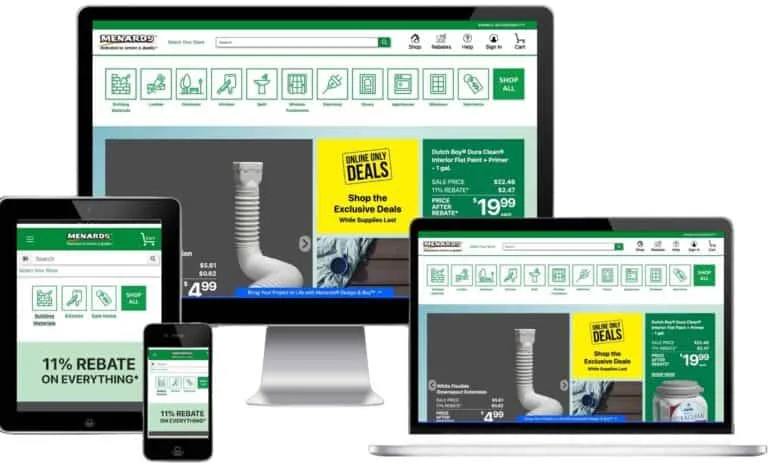
Menards
Home Improvement Retail | Site Rebuild
A retail giant whose site Egochi worked on for speed and conversion at national scale. Traffic and conversions both jumped, proof the build discipline holds under heavy load.
- +245% Traffic
- +180% Conversions
- 2.3s Speed
-
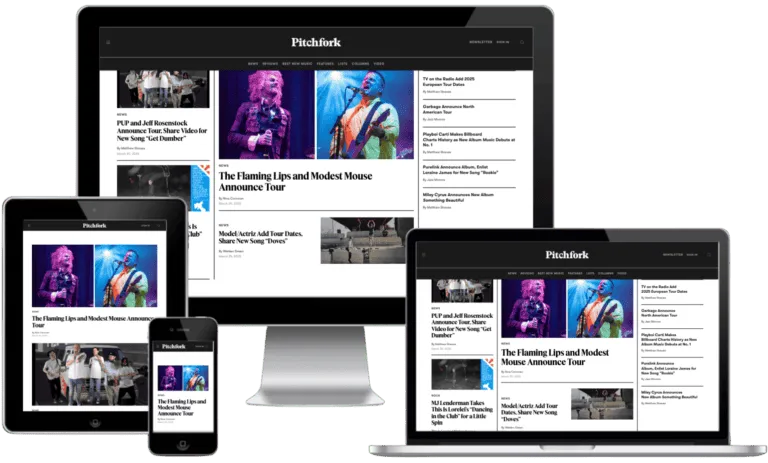
Pitchfork Media
Music Publication | Performance Work
A publication read by millions, where every second of load time costs readers. Egochi cut load times and lifted engagement, the same speed bar every dental build ships against.
- -60% Load Time
- +320% Engagement
- 2.6M Monthly Visitors
-
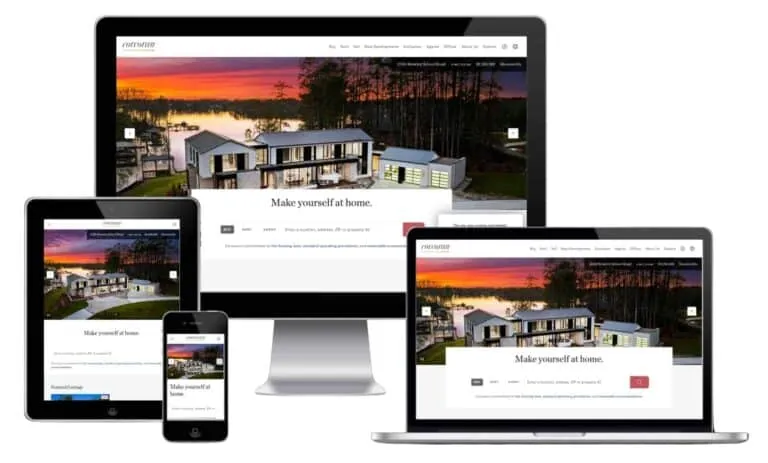
Corcoran Group
Real Estate | Core Web Vitals
A real estate brand whose site Egochi tuned for Core Web Vitals. Largest paint and interaction delays both fell, and organic traffic rose behind the faster pages.
- 3.4s → 2.1s LCP
- 340ms → 195ms INP
- +120% Organic Traffic
See How Egochi Works
A short look at how our team plans, builds, and reports on client work.
Is This Right for You?
This is for you if
- Your current site buries the insurance answer and funnels everyone to one contact form.
- Implants, aligners, or other high-value procedures matter to your production and the site gives them nothing credible.
- Your site drags on phones and you suspect nervous visitors are not waiting around to find out.
This may not be the right fit if
- You want a template live by Friday; a site built to convert takes real photography, real answers, and a few weeks.
- You only need a business-card page and no new patients from search; a full rebuild will not earn its cost back there.
See the work: Dental case studies · Web design case studies
The Complete Dental Program
This page is one part of a five-part program. Each piece works alone and works better together.
-
Dental Marketing Agency
The full program that keeps chairs booked: search, reviews, recall campaigns.
-
Dental SEO
Procedure-page rankings and Map Pack visibility for high-value treatments.
-
Dental PPC
Implant, Invisalign, and emergency campaigns tracked to booked appointments.
-
Dental Social Media
Before-and-after proof and patient education that make choosing easy.
Common Questions About Dental Web Design
-
How much does a dental website cost?
Site builds are quoted by scope after a short call, since a focused practice site and a multi-location group site are different projects. Many practices fold the build into an ongoing plan, which starts at $1,500 monthly at Egochi and covers design, SEO, and updates together.
-
Does a dental website affect AI search visibility?
Directly. AI Overviews, ChatGPT, Gemini, and Perplexity build answers from what they can read on your site: one-topic procedure pages, visible credentials, structured data, and details that match your profiles. Egochi builds practice sites in that shape from the start, so the pages that convert nervous visitors also get quoted when patients ask an assistant.
-
Should a dental website have online scheduling?
Yes, if the practice can honor it. A meaningful share of booking decisions happen outside office hours, when a phone number converts nobody. Online scheduling or even a simple appointment-request form captures the 11pm decision before morning nerves undo it. The setup has to match how your front desk actually works, which Egochi scopes up front.
-
Does a dentist need a page for every procedure?
For every procedure that matters to production, yes. An implant patient and a teeth-whitening shopper ask different questions, fear different things, and search different phrases, so one crowded services page fails both. The separate pages Egochi builds carry honest cost context, convert better, and give each search something to rank.
-
How do I choose a dental web design company?
Ask where the insurance answer sits in their layouts; buried in a FAQ means the first check most visitors run gets failed. Ask whether booking stays within reach on every page, whether the redirect plan preserves old rankings, and who owns the site if you leave. Template platforms that keep the site you paid for are the clause to read for before signing.
Awards and Partnerships Egochi Holds in 2026
-

Egochi Named 2026 Top Digital Marketing Agency by Clutch
Clutch, a B2B market research and reviews platform, names Egochi a top digital marketing agency for 2026. The distinction rests on overall market presence and, most importantly, verified client feedback. Egochi holds a 5.0 rating across 190+ reviews on Clutch.
-

Egochi Is a Certified Google Premier Partner
Egochi is a certified Google Premier Partner, a status Google grants to the top 3% of participating advertising agencies each year. The tier is earned on campaign performance, sustained client growth, and advanced Google Ads certification, and Google reviews it annually rather than granting it for life.
The Team Behind the Work
-
Jobin John
Chief Executive Officer
-

Justin Brown
Head of Search Engine Optimization
-

Bryan Thomson
Head of Web Design & Development
-

Ina Komins
Head of Social Media Marketing
-
Kierra Pita
Head of Advertising & Content Marketing
-
Patricia Turner
Chief Creative Officer
-
William Carter
Chief Digital Strategy Officer
-

Andrew Miller
Senior SEO Strategist
-
Amy Robinson
Content Marketing Manager
-

Betty Harrison
PPC Campaign Specialist
-

Anthony Carter
Lead Digital Account Executive
-
Amanda Cooper
Social Media Director
-
Carol Parker
Senior Client Success Manager
-
Barbara Bennett
Email Marketing Lead
-

Charles Turner
Technical SEO Analyst
-
Brian Sullivan
Creative Director
-

Christine Walker
Director of Project Management
-
Christopher Brooks
Digital Marketing Strategist
-

Daniel Wright
Senior Analytics Specialist
-

David Henderson
Lead Content Strategist
-
Donna Mitchell
Client Communications Manager
-
Elizabeth Foster
Director of Paid Advertising
-

Emily Baredi
Brand Experience Specialist
-
Emma Scott
Social Media Content Creator
-

George Crawford
Technical Solutions Architect
-
Jacob Evans
Digital Content Coordinator
-
James Anderson
Marketing Automation Specialist
-
Jason Palmer
Junior Copywriter
-
Jeffrey Reynolds
Paid Media Analyst
-
Jennifer Lewis
Community Engagement Specialist
-

Jonathan Murphy
SEO Reporting Specialist
-
Joseph Morgan
Influencer Marketing Coordinator
-

Kenneth Stevens
Digital PR Manager
-
Kimberly Harper
Digital Marketing Intern
-
Kevin Morris
SEO Outreach Specialist
-

Lee Dawson
Junior Web Developer
-

Linda Peterson
Email Campaign Coordinator
-
Lisa Thompson
Social Media Ads Specialist
-

Margaret Bradley
Marketing Operations Lead
-
Mark Richards
Data & Insights Analyst
-

Mary Kennedy
Senior Copyeditor
-
Matthew Clark
Growth Marketing Manager
-

Michelle Sanders
Junior Marketing Designer
-
Michael Foster
Senior Conversion Rate Specialist
-

Nancy Wheeler
Digital Analytics Manager
-
Nicholas Pierce
Affiliate Marketing Specialist
-
Nicole Adams
Outreach Program Coordinator
-

Paul Franklin
Paid Social Campaign Manager
-
Richard Barnes
Reputation Management Specialist
-

Robert Murphy
Lead Solutions Architect
-
Ronald Davis
Marketing Technology Analyst
-
Ryan Bell
Paid Media Buyer
-

Sandra Gregory
Digital Account Coordinator
-
Scott Hopkins
CRM Implementation Specialist
-

Shirley Ellis
Customer Insights Manager
-
Stephanie Cross
Brand Content Designer
-

Steven Greene
Web Analytics Specialist
-

Susan Price
Affiliate Campaign Manager
-

Thomas Fisher
Lead Technical Architect
-

Timothy Nash
Mobile Marketing Strategist
Certified & Accredited


A Website Where Booking Beats the Nerves
Send us your current site and your procedure priorities. Egochi, a 5.0 rated agency across 190+ Clutch reviews, quotes what we would build, what it costs, and what it should book for you.
Egochi Stats
- 250+ Google Reviews
- 5.0 Clutch Rating
- 12+ Years Experience
- $200M+ Revenue Generated
- 4 US Offices
- 190+ Clutch Reviews
Blog Posts
- Aug 12, 2026 GEO vs. SEO: A Comparative Guide for Digital Marketers
- Aug 12, 2026 What is llms.txt? | How to Create llms.txt file for your website
- Aug 12, 2026 What is Semantic SEO? | How to Build Topical Authority That Ranks
- Aug 12, 2026 What is Schema Markup? | How to Add Structured Data to Your Website
- Aug 12, 2026 How to Optimize for Voice Search: A Realistic 2026 Guide