Shopify SEO Company
Product pages, collection pages, and the Shopify blog, each ranking for the searches that carry revenue, inside the URL structure Shopify enforces.
Shopify SEO services get an online store ranking in Google and cited in AI shopping answers: keyword-mapped handles and titles inside the locked URL structure, variant canonicals that stop your own pages competing, schema shipped through Liquid templates, an app stack audited for speed, and a Merchant Center feed groomed for free listings. Egochi is a certified Shopify and BigCommerce partner and runs this work for stores from first-catalog DTC brands to Shopify Plus operations. The platform’s constraints are real and workable; what stalls most stores is strategy, not software. The next step costs nothing: a free store audit that names what caps your catalog.
You cannot remove /products/ or /collections/ from a Shopify URL, and budget spent fighting that is budget wasted. Rankings are won in the handle, the title, and the internal links pointing at the page.
As Featured In






How much does Shopify SEO cost?
Shopify SEO at Egochi runs inside monthly programs from $1,500 to $15,000, scoped by catalog size, competition, and how much content the store needs. Smaller catalogs sit near the floor; Shopify Plus stores in contested verticals sit higher. A one-time store audit runs $2,500 to $10,000, and it prices the full program before you commit to anything.
Egochi has been doing search engine optimization since 2014, from offices in New York, Miami, Milwaukee, and Madison, with 250+ Google reviews and 190+ Clutch reviews at a 5.0 rating behind the work. Shopify engagements here run at theme-code level: our developers edit theme.liquid, product.liquid, and collection.liquid directly, so schema, meta templates, and internal links ship in code, where app-only setups stop.
What is Shopify SEO?
Shopify SEO is search ranking work shaped around how Shopify actually behaves: URL handles inside the locked /products/ and /collections/ structure, canonical tags for variants and collection paths, schema shipped through Liquid templates or metafields, app stacks audited for speed, collection descriptions that earn category terms, and a Merchant Center feed groomed for free listings. Same discipline as any search program, different levers.
What Our Shopify SEO Services Cover
Eight pieces of work, all of them shaped by how the platform behaves. The audit decides which ones your store actually needs first.
-
Product Page SEO
Title formulas tuned to your catalog, original descriptions replacing manufacturer text, image alt text, keyword-bearing URL handles, and variant canonicals, holding every template to the same standards as our on-page SEO services.
-
Collection Page SEO
Collections rank for the category terms individual products never will. We write collection descriptions, tune metafields, handle pagination, breadcrumbs, and filtered-view canonicals, and structure the internal linking that concentrates authority where it sells.
-
Shopify Technical SEO
Canonical audits across variants and collection paths, 301 maps for changed handles, sitemap and robots workarounds within platform limits, and crawl-error cleanup, run to the same checklist as our technical SEO services.
-
Schema Through Liquid
Product, Offer, Brand, and BreadcrumbList markup shipped in theme files directly, or through metafields where the theme allows, with rating markup fed by real customer reviews only. Rich results and AI systems read live price and availability.
-
Product Keyword Research
Transactional terms mapped to products, category terms to collections, and question queries to the blog, one keyword to one URL, built with the discipline of our keyword research services applied to a catalog.
-
Shopify Content and Blog SEO
Original product and collection copy shipped in priority order, best sellers and best margins first, plus Shopify blog articles and comparison content that capture research-phase shoppers and link into the collections they feed.
-
Google Merchant Center
Feed connection and grooming: keyword-bearing feed titles, GTIN and MPN attributes, precise category mapping, disapproval fixes, and free listing eligibility for the Shopping tab, kept in agreement with on-page schema.
-
Shopify Link Building
Product roundup placements, seasonal gift-list features, supplier and brand links, and digital PR, earned with the standards of our link building services, with 301s preserving equity when handles change.
Six Shopify SEO Problems, and the Honest Playbook for Each
Shopify is the most popular cart in US ecommerce and it comes with a fixed set of walls. None of them is a penalty; all of them punish stores that pretend the walls are not there.
-
The /collections/ and /products/ prefixes are locked
Every product URL carries /products/ and every collection URL carries /collections/, and no app, theme, or plan removes them. A Shopify SEO agency promising custom URL structures is describing a different platform. The workable play is the handle: the segment after the prefix is fully yours, and short keyword-bearing handles with clean 301s when they change do the ranking work the prefix never blocked.
-
Variants and collection paths duplicate your products
The URLs /collections/mens/products/blue-shirt and /collections/sale/products/blue-shirt load one product at two addresses, and size or color variants can mint parameter URLs on top. Whether that is harmless or a rankings leak depends entirely on the theme’s canonical handling, which is the first thing our audits read.
-
Sitemap and robots.txt are platform-controlled
Shopify auto-generates the XML sitemap with no exclusion options, and robots editing is limited, with Plus plans getting the robots.txt.liquid template. The workarounds are real but indirect: noindex through metafields or Liquid, canonical directives, and careful template edits where the plan allows them.
-
Apps are a speed tax that compounds
Every app injects scripts and styles into your templates whether the page uses them or not, and reviews, popups, upsells, and email capture all pile onto the product template that closes sales. Theme bloat adds render-blocking weight on top, and your Core Web Vitals carry the bill. Speed work on Shopify starts by removing, not by adding a speed app to the pile.
-
Thin descriptions Google has seen a thousand times
Stores launch with supplier copy pasted across every listing, and collection pages ship with no text at all. Google filters near-duplicates and keeps the domain it trusts most, usually the manufacturer or a marketplace. Original copy in priority order, best sellers and best margins first, is the fix.
-
Schema the theme half-ships
Default themes output basic Product markup and quietly miss Offer details, review fields, and Brand, so competitors show price and stars in results while your listing is a bare blue link. Availability often mis-reports after stock changes too. The full markup ships in Liquid, validated, and matched to the visible page.
These six are the platform layer. The discipline underneath them, category architecture, faceted navigation, out-of-stock rules, and non-brand revenue reporting, works the same on any cart and lives in our ecommerce SEO services. This page covers what changes when the store runs on Shopify.
Why Choose Egochi as Your Shopify SEO Company
Not every SEO agency reads Liquid, and the difference shows up in what actually ships. Three things stores hire us for specifically.
-
Certified Shopify and BigCommerce partner
Egochi is a certified Shopify and BigCommerce partner, with working coverage across standard Shopify, Shopify Plus, and Shopify Markets. Partner status here means platform-level knowledge of how Shopify handles URLs, sitemaps, redirects, and structured data, not a badge in a footer.
-
Liquid template editing
Our developers edit theme.liquid, product.liquid, collection.liquid, and article.liquid directly. Custom schema, metadata templates, internal link blocks, and speed cleanup ship at theme-code level, which is exactly where app-only agencies stop.
-
Merchant Center fluency
Feeds, GTIN and MPN attributes, category mapping, disapprovals, and free listing eligibility, treated as an organic channel with its own keyword work rather than a checkbox ticked once at setup.
The App Stack, Read Honestly
The Shopify app store sells an answer for everything, which is exactly the problem. Before any new install is discussed, our audits sort a store’s SEO-adjacent apps into three buckets.
-
Apps doing real work
Structured data apps that ship markup the theme genuinely lacks, image compression that re-encodes files rather than renaming them, and redirect managers on stores with heavy handle churn. These earn their script weight, and we keep and configure them.
-
Apps re-skinning free fields
Much of what SEO apps charge for monthly, title and meta editing, alt text, basic sitemap submission, is a friendlier interface over fields Shopify already exposes at no cost. We move that work into the native fields and the theme, then cancel the subscription.
-
Apps that cost more than they give
Popups, badges, and widget apps often bill a store twice: the monthly fee, and the speed loss on the product template that converts. The audit measures script weight per app and removes before it adds. App bloat is a speed tax, and it is the first thing we read on a slow store.
When a Variant Deserves Its Own Page
On most platforms variants are an afterthought. On Shopify they are a canonical decision made per catalog, from query data, not left to whatever the theme happens to do.
| The call | When it applies | Why |
|---|---|---|
| Canonical to the parent (the default) | Color and size options nobody searches for by name | One URL concentrates every ranking signal; the parent page ranks and the variant picker handles the rest. |
| Variant earns its own page | Real query demand names the attribute: a specific colorway, finish, size class, or compatibility | Demand plus distinct copy, images, and reviews justify an indexable URL that can rank on its own merits. |
| Noindex the URL entirely | Parameter URLs minted by apps or feeds, with no search demand behind them | They stay reachable for shoppers and ad landing pages while staying out of the index and the crawl. |
The test is two questions: do people search for the attribute by name, and can its page say something the parent page does not? Two yeses earn a page. Anything less is duplicate surface area wearing a growth costume.
The Feed Is a Second Storefront
Google Merchant Center is the most overlooked organic channel in ecommerce. Free listings place products in the Shopping tab and in product results without ad spend, using the feed Shopify syncs automatically, and most stores connect that feed once at launch and never groom it again.
The feed is a second storefront, and it gets the same keyword treatment pages do: feed titles rewritten to front-load the query instead of the internal product name, GTIN, MPN, and Brand attributes completed so Google can match products to demand, categories mapped precisely, and disapprovals cleared instead of ignored. Feed data and on-page schema must also agree with each other, since mismatched price or availability can suspend listings.
How long does Shopify SEO take to work?
Technical fixes such as canonicals, schema, and meta templates register within weeks of a recrawl. Product and collection pages on an established store usually move in three to six months. New stores on fresh domains take longer, and contested verticals like fashion and beauty sit at the slow end. Anyone quoting days is selling something other than SEO.
Our Shopify SEO Process, Built on VERTEX Search™
Shopify work runs inside the same 18-step framework as our full SEO programs. The eight moves below are its platform core, feeding the stages around them: Discover, Structure, Create, Validate, Amplify.
-
Shopify Store Audit
A full crawl of the store, Search Console history, and a read of the theme’s Liquid code: canonical handling, schema output, app script weight, and the duplicate surface from variants and collection paths, documented as a fix list priced by revenue impact.
-
Product Keyword Mapping
Transactional terms mapped to products, category terms to collections, question queries to the blog. One keyword, one URL, so your own pages never compete with each other for the same search.
-
Technical Fixes in the Theme
Variant and collection-path canonicals corrected, 301 redirects set for changed handles, noindex applied where the sitemap cannot exclude, and crawl errors cleared, in the theme code rather than a settings page.
-
Product Page SEO
Title formulas per catalog, original descriptions written in priority order, image alt text, keyword-bearing handles, and Product and Offer schema shipped through Liquid or metafields, validated against the visible page.
-
Collection Page Work
Collection descriptions that earn category keywords, metafield-driven schema, pagination handling, filtered-view canonicals, and internal links routed from collections into the products they should lift.
-
Merchant Center and Free Listings
Feed connected and groomed: keyword-bearing feed titles, GTIN and MPN attributes, precise category mapping, and disapproval fixes, so products qualify for the Shopping tab without ad spend.
-
Links and Digital PR
Product roundup placements, seasonal gift-list pitches, supplier and brand links, and data-led PR built from the catalog itself, with 301s preserving equity whenever handles change.
-
Revenue Tracking and Iteration
GA4 ecommerce events verified end to end, organic revenue attributed by product and query class, and a monthly report that says what changed in plain numbers, feeding the next round of fixes.
VERTEX Search™ is the search discipline inside the EGOCHI VERTEX™ Growth System, the operating system behind every Egochi engagement.
Do AI assistants recommend products from Shopify stores?
Yes, when the store gives them something to read. The LLMs behind these assistants assemble shopping answers from product schema, review data, spec-complete descriptions, and comparison content across the sites they retrieve. A Shopify store with valid Product and Offer markup, real review data, and original copy is quotable; one running manufacturer text behind a thin theme rarely surfaces.
What AI Shopping Recommendations Read From Your Store
When a shopper asks ChatGPT, Perplexity, or Google’s AI Overviews what to buy, the answer is assembled from what those systems can read across stores. On Shopify, what they can read is decided by your theme, your review apps, and your feed.
-
The schema your theme actually outputs
Shopping answers lean on Product and Offer markup for price, availability, and product identity. Default themes half-ship it. The full version goes into Liquid, validates cleanly, and matches the visible page, because markup that contradicts the page gets discounted.
-
Review data from your apps
Review apps hold the rating data that makes a product citable. Whether that data reaches the page as valid markup, fed by real customer reviews, depends on how the app and the theme are wired together, which is a Liquid job, not a setting.
-
Copy worth quoting
Models quote text that answers the question asked: who the product fits, what it works with, what the spec sheet omits. Manufacturer boilerplate that exists on forty other stores gives a system no reason to cite yours.
-
Feed quality
Shopping surfaces inside AI experiences draw on Merchant Center data. A groomed feed with complete, accurate attributes is readable; a stale feed carrying disapprovals is invisible, no matter how good the products are.
Nobody sells control over an assistant’s answer, and we do not either: what a store controls is whether it is readable and worth citing, and every item above ships inside this program. Measuring and growing AI citations is its own discipline, covered end to end by our AI SEO services.
Is Shopify SEO Right for You?
Who this is for
- You run a Shopify or Shopify Plus store with enough catalog, roughly fifty SKUs and up, that templates, collections, and canonicals decide what ranks, not page-by-page effort.
- Your products are good and your traffic is rented: ads carry the revenue while organic sits idle, and rising cost per click keeps eating the margin.
- You are replatforming onto or off Shopify and need the redirect map and launch plan that keeps rankings alive through the move.
- You want product visibility in AI answers and the Shopping tab, and nobody has ever groomed your feed, your schema, or your review markup.
When this may not be the right fit
- Stores under roughly fifty SKUs. A catalog that small rarely needs a monthly program; a one-time setup pass covering handles, titles, schema, and the feed usually serves it better, and the audit will say so if that is you.
- Marketplace-only sellers. If the revenue lives on Amazon or Etsy and the Shopify store is a placeholder, marketplace levers move your number, not store SEO. We work on stores you own.
Fair Questions Before You Buy Shopify SEO
Do Shopify SEO apps replace an SEO program?
No, and the distinction is worth your money. Apps expose fields: titles, metas, alt text, schema slots. A program decides what goes into them: which keyword each collection owns, what the title formulas say, which variants earn pages, where the internal links point. An app with nobody driving it is an empty spreadsheet with a subscription fee. Some of our best audits end with fewer apps installed, not more.
Does Shopify have an SEO problem?
Constraints, not a penalty. Google does not care what platform a store runs on, and Shopify stores rank at the top of brutal verticals every day. What Shopify has is a fixed set of walls: locked URL prefixes, a platform-controlled sitemap, limited robots access. Every platform has its own version; WooCommerce trades these walls for plugin and hosting debt. Stores that stall on Shopify usually have strategy problems wearing a platform costume.
Should we migrate off Shopify for better SEO?
Usually no. A replatform puts every URL, redirect, and template in play at once, which makes it the riskiest event in a store’s search life, and the ceilings people migrate to escape are mostly workable constraints. Unless the business has outgrown the platform operationally, the migration tends to cost more traffic than the constraints ever did. We say this as a Shopify SEO agency that would get paid either way.
Why does my store not rank when the products are good?
Because Google cannot rank product quality it cannot read. The usual mix: supplier descriptions filtered as duplicates, collection pages with no copy at all, variant URLs splitting one product’s signals, an unaudited app stack dragging speed, and no links from anywhere that matters. Good products earn reviews and repeat buyers on their own; rankings are earned by the store built around them. The audit names which of these is yours.
The Store Engagements Behind This Page
Platforms are named only where the engagement ran on Shopify; the rest are labeled as what they are. Every number below is register-fed and covers the whole engagement, honestly.
-
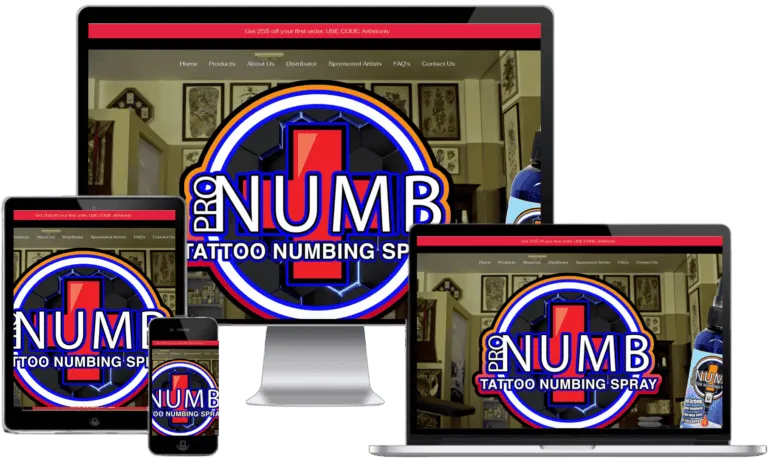
Pro Numb
Shopify Plus | Topical Anesthetics
A Shopify Plus store in a category where a handful of queries carry the revenue. Product work, answer-formatted content, and schema built around those terms; the brand now surfaces across AI results for its most competitive query. Whole-engagement numbers.
- $2M+ Monthly Revenue
- +340% Organic Traffic
- 47 Featured Snippets
-

Original Penguin
Heritage Menswear | Shopify + Stores
A heritage apparel brand on Shopify with physical stores to feed. Store-level pages and Google Business Profiles tuned location by location, so search demand landed at the right door. Engagement numbers, reported as tracked.
- 10,400 → 24,600 Store Page Sessions
- 1,280 → 2,840 GBP Actions
- 195k → 410k Impressions
-

DOORS NYC
Fashion Retail | Shopify, SoHo
A SoHo boutique on Shopify competing against fashion houses with years of search authority. Collection pages built for specific style searches turned style demand into sessions, calls, and store visits.
- ↑62% Organic Sessions
- ↑58% Calls
- ↑71% Directions
-

Grown Brilliance
Lab Grown Jewelry | DTC Ecommerce
A jewelry retailer in one of the most contested verticals in ecommerce. Keyword mapping, category content, and technical work carried the rankings; whole-engagement numbers, labeled honestly.
- 160K+ Organic Visits
- +95% Ranking Improvement
- $200M Annual Revenue
-
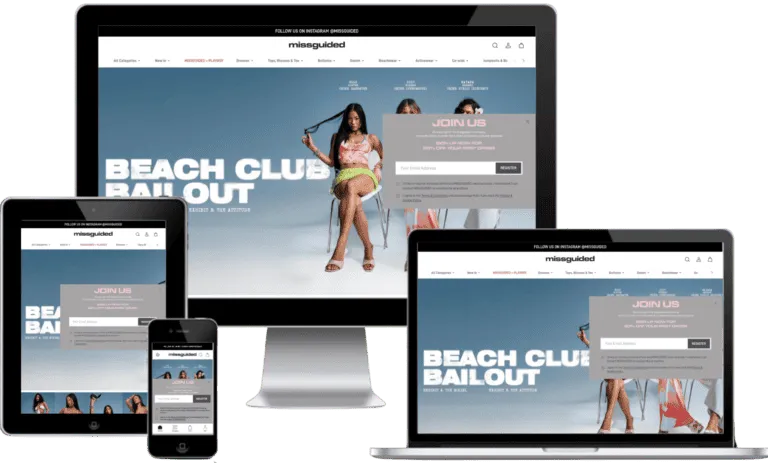
MissGuided
Fashion Ecommerce | Catalog Scale
A fashion catalog where seasonal collections and size variants make duplication structural, the same canonical discipline this page describes. Search ran inside the wider engagement; the numbers cover it whole.
- $2M-$3M Monthly Revenue
- 32,000 → 56,000 Organic Sessions
- 28 Featured Snippets
-
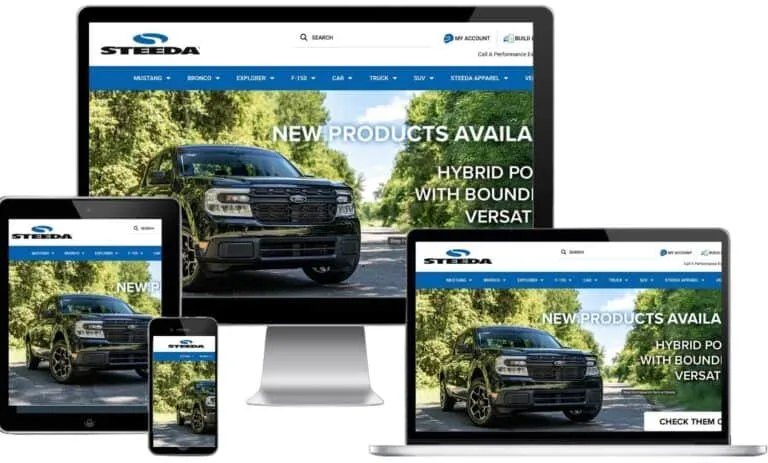
Steeda
Automotive Performance Parts
A performance-parts catalog where fitment queries decide everything. Category and product work matched pages to the way enthusiasts actually search. Numbers from the published engagement, whole.
- +102% Organic Traffic
- +95% Sales Growth
- +100K Monthly Visitors
-
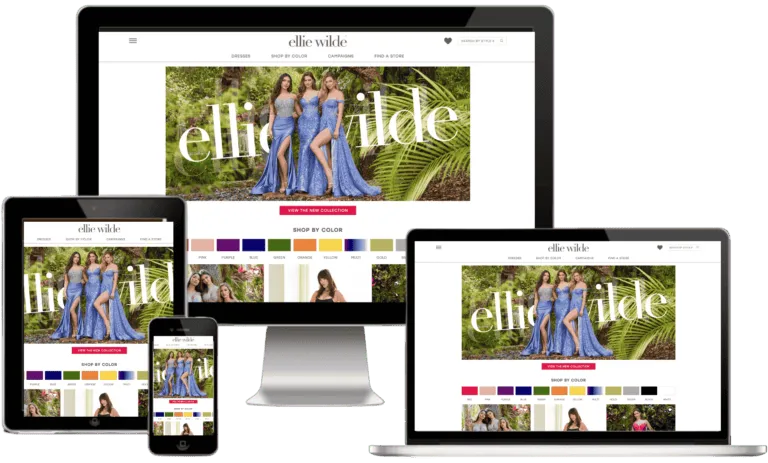
Ellie Wilde
Prom Dresses | Fashion DTC
A dress brand with hard seasonality: demand spikes months ahead of prom season, and pages must rank before it arrives. Content and product work timed to that calendar; numbers cover the whole engagement.
- 100K+ Monthly Organic Visitors
- 45% User Interaction
- 80% Social Engagement
The full set of store engagements on this platform lives in our Shopify case studies.
Meet Your Shopify SEO Team
The strategists, Liquid developers, content writers, and analysts who work in your theme and your feed, and then answer for the revenue.
-

Jobin John
Chief Executive Officer
-

Justin Brown
Head of Search Engine Optimization
-

Bryan Thomson
Head of Web Design & Development
-

Ina Komins
Head of Social Media Marketing
-

Kierra Pita
Head of Advertising & Content Marketing
-

Patricia Turner
Chief Creative Officer
-

William Carter
Chief Digital Strategy Officer
-

Andrew Miller
Senior SEO Strategist
-

Amy Robinson
Content Marketing Manager
-

Betty Harrison
PPC Campaign Specialist
-

Anthony Carter
Lead Digital Account Executive
-

Amanda Cooper
Social Media Director
-

Carol Parker
Senior Client Success Manager
-

Barbara Bennett
Email Marketing Lead
-

Charles Turner
Technical SEO Analyst
-

Brian Sullivan
Creative Director
-

Christine Walker
Director of Project Management
-

Christopher Brooks
Digital Marketing Strategist
-

Daniel Wright
Senior Analytics Specialist
-

David Henderson
Lead Content Strategist
-

Donna Mitchell
Client Communications Manager
-

Elizabeth Foster
Director of Paid Advertising
-

Emily Baredi
Brand Experience Specialist
-

Emma Scott
Social Media Content Creator
-

George Crawford
Technical Solutions Architect
-

Jacob Evans
Digital Content Coordinator
-

James Anderson
Marketing Automation Specialist
-

Jason Palmer
Junior Copywriter
-

Jeffrey Reynolds
Paid Media Analyst
-

Jennifer Lewis
Community Engagement Specialist
-

Jonathan Murphy
SEO Reporting Specialist
-

Joseph Morgan
Influencer Marketing Coordinator
-

Kenneth Stevens
Digital PR Manager
-

Kimberly Harper
Digital Marketing Intern
-

Kevin Morris
SEO Outreach Specialist
-

Lee Dawson
Junior Web Developer
-

Linda Peterson
Email Campaign Coordinator
-

Lisa Thompson
Social Media Ads Specialist
-

Margaret Bradley
Marketing Operations Lead
-

Mark Richards
Data & Insights Analyst
-

Mary Kennedy
Senior Copyeditor
-

Matthew Clark
Growth Marketing Manager
-

Michelle Sanders
Junior Marketing Designer
-

Michael Foster
Senior Conversion Rate Specialist
-

Nancy Wheeler
Digital Analytics Manager
-

Nicholas Pierce
Affiliate Marketing Specialist
-

Nicole Adams
Outreach Program Coordinator
-

Paul Franklin
Paid Social Campaign Manager
-

Richard Barnes
Reputation Management Specialist
-

Robert Murphy
Lead Solutions Architect
-

Ronald Davis
Marketing Technology Analyst
-

Ryan Bell
Paid Media Buyer
-

Sandra Gregory
Digital Account Coordinator
-

Scott Hopkins
CRM Implementation Specialist
-

Shirley Ellis
Customer Insights Manager
-

Stephanie Cross
Brand Content Designer
-

Steven Greene
Web Analytics Specialist
-

Susan Price
Affiliate Campaign Manager
-

Thomas Fisher
Lead Technical Architect
-

Timothy Nash
Mobile Marketing Strategist
Shopify SEO FAQs
What does a Shopify SEO company actually do?
The platform-shaped version of search work: keyword-mapped handles and titles inside the locked URL structure, canonical fixes for variants and collection paths, schema shipped through Liquid or metafields, collection descriptions, app-stack audits for speed, Merchant Center feed grooming, link earning, and GA4 revenue tracking. The deliverable is organic revenue you can trace by product and query, not a rankings screenshot.
Can you change the Shopify URL structure?
The /products/ and /collections/ prefixes, no; Shopify locks them at platform level and nothing removes them. The handle after the prefix is fully editable per product, collection, page, and post. Keep handles short and keyword-bearing, and set a 301 whenever one changes; Shopify offers the redirect at rename, and we verify every one of them.
How do you fix duplicate content on Shopify?
By reading what the theme does first. Collection-path URLs and variant parameters get canonical tags pointing at the primary product URL, set in Liquid where apps fall short. Pages with no search value get noindexed through metafields. The variant question, which ones deserve their own pages, is decided per catalog from query data, never left to the theme default.
Do you edit Shopify theme code?
Yes. Our developers work in theme.liquid, product.liquid, collection.liquid, and article.liquid directly: schema markup, meta tag templates, internal link blocks, and speed cleanup at code level. Everything ships in a duplicated theme first, gets tested, then publishes, so the live store never runs unreviewed changes. The durable fixes live in the code, which is where app-only work stops.
Which Shopify SEO app should we install?
Possibly none. Titles, metas, alt text, and redirects are native Shopify fields; most SEO apps add a bulk-editing interface on top of them. Structured data and image compression apps earn a place when the theme genuinely lacks the capability. We measure script weight per app before recommending anything, and our audits remove apps more often than they add them.
Do you work with Shopify Plus stores?
Yes. Plus opens levers standard plans lack: robots.txt.liquid editing, checkout customization, Shopify Markets for international targeting, and deeper Liquid access. Larger catalogs also raise the stakes on canonicals, feeds, and app governance. Plus engagements sit at the upper end of the pricing range because the surface area is genuinely larger, not because the badge says Plus.
Do you set up Google Merchant Center?
Yes, and we treat it as a channel rather than a checkbox: feed connected, feed titles rewritten around real queries, GTIN, MPN, and Brand attributes completed, categories mapped, disapprovals cleared, and free listing eligibility confirmed. Feed data and on-page schema are kept in agreement with each other, since mismatched price or availability can suspend listings.
How is Shopify SEO different from ecommerce SEO?
Ecommerce SEO is the discipline: category architecture, faceted navigation, product schema, content, and links, on any cart. Shopify SEO is that discipline executed inside Shopify’s specifics: locked URL prefixes, Liquid templates, metafields, app stacks, and the platform sitemap. Same goals, platform-shaped levers. We keep a separate page for each because the depth differs, not the destination.
How do I choose a Shopify SEO agency?
Ask whether their developers edit Liquid theme files or work only through apps, since durable fixes ship in code. Ask how they handle variant canonicals and who grooms the Merchant Center feed. Walk away from anyone promising to remove the /products/ prefix; the platform locks it. A fair agency prices the program from an audit and tells small catalogs when a one-time pass serves them better.
Ready to Rank Your Shopify Store Higher?
Shopify SEO is a specialty inside our full search engine optimization services, so the research, the theme work, the content, and the links run as one program with one owner. Tell us about your store and we will send back a plan with real findings in it: what the theme does with your canonicals, what the app stack costs you in speed, and what we would fix first.
Questions? Call (888) 644-7795 or email care@egochi.com
Egochi Stats
- 250+ Google Reviews
- 5.0 Clutch Rating
- 12+ Years Experience
- $200M+ Revenue Generated
- 4 US Offices
- 190+ Clutch Reviews
Blog Posts
- Aug 12, 2026 GEO vs. SEO: A Comparative Guide for Digital Marketers
- Aug 12, 2026 What is llms.txt? | How to Create llms.txt file for your website
- Aug 12, 2026 What is Semantic SEO? | How to Build Topical Authority That Ranks
- Aug 12, 2026 What is Schema Markup? | How to Add Structured Data to Your Website
- Aug 12, 2026 How to Optimize for Voice Search: A Realistic 2026 Guide