Remodeling Website Design
Egochi designs websites for remodeling contractors on one principle: the portfolio is the website. Homeowners planning a five-figure remodel do not skim a brochure site; they study your finished work, compare it to their saved ideas, and look for proof you can handle a months-long build inside their home. So we structure the site around featured-project pages that each tell one remodel's story and rank for its project type, galleries organized by room and style, budget ranges published up front to qualify leads before the call, process pages that answer the fear of living through construction, and financing content. The consultation flow is tuned for a considered decision, not an impulse click. Design is quoted to scope; plans that pair design with SEO start at $1,500 monthly.
Get Your Free Website Design Quote See What's Included
- 250+ Google Reviews
- 190+ Clutch Reviews at 5.0
- Google Premier Partner
As Featured In






What Makes a Remodeling Website Convert
Four decisions Egochi makes in every build that separate a portfolio that sells from a brochure that sits.
One project, one page
A featured-project page tells a single remodel's story: the starting point, the decisions, the photos, the location. It can rank for its project type, and it gives a researcher something to save and send to a spouse. A gallery lightbox with forty thumbnails does neither. Egochi builds the portfolio as pages, not pictures.
Published budget ranges qualify before the call
A homeowner who has budgeted for months has been refused numbers by every site they visited. Egochi publishes budget bands per project type, which earns immediate trust, filters out projects below your minimum, and means the consultations you take are with people whose expectations already fit your work.
Process pages fight fear, the real objection
A remodel means strangers in your home for months. The visitor stalling on your contact form is usually afraid of that, not unsure about your work. Egochi writes a clear process page covering what happens when, how decisions get made, and how the house stays livable, converting researchers your gallery already impressed.
Built for a considered decision, not an impulse
Your visitor may be a year from starting, and a form demanding a phone number right now reads wrong to them. Egochi builds the consultation flow to ask project type, timeline, and budget band, offers financing information for the ones doing math, and gives early-stage researchers a reason to keep coming back: the portfolio itself.
What's Inside a Remodeling Website Project
Egochi ships a portfolio-first build where every piece either shows the work or moves a researcher toward a consultation.
-
Portfolio-First Architecture
Egochi structures the site around your projects rather than your service list, so the finished work is the first thing every visitor meets and the thing search engines index.
-
Featured Project Pages
Egochi writes a page per standout remodel with the story, decisions, photos, and location, structured to rank for its project type and market.
-
Room and Style Galleries
Egochi organizes galleries the way homeowners actually browse, by room and by style, so a visitor with a saved-ideas folder finds your matching work in seconds.
-
Budget and Financing Content
Egochi publishes budget bands per project type and plain-language financing information where researchers can find them, qualifying leads before anyone gets on a call.
-
Process and Trust Pages
Egochi builds what-happens-when pages covering timeline, communication, and site care, answering the fear of a months-long build before it stalls the inquiry.
-
Consultation Request Flow
Egochi designs a form that asks project type, timeline, and budget band, paced for a considered decision, so submissions arrive qualified and ready to schedule.
A Remodeling Website Now Answers AI Assistants Too
Before the shortlist forms, homeowners ask AI Overviews what their remodel should cost, ask ChatGPT whether the project needs permits, and ask Gemini or Perplexity how to vet a contractor. Those systems build their answers from websites, and Egochi structures every build so yours is the one they can read, resolve, and name.
Google AI OverviewsChatGPTGeminiPerplexity
-
Featured-project pages are what assistants can cite
A project page with a story, scope, location, and photos gives AI engines something concrete to reference when a homeowner asks who does that work nearby. Egochi structures each one with markup a system can lift, which a gallery lightbox never provides.
-
Budget bands become the quoted numbers
Cost questions lead remodeling queries to ChatGPT and AI Overviews, and the systems quote pages that state ranges with the factors that move them. Egochi publishes your bands in exactly that shape, so the answer that frames a budget carries your firm's name.
-
License and service-area data machines can verify
Egochi marks up license, insurance, service areas, projects, and FAQs in structured schema and keeps that identity consistent across the site, profiles, Houzz, and directories. Gemini and Perplexity resolve which remodeler to recommend through exactly those signals.
-
Review signals carry into vetting answers
When someone asks an assistant how to choose a contractor, review depth and recency weigh heavily, along with whether your site tells the same story as your profiles. Egochi wires the build to surface real reviews and keeps every public claim aligned with what the firm can back up.
How a Portfolio-First Build Happens
-
Portfolio and photo inventory
Egochi starts with what exists: which completed projects have photography worth featuring, which need reshoots, and which stories carry the strongest proof for the project types you want more of.
-
Architecture before design
Egochi gets the sitemap approved first: featured-project pages, room and style galleries, budget and financing content, and process pages, each with a defined search target so no page ships as decoration.
-
Featured-project page production
Egochi writes each launch project's story: the starting point, the decisions, the materials, the result, with location detail and markup that let the page compete for its project type in search.
-
Trust and qualification layer
Egochi adds budget bands, financing information, and the process pages that answer construction-fear questions next, with the consultation form asking timeline and budget band so submissions arrive qualified.
-
Launch with rankings protected
Egochi maps redirects to carry over anything your old site had earned, tracking goes live with the build, and you get a repeatable path for turning each newly completed remodel into its own page.
Fair Questions About Remodeling Websites
Our Instagram already shows our work. Why rebuild the site?
Instagram rents you a feed; the site owns the ranking. A saved post cannot surface when someone searches your project type in your city, and a platform change can bury years of posts overnight. The two work together: social gets you into saved folders, and the site is where researchers verify you are a real firm worth a consultation.
Will publishing budget bands box in our estimates?
A band is not a bid. Publishing a range per project type with the factors that move it commits you to nothing while telling researchers whether you are in their neighborhood on price. The alternative is consultations with homeowners expecting half your minimum, which costs more sales time than any published range ever will.
Is a portfolio-first build worth the cost over a template?
For a firm selling five-figure projects, usually yes, and here is the honest test: if your finished work is your strongest sales asset, a template that buries it in a lightbox wastes exactly that asset. If you compete mostly on price with small jobs, a modest site is fine and Egochi will tell you so.
How much photography do we really need to launch?
Fewer projects than most firms think, shot better than most firms have. A launch with a handful of strong featured projects beats dozens of mediocre thumbnails, because each page needs enough images to tell one story well. Egochi inventories what you have first; reshoots of your best completed work usually cover the gaps.
Common Mistakes to Avoid
-
Organizing the portfolio by date completed instead of by room and style, the two ways homeowners actually browse for their own project.
-
Cropping every photo into a uniform grid until a whole-home remodel and a powder room refresh read as the same thumbnail.
-
Demanding a phone number from a visitor who is a year from starting, and losing the researcher a softer ask would have kept.
-
Writing project pages about the company instead of the remodel, leaving nothing for a searcher or a saver to connect with.
-
Treating the site as finished at launch, when every completed project afterward is a ranking page the firm never builds.
Website Builds Egochi Publishes Numbers For
Egochi builds sites for craft trades, home services, and national brands, and these receipts come from across that roster rather than a remodeling-only list. Every number restates the client's published case study, and the portfolio-first carpentry build leads the row.
-
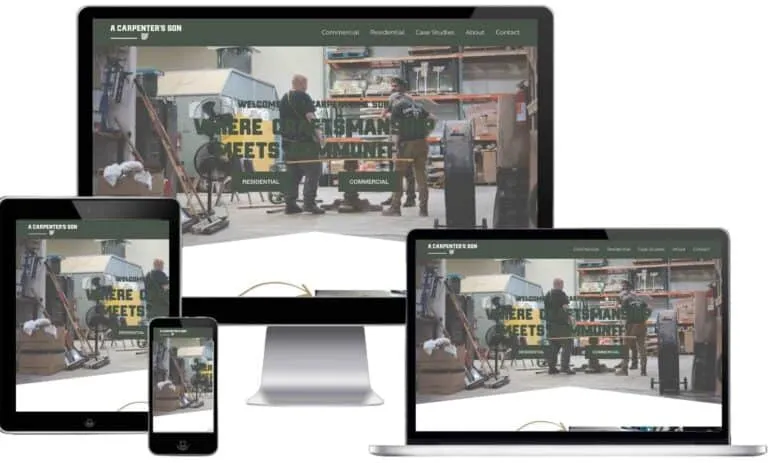
A Carpenter's Son Design Company
Custom Carpentry | Squarespace Build
A bespoke furniture and carpentry firm whose old site did not show the craftsmanship. Egochi rebuilt it with the portfolio leading and the quote path clear, and custom-order revenue rose with the traffic, the portfolio-first thesis in practice.
- +87% Organic Traffic Increase
- +80% PPC Conversion Rate Climb
- +85% Custom Order Revenue Rise
-
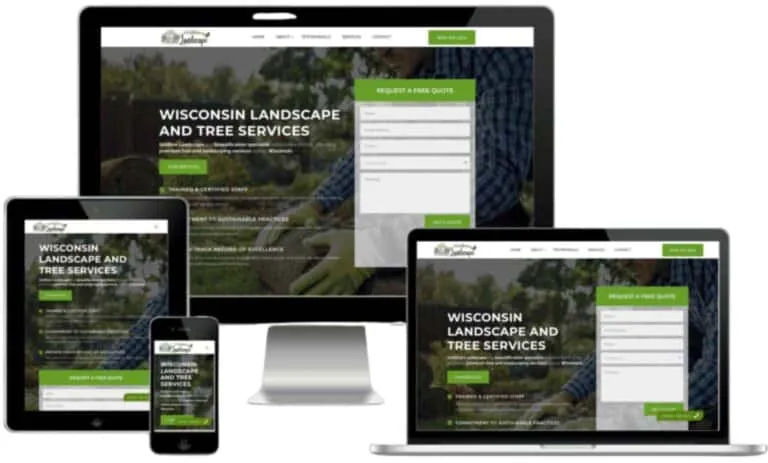
Gridline Landscape
Garden & Lawn Care | Wisconsin
A home-and-garden business whose site design did not reflect the quality of its work. Egochi redesigned it with content and local search in the same program, and lead flow followed.
- +80% Organic Traffic Increase
- +70% Local Lead Growth
- +60% Online Engagement Lift
-
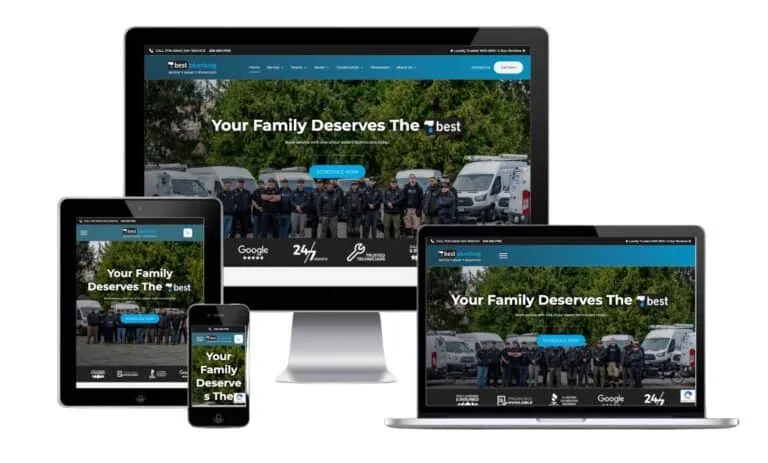
Best Plumbing
Plumbing Company | Seattle, WA
A trades site that hid its services and hesitated on the ask. Egochi rebuilt the WordPress site around findable information and a committed call to action, and conversion rate proved the change.
- +50% Conversion Rate Improvement
- +65% Local Inquiry Growth
- +75% Organic Traffic Increase
-
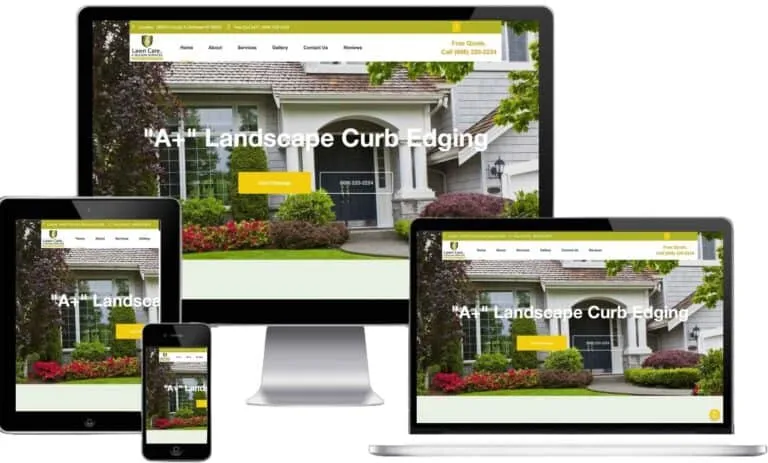
A+ Lawn Care
Lawn Care | Home Services
A home-services provider whose site could not communicate the quality of its work. Egochi shipped the responsive rebuild alongside profile and content work, and inquiries grew with the visibility.
- +60% Customer Inquiry Growth
- +70% Local Map Visibility Lift
- +80% Organic Traffic Increase
-
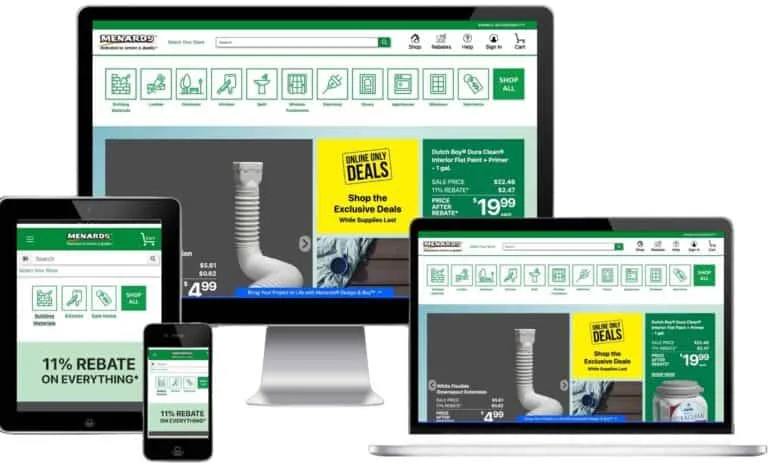
Menards
Home Improvement Retail | Web Build
A national retailer whose rebuild had to move conversions at scale. Egochi shipped the build, proof the process holds far past a launch with a handful of featured projects.
- +245% Traffic
- +180% Conversions
- 2.3s Page Speed
-
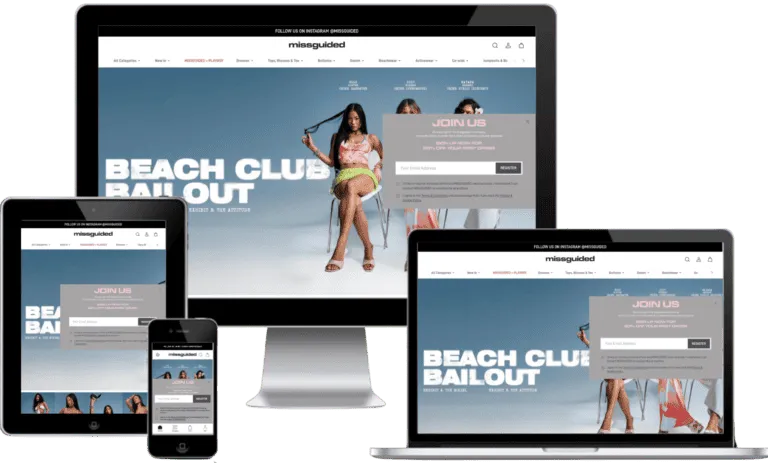
MissGuided
Fashion Ecommerce | Web Design
A retailer whose redesign was judged in conversion rate. Egochi rebuilt the funnel until sessions and conversions rose together, the same discipline behind a consultation flow built for researchers.
- 4.1% Conversion Rate
- 32,000 → 56,000 Organic Sessions
- +55% Revenue
See How Egochi Works
A short look at how our team plans, builds, and reports on client work.
Is This Right for You?
This is for you if
- Your finished work is stronger than your current site shows, and you lose comparisons to firms with weaker projects and better pages.
- You want project pages that rank for their project types, not a brochure that depends on ads for every visitor.
- You are willing to publish budget ranges and invest in photography, the two inputs the whole design is built around.
This may not be the right fit if
- You want the cheapest possible template site up fast. Portfolio-first design is a real build, and it is priced like one.
- You have no project photography and no plan to produce any. Without it, a portfolio-first site has nothing to feature.
See the work: Home & garden case studies · Web design case studies
What Clients Tell Us
Word of mouth used to be my only marketing. Egochi helped me get found online and now I have more leads than I can handle. Had to hire two more crews this year. Money well spent.
The Complete Remodeling Program
This page is one part of a five-part program. Each piece works alone and works better together.
-
Remodeling Marketing Agency
The full program for a months-long decision, measured in signed contracts.
-
Remodeler SEO
Project-type rankings and the cost answers competitors refuse to publish.
-
Remodeling PPC Management
Remarketing as the campaign, across the whole research window.
-
Remodeler Social Media Marketing
Project reveals built to live in saved folders until the call.
Common Questions About Remodeling Website Design
-
How much does a remodeling contractor website cost?
Remodeling website projects at Egochi are quoted to scope, and plans that pair the build with SEO and content start at $1,500 monthly. The main cost drivers are how many featured-project pages you launch with and how much photography needs producing, which the proposal prices out before you commit.
-
What should a remodeling contractor website include?
Featured-project pages that each tell one remodel's story, galleries organized by room and style, published budget ranges, a process page that walks homeowners through what a build is like to live through, financing information, and a consultation flow that asks about project type, timeline, and budget band.
-
How does a remodeling website show up in AI search answers?
AI Overviews, ChatGPT, Gemini, and Perplexity read websites to answer what a remodel costs, whether it needs permits, and which contractor nearby to trust. Egochi structures your project, cost, license, service-area, and review data in schema those systems can resolve, and the same structure moves your classic rankings.
-
Why should each remodeling project have its own page?
Because a page can rank and a lightbox cannot. A featured-project page with the story, decisions, photos, and location can appear in searches for that project type, and it gives a researcher something to save and send to a spouse. A gallery thumbnail does neither of those things.
-
How do we choose a website designer for a remodeling company?
Ask how they treat the portfolio. If the plan is a gallery lightbox, your strongest sales asset ships unable to rank or be saved; you want a page per featured project. Ask their view on publishing budget bands, how photography gaps get handled, and whether redirects protect what your old site earned. A designer with no path for turning future projects into pages is selling a brochure.
Awards and Partnerships Egochi Holds in 2026
-

Egochi Named 2026 Top Digital Marketing Agency by Clutch
Clutch, a B2B market research and reviews platform, names Egochi a top digital marketing agency for 2026. The distinction rests on overall market presence and, most importantly, verified client feedback. Egochi holds a 5.0 rating across 190+ reviews on Clutch.
-

Egochi Is a Certified Google Premier Partner
Egochi is a certified Google Premier Partner, a status Google grants to the top 3% of participating advertising agencies each year. The tier is earned on campaign performance, sustained client growth, and advanced Google Ads certification, and Google reviews it annually rather than granting it for life.
The Team Behind the Work
-

Jobin John
Chief Executive Officer
-

Justin Brown
Head of Search Engine Optimization
-

Bryan Thomson
Head of Web Design & Development
-

Ina Komins
Head of Social Media Marketing
-

Kierra Pita
Head of Advertising & Content Marketing
-

Patricia Turner
Chief Creative Officer
-

William Carter
Chief Digital Strategy Officer
-

Andrew Miller
Senior SEO Strategist
-

Amy Robinson
Content Marketing Manager
-

Betty Harrison
PPC Campaign Specialist
-

Anthony Carter
Lead Digital Account Executive
-

Amanda Cooper
Social Media Director
-

Carol Parker
Senior Client Success Manager
-

Barbara Bennett
Email Marketing Lead
-

Charles Turner
Technical SEO Analyst
-

Brian Sullivan
Creative Director
-

Christine Walker
Director of Project Management
-

Christopher Brooks
Digital Marketing Strategist
-

Daniel Wright
Senior Analytics Specialist
-

David Henderson
Lead Content Strategist
-

Donna Mitchell
Client Communications Manager
-

Elizabeth Foster
Director of Paid Advertising
-

Emily Baredi
Brand Experience Specialist
-

Emma Scott
Social Media Content Creator
-

George Crawford
Technical Solutions Architect
-

Jacob Evans
Digital Content Coordinator
-

James Anderson
Marketing Automation Specialist
-

Jason Palmer
Junior Copywriter
-

Jeffrey Reynolds
Paid Media Analyst
-

Jennifer Lewis
Community Engagement Specialist
-

Jonathan Murphy
SEO Reporting Specialist
-

Joseph Morgan
Influencer Marketing Coordinator
-

Kenneth Stevens
Digital PR Manager
-

Kimberly Harper
Digital Marketing Intern
-

Kevin Morris
SEO Outreach Specialist
-

Lee Dawson
Junior Web Developer
-

Linda Peterson
Email Campaign Coordinator
-

Lisa Thompson
Social Media Ads Specialist
-

Margaret Bradley
Marketing Operations Lead
-

Mark Richards
Data & Insights Analyst
-

Mary Kennedy
Senior Copyeditor
-

Matthew Clark
Growth Marketing Manager
-

Michelle Sanders
Junior Marketing Designer
-

Michael Foster
Senior Conversion Rate Specialist
-

Nancy Wheeler
Digital Analytics Manager
-

Nicholas Pierce
Affiliate Marketing Specialist
-

Nicole Adams
Outreach Program Coordinator
-

Paul Franklin
Paid Social Campaign Manager
-

Richard Barnes
Reputation Management Specialist
-

Robert Murphy
Lead Solutions Architect
-

Ronald Davis
Marketing Technology Analyst
-

Ryan Bell
Paid Media Buyer
-

Sandra Gregory
Digital Account Coordinator
-

Scott Hopkins
CRM Implementation Specialist
-

Shirley Ellis
Customer Insights Manager
-

Stephanie Cross
Brand Content Designer
-

Steven Greene
Web Analytics Specialist
-

Susan Price
Affiliate Campaign Manager
-

Thomas Fisher
Lead Technical Architect
-

Timothy Nash
Mobile Marketing Strategist
Certified & Accredited


Let the Finished Work Do the Selling
Tell us about your projects and the photography you have. Egochi, a 5.0 rated design team across 190+ Clutch reviews, maps the featured-project pages, galleries, and content your build starts with.
Egochi Stats
- 250+ Google Reviews
- 5.0 Clutch Rating
- 12+ Years Experience
- $200M+ Revenue Generated
- 4 US Offices
- 190+ Clutch Reviews
Blog Posts
- Aug 12, 2026 GEO vs. SEO: A Comparative Guide for Digital Marketers
- Aug 12, 2026 What is llms.txt? | How to Create llms.txt file for your website
- Aug 12, 2026 What is Semantic SEO? | How to Build Topical Authority That Ranks
- Aug 12, 2026 What is Schema Markup? | How to Add Structured Data to Your Website
- Aug 12, 2026 How to Optimize for Voice Search: A Realistic 2026 Guide