Roofing Website Design
A roofing website has one job: turn an urgent visitor into a booked estimate before they hit the back button. Egochi designs roofing sites around that moment. An estimate form and a tap-to-call button sit above the fold on every page, project galleries are organized by roof type and by town so homeowners can find their own neighborhood, and dedicated financing and insurance-claim pages answer the two questions that stall five-figure replacements. Manufacturer certification badges go where doubt actually occurs, not buried in a footer. The same templates serve as landing pages for roofing PPC, where page experience prices every click. Because roofing traffic spikes with the weather, Egochi builds for a phone in a driveway, not a desktop in an office. Site builds are quoted per project; marketing plans that keep the site ranking start at $1,500 monthly. Start with a free teardown of your current site.
Get Your Free Site Teardown See What's Included
- 250+ Google Reviews
- 190+ Clutch Reviews at 5.0
- Google Premier Partner
As Featured In






What a Roofing Website Has to Do
Four design decisions where Egochi decides whether visitors book estimates.
The estimate request is architecture, not a button
On mobile, the estimate form and a tap-to-call button both belong above the fold on every page, because storm traffic enters wherever Google drops it. Egochi designs the request path first and the layout around it, then measures the site on estimate requests, not visits.
Galleries convert when they answer a search
Homeowners look for two things in a gallery: their material and their town. A gallery filterable by roof type and neighborhood answers whether you have done their roof, near them, in seconds. A wall of unlabeled beauty shots answers nothing.
Financing and claim pages remove the two stalls
Replacements stall on money and on insurance confusion. Egochi writes a financing page with honest monthly framing and a claim page that explains deductibles and adjuster visits, answering the questions homeowners will not ask on the phone, and both pull search demand of their own.
Storm surges are the real load test
A roofing site gets its heaviest traffic on the day conditions are worst: spotty cell service, older phones, stressed visitors. Egochi ships static-fast pages, compresses imagery hard, and tests on mid-range devices, because the surge is the moment the site exists for.

What's Inside a Roofing Website Build
Six elements Egochi aims at the estimate request.
-
Estimate-First Architecture
Egochi puts a form and tap-to-call above the fold on every template, keeps forms short enough to ask only what booking requires, and builds a thank-you path that sets expectations.
-
Town and Roof-Type Galleries
Egochi structures project galleries filterable by material and by town, so each combination can earn its own search visibility.
-
Financing and Claim Pages
Egochi writes dedicated pages for financing options and the insurance-claim process, plainly, answering the two questions that stall five-figure decisions.
-
Certification and Trust Placement
Egochi places manufacturer certifications, licensing, and insurance credentials where doubt actually occurs: beside the form, on estimate pages, near pricing.
-
Storm-Surge Speed
Egochi ships static-fast builds tested on mid-range phones and weak connections, because your heaviest traffic arrives in the worst conditions.
-
Search-Ready Foundations
Egochi builds clean semantic markup, LocalBusiness schema, and a URL per service and town, so the site is built to rank from day one instead of retrofitted later.
A Roofing Site Built for AI Answers as Well as Browsers
Homeowners now ask AI Overviews whether hail damage means a full replacement, ask ChatGPT what insurance covers after a storm, and ask Gemini or Perplexity which local roofer is licensed and reviewed. Those systems answer by reading websites. Egochi builds roofing sites whose services, materials, service areas, licensing, and credentials are structured so a machine can lift them and name your company.
Google AI OverviewsChatGPTGeminiPerplexity
-
Pages a system can quote
AI Overviews and ChatGPT cite pages that answer one question cleanly: replacement cost ranges, what a claim covers, how long a tear-off takes. Egochi writes and structures those pages so the answer, and your company beside it, sits where an assistant can lift both.
-
Schema that identifies the company
Egochi marks up LocalBusiness data, services, service areas, and credentials in structured schema and keeps them consistent with your profiles and directories. Gemini and Perplexity resolve which roofer to name through exactly these signals.
-
Galleries and reviews as machine-readable proof
Town-and-material galleries and on-site review markup give assistants the same local evidence a skeptical homeowner checks. Egochi structures both so the proof reads clearly to people and to systems.
-
One build serves rankings, clicks, and citations
The structured, static-fast pages that earn AI citations are the same ones that rank organically and convert paid clicks, so Egochi builds one site that does all three jobs instead of bolting on an AI version later.
How a Roofing Website Build Runs
-
Teardown and scoping
Egochi tears down your current site page by page: where estimate requests leak, how it loads on a mid-range phone, and what the rebuild needs to keep, kill, or add. You get a fixed quote from that scope.
-
Architecture before design
The estimate path, the gallery structure, and the service and town URL map get drawn first, so the design decorates a conversion plan instead of the other way around.
-
Design and build
Egochi designs against your real jobs and proof, builds static-fast templates, and tests every page on the phones and weak connections that storm traffic actually arrives on.
-
Content and proof load-in
Galleries get filled by town and roof type, financing and claim pages get written plainly, and certifications get placed at the exact points where visitors hesitate.
-
Launch, measure, hand over
The site launches with call and form tracking wired in, redirects verified, and a walkthrough from Egochi of how to add jobs to galleries yourself, so the engine keeps feeding.
Fair Questions Roofers Ask About Websites
Our old site gets calls. Why rebuild at all?
Calls despite a site are not calls because of it. The teardown puts a number on the gap: how many visitors arrive, how many request estimates, and where the rest leave. If your conversion path is already tight and the pages load fast on a phone, Egochi will say so and you keep your money.
Would a cheap template site do the same job?
For a new company with no job history, a clean template is an honest start. It falls behind when you need town galleries that rank, claim and financing pages, and speed under storm loads, because templates carry plugin weight you cannot remove. The right question is not template versus custom; it is what stage the business is at.
How long before a new site produces estimates?
Conversion improvements show as soon as traffic hits the new pages, often in the first weeks, because the same visitors meet a shorter path. Ranking gains take months and depend on the search work done after launch. Egochi separates the two in reporting so neither gets credited for the other.
Can we keep adding pages ourselves without breaking it?
That is a design requirement, not a favor. Galleries, town pages, and job photos should be additions your office staff can make in minutes, and Egochi hands over instructions and a working example at launch. A site you cannot feed without a developer invoice was built wrong.
Common Mistakes to Avoid
-
Burying the estimate form on a contact page while every landing page ends in a brochure paragraph and no ask.
-
Loading the homepage with a full-screen video that looks great in the office and takes eight seconds on a phone in a driveway.
-
Publishing one gallery of unlabeled roof photos instead of galleries by town and material that answer what visitors actually came to check.
-
Leaving financing to a phone conversation, when the monthly-payment question is what stalls many replacement decisions.
-
Launching without call tracking, so nobody can ever say which pages produce estimates and which just look good.
Website Builds Egochi Publishes Numbers For
Egochi builds sites for trades, retailers, and publishers, and these receipts come from across that roster rather than a roofing-only list. Every number restates the client's published case study, and the home-service builds lead the row because their buyer is the one a roofing site converts.
-
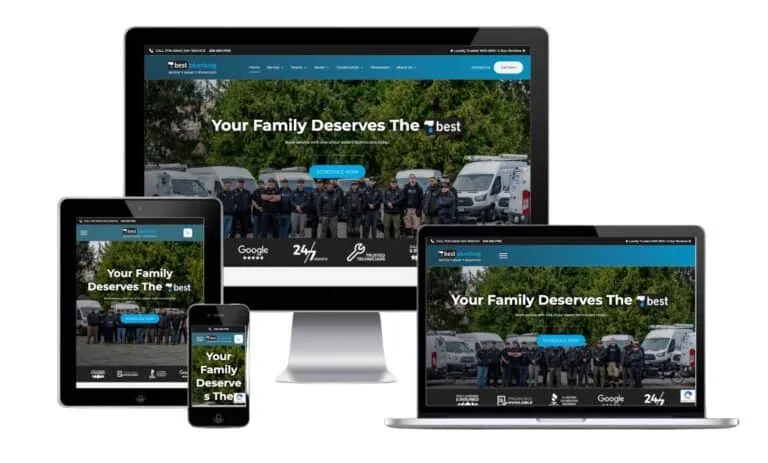
Best Plumbing
Plumbing Contractor | Seattle, WA
An urgent-call trade whose WordPress site was losing the visitors its rankings earned. Egochi revamped it around the call and the booking, and conversion rate and local inquiries rose across twelve months.
- +50% Conversion Rate Improvement
- +65% Local Inquiry Growth
- +75% Organic Traffic Increase
-
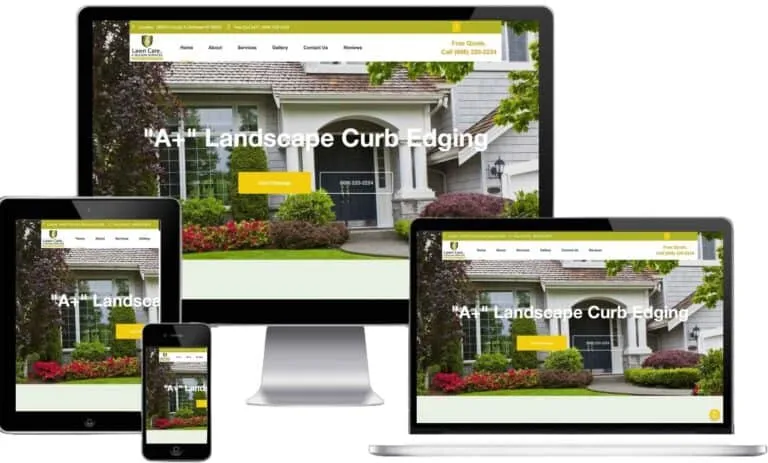
A+ Lawn Care
Lawn Care Company | Local Home Services
A local trade that needed a complete online upgrade to reach homeowners. Egochi rebuilt the site and presence, and traffic, map visibility, and inquiries climbed together.
- +80% Organic Traffic Increase
- +70% Local Map Visibility Lift
- +60% Customer Inquiry Growth
-
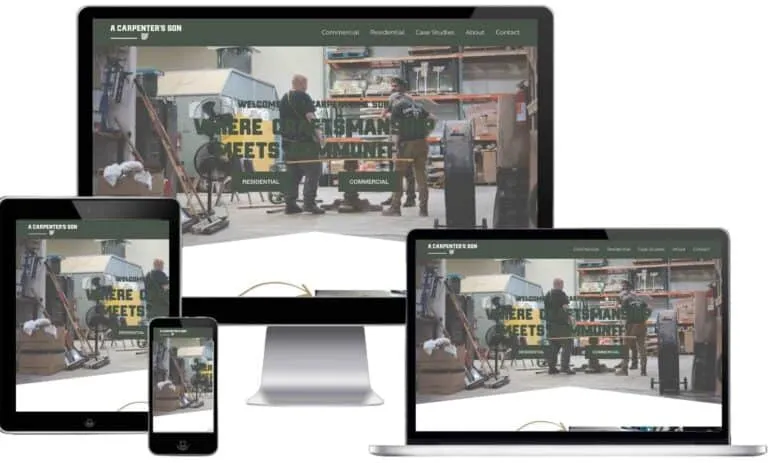
A Carpenter's Son Design Company
Custom Carpentry | Web and Search
A craftsman firm selling custom-quoted work through its site, the roofing estimate economics exactly. Egochi rebuilt the digital presence, and order revenue climbed with traffic and paid conversion.
- +85% Custom Order Revenue Rise
- +80% PPC Conversion Rate Climb
- +87% Organic Traffic Increase
-
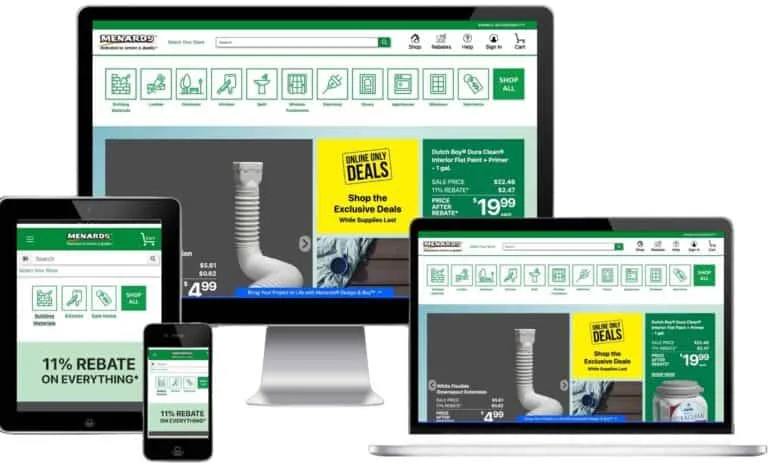
Menards
Home Improvement Retail | Web Build
A national home improvement retailer whose rebuild had to move conversions at scale. Egochi shipped the build, proof the process holds far past a ten-page contractor site.
- +245% Traffic
- +180% Conversions
- 2.3s Page Speed
-

Pitchfork Media
Media Publisher | Site Speed
A publisher living on page speed. Egochi cut load times and reading depth climbed, the same speed discipline a storm-week search on a driveway phone demands.
- -60% Load Time
- +320% Engagement
- 2.6M Monthly Visitors
-
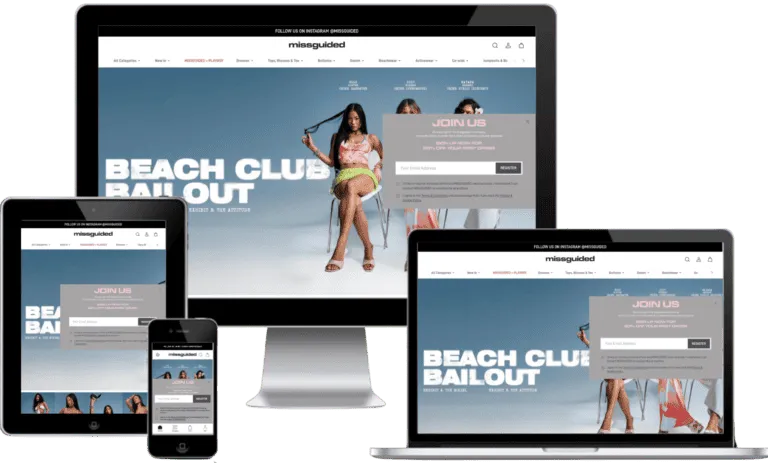
MissGuided
Fashion Ecommerce | Web Design
A retailer whose redesign was judged in conversion rate. Egochi rebuilt the funnel until sessions and conversions rose together, the discipline behind every estimate-first roofing build.
- 4.1% Conversion Rate
- 32,000 → 56,000 Organic Sessions
- +55% Revenue
See How Egochi Works
A short look at how our team plans, builds, and reports on client work.
Is This Right for You?
This is for you if
- Your current site gets traffic but produces few estimate requests, and you cannot say why.
- You run ads or door-hanger campaigns into a homepage that loads slowly on phones.
- You have years of finished jobs and no gallery structure doing anything with them.
This may not be the right fit if
- You want the cheapest possible template site. A template can be a fine start, but it is not what Egochi builds here.
- Nobody on your team will supply job photos going forward. Galleries are the engine here, and they need feeding.
See the work: Home & garden case studies · Web design case studies
What Clients Tell Us
Storm season used to be our only busy time. Now we get steady leads year-round for roof replacements and repairs. Egochi’s local SEO and PPC work has transformed our business.
The Complete Roofing Program
This page is one part of a five-part program. Each piece works alone and works better together.
-
Roofing Marketing Agency
The full program for both demand modes: storm response and steady replacement.
-
Roofing SEO
Storm-response visibility and rankings that compound between seasons.
-
Roofing PPC Agency
Surge bidding and exact-match discipline at premium click prices.
-
Roofing Social Media Marketing
Drone footage and documented local jobs, the antidote to storm-chaser distrust.
Common Questions About Roofing Website Design
-
How much does a roofing website cost?
Egochi scopes roofing sites to the build: most contractor sites land between $3,500 and $15,000 depending on page count, galleries, and custom features. Marketing plans that keep the site ranking after launch start at $1,500 monthly. The free teardown of your current site comes with a fixed quote.
-
What makes a roofing website convert?
An estimate path a stressed homeowner can complete in under a minute: tap-to-call and a short form above the fold, proof beside the ask, and pages that load fast on a phone in a driveway. Egochi treats conversion as the removal of friction and doubt, not persuasion tricks.
-
Should a roofing website have a page for each town?
Yes, when each page carries real local substance: jobs completed there, photos, the roof types common in that housing stock. A town page that only swaps the city name gets filtered by Google and ignored by residents. Egochi builds them at the pace your project history supports.
-
How does a roofing website show up in AI search answers?
AI Overviews, ChatGPT, Gemini, and Perplexity answer homeowner questions by reading structured sites. Egochi marks up your services, service areas, licensing, and reviews in schema and writes cost and claim pages in the direct shape those systems quote, so the answer about storm damage can name your company.
-
What should roofers ask before hiring a website designer?
Load their past roofing builds on a mid-range phone over a cell connection and time them; storm traffic will not wait past three seconds, and static builds with compressed images and no plugin bloat are what pass the test. Ask for a fixed quote from a real teardown, whether galleries organize by town and roof type, whether call tracking ships at launch, and whether your office staff can add jobs without a developer invoice.
Awards and Partnerships Egochi Holds in 2026
-

Egochi Named 2026 Top Digital Marketing Agency by Clutch
Clutch, a B2B market research and reviews platform, names Egochi a top digital marketing agency for 2026. The distinction rests on overall market presence and, most importantly, verified client feedback. Egochi holds a 5.0 rating across 190+ reviews on Clutch.
-

Egochi Is a Certified Google Premier Partner
Egochi is a certified Google Premier Partner, a status Google grants to the top 3% of participating advertising agencies each year. The tier is earned on campaign performance, sustained client growth, and advanced Google Ads certification, and Google reviews it annually rather than granting it for life.
The Team Behind the Work
-

Jobin John
Chief Executive Officer
-

Justin Brown
Head of Search Engine Optimization
-

Bryan Thomson
Head of Web Design & Development
-

Ina Komins
Head of Social Media Marketing
-

Kierra Pita
Head of Advertising & Content Marketing
-

Patricia Turner
Chief Creative Officer
-

William Carter
Chief Digital Strategy Officer
-

Andrew Miller
Senior SEO Strategist
-

Amy Robinson
Content Marketing Manager
-

Betty Harrison
PPC Campaign Specialist
-

Anthony Carter
Lead Digital Account Executive
-

Amanda Cooper
Social Media Director
-

Carol Parker
Senior Client Success Manager
-

Barbara Bennett
Email Marketing Lead
-

Charles Turner
Technical SEO Analyst
-

Brian Sullivan
Creative Director
-

Christine Walker
Director of Project Management
-

Christopher Brooks
Digital Marketing Strategist
-

Daniel Wright
Senior Analytics Specialist
-

David Henderson
Lead Content Strategist
-

Donna Mitchell
Client Communications Manager
-

Elizabeth Foster
Director of Paid Advertising
-

Emily Baredi
Brand Experience Specialist
-

Emma Scott
Social Media Content Creator
-

George Crawford
Technical Solutions Architect
-

Jacob Evans
Digital Content Coordinator
-

James Anderson
Marketing Automation Specialist
-

Jason Palmer
Junior Copywriter
-

Jeffrey Reynolds
Paid Media Analyst
-

Jennifer Lewis
Community Engagement Specialist
-

Jonathan Murphy
SEO Reporting Specialist
-

Joseph Morgan
Influencer Marketing Coordinator
-

Kenneth Stevens
Digital PR Manager
-

Kimberly Harper
Digital Marketing Intern
-

Kevin Morris
SEO Outreach Specialist
-

Lee Dawson
Junior Web Developer
-

Linda Peterson
Email Campaign Coordinator
-

Lisa Thompson
Social Media Ads Specialist
-

Margaret Bradley
Marketing Operations Lead
-

Mark Richards
Data & Insights Analyst
-

Mary Kennedy
Senior Copyeditor
-

Matthew Clark
Growth Marketing Manager
-

Michelle Sanders
Junior Marketing Designer
-

Michael Foster
Senior Conversion Rate Specialist
-

Nancy Wheeler
Digital Analytics Manager
-

Nicholas Pierce
Affiliate Marketing Specialist
-

Nicole Adams
Outreach Program Coordinator
-

Paul Franklin
Paid Social Campaign Manager
-

Richard Barnes
Reputation Management Specialist
-

Robert Murphy
Lead Solutions Architect
-

Ronald Davis
Marketing Technology Analyst
-

Ryan Bell
Paid Media Buyer
-

Sandra Gregory
Digital Account Coordinator
-

Scott Hopkins
CRM Implementation Specialist
-

Shirley Ellis
Customer Insights Manager
-

Stephanie Cross
Brand Content Designer
-

Steven Greene
Web Analytics Specialist
-

Susan Price
Affiliate Campaign Manager
-

Thomas Fisher
Lead Technical Architect
-

Timothy Nash
Mobile Marketing Strategist
Certified & Accredited


A Roofing Site Has One Job, to Book the Estimate
Send us your current site. Egochi's teardown shows where estimate requests leak, how the site holds up on a phone, and what a rebuild would cost, with a fixed quote.
Egochi Stats
- 250+ Google Reviews
- 5.0 Clutch Rating
- 12+ Years Experience
- $200M+ Revenue Generated
- 4 US Offices
- 190+ Clutch Reviews
Blog Posts
- Aug 12, 2026 GEO vs. SEO: A Comparative Guide for Digital Marketers
- Aug 12, 2026 What is llms.txt? | How to Create llms.txt file for your website
- Aug 12, 2026 What is Semantic SEO? | How to Build Topical Authority That Ranks
- Aug 12, 2026 What is Schema Markup? | How to Add Structured Data to Your Website
- Aug 12, 2026 How to Optimize for Voice Search: A Realistic 2026 Guide