Hotel Website Design
Egochi designs hotel websites with one test in mind: when a traveler compares your site to your own listing on Expedia or Booking, your site has to win. That means a booking engine embedded on the page with real-time rates, not a link out to a portal that looks like someone else's; room pages built to rank for the searches guests actually run; photography presented the way the property deserves; and book-direct perks stated plainly beside the rate, so the reason to skip the OTA is on the screen at the moment of choice. Egochi quotes sites per project, and the marketing plans that send them demand start at $1,500 monthly. Start with a free teardown of your current site against your own OTA listing.
Get Your Free Website Teardown See What's Included
- 250+ Google Reviews
- 190+ Clutch Reviews at 5.0
- Google Premier Partner
As Featured In






What Makes a Hotel Website Different
Four things Egochi gets right so your site wins the booking instead of handing it back to the OTA.
The OTA page for your hotel is the competition
Travelers open your site and your OTA listing side by side. The OTA brings reviews, photos, and one-tap booking; your site has to clear that bar and then add what the OTA never will: your full story, your perks, and a rate with no commission behind it. Most independent hotel sites lose this comparison on the booking step alone.
A link-out booking portal loses guests mid-checkout
Sending guests to a third-party subdomain that looks nothing like your site breaks trust exactly where money changes hands. Egochi embeds the engine on the page, matches its styling to the property, and keeps live rates visible before the guest commits to a click, because every extra hop sheds bookings.
Room pages are landing pages, not a gallery grid
Each room type earns its own page: copy, photos, occupancy, rates, and structured data, so it can rank on its own and take a booking on its own. A site whose rooms live inside one slider gives search engines nothing to rank and guests nothing to land on from an ad, so Egochi builds a page per room type.
Book-direct perks only work when they sit next to the rate
Rate parity clauses often stop you from publishing a cheaper price, so the direct case is made in perks: late checkout, breakfast, flexible cancellation, a welcome drink. Buried on a policies page they do nothing. Placed beside the price at the moment of comparison, they are the argument, and Egochi places them exactly there.

What's Inside a Hotel Website Build
Egochi aims design, speed, and structure at one outcome: confirmed direct reservations.
-
Design That Sells the Stay
Egochi designs photography-first layouts that put the property and its setting forward, with a visual hierarchy that moves guests from the first image toward dates and rates.
-
Booking Engine on the Page
Egochi embeds your engine with real-time rates and availability, styled to match the site, so guests book without being handed off to a portal that feels like a different company.
-
Room and Rate Pages
Egochi builds a page per room type with its own copy, photos, and structured data, made to rank in search and to land ad clicks that convert.
-
Speed and Core Web Vitals
Egochi builds image-heavy pages that load fast on the phones and patchy connections travelers actually book from. Green Core Web Vitals as a build requirement, not an afterthought.
-
Search-Ready Structure
Egochi ships clean technical structure, hotel and room schema, and local content architecture, so the site feeds your search visibility instead of fighting it.
-
Accessibility Built In
Egochi builds keyboard navigation, readable contrast, and screen-reader support through the booking path. Hospitality sites draw accessibility complaints; a compliant build is protection and better service at once.
A Structured Hotel Website Is What AI Search Reads
Travelers now ask ChatGPT and Perplexity for a property matching their trip, and Google answers hotel questions with AI Overviews assembled from structured data. Those systems read the same crawl classic search runs, so a brochure site with rooms hidden in a slider is invisible to both. Egochi builds hotel websites as the structured source the machines can identify and cite.
Google AI OverviewsChatGPTGeminiPerplexity
-
Room and amenity schema drive the match
A request like "boutique hotel with a pool near downtown" gets answered from structured property, room, and amenity data. Egochi marks all of it up at build time, so Gemini and Google AI Overviews can match your property to the stay being described.
-
A page per room gives the systems something to cite
AI answers lift from pages that describe one thing directly. The room, offer, and destination pages Egochi builds for rankings are the same pages the assistants quote, where a single long homepage gives them nothing.
-
Consistency decides whether you are recognized
Egochi keeps your property name, location, amenities, and rates telling one story across the site, your Google hotel listing, and your profiles, because ChatGPT and Perplexity resolve a hotel as an entity before recommending it.
-
The citation should land on your booking engine
When an AI answer cites the OTA page for your own property, the commission follows the recommendation. Egochi builds your site as the strongest source about your hotel, so the machines send travelers where no commission waits.
How the Build Wins the Comparison
-
Side-by-side teardown
Egochi opens your site next to your own OTA listing and scores the comparison a traveler makes: booking path length, rate visibility, photography, speed, and the direct case. The gaps become the build spec.
-
Booking engine embedded
Egochi puts your engine on the page, styled to the property, with live rates and availability visible before any click commits. The handoff to a foreign-looking portal disappears.
-
Room pages built to land
Egochi gives each room type its own page with copy, photos, occupancy, rates, and structured data, ready to rank in search and to receive ad clicks that convert.
-
Perks beside the price
Egochi writes and places the book-direct case, late checkout, breakfast, flexible cancellation, at the rate itself, where the OTA comparison actually happens, instead of burying it on a policies page nobody opens.
-
Speed, schema, and launch
Image-heavy pages get compressed and tested to green Core Web Vitals on real phone connections, hotel and room schema goes in, and tracking is live at launch so results show from week one.
Questions Hoteliers Ask Before a Rebuild
Guests can already book on the OTA. Why invest in our own site?
Every booking that happens there instead of here carries a commission you set fire to. The site is the one sales channel where the full margin, the guest relationship, and the upsell all stay with you. The rebuild Egochi ships does not remove OTAs from the mix; it stops sending them the guests who came looking for you specifically.
Our current site is only a few years old. Rebuild or repair?
Age matters less than three tests: does booking happen on your pages with live rates, can each room type rank and land traffic on its own, and does it load fast on a phone. A recent site failing all three needs structural work a facelift cannot deliver. Passing two of three, targeted repair may honestly be the better spend, and an Egochi teardown will say which.
Is a beautiful design enough to win the direct booking?
Design earns attention; the booking is won at the rate. A stunning site that hands guests to a clunky portal, hides prices, or loads slowly on hotel wifi loses the comparison to the OTA tab sitting one swipe away. The builds Egochi ships pair the photography with a short path, live rates, and a stated reason to book here, because that pairing is what shifts direct share.
How long does a hotel website project take?
A focused independent-property build typically runs a couple of months: teardown and architecture first, then design, then room pages and the booking-engine work, then the speed and schema pass. The engine connection is the step that stretches most often, because it depends on your vendor. Egochi sets the schedule in the quote and flags that risk early.
Common Mistakes to Avoid
-
Linking the book button to a portal that looks like a different company at the exact moment payment begins.
-
Hiding every room inside one gallery slider, leaving nothing for search to rank or an ad to land on.
-
Publishing the direct perks on a policies page instead of beside the rate where the OTA comparison happens.
-
Shipping full-resolution photography that takes eight seconds to paint on the hotel wifi guests actually book from.
-
Rebuilding the design while leaving rates and availability off the site, so the prettier brochure still cannot take a reservation.
Hotel Website Design Case Studies
Egochi publishes these receipts from hospitality and build engagements across the client roster. Every number restates the client's published case study, and the booking builds lead the row.
-
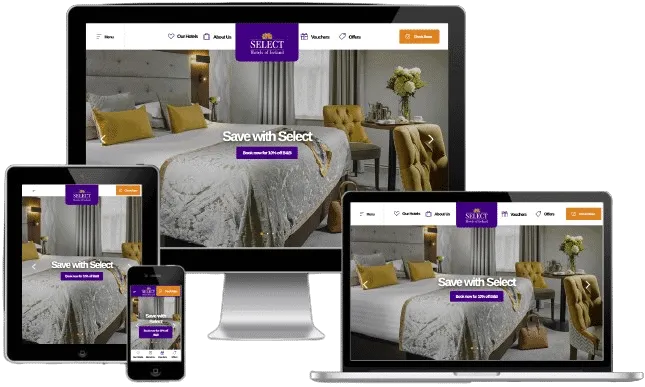
SELECT Hotels
Hotel Group | Custom CMS & Booking Build
A property group serving business and leisure travelers on a platform that made booking harder than it should be. Egochi built the custom CMS and integrated booking system, and inquiries, conversions, and satisfaction all climbed.
- +70% Inquiry Surge
- +55% Booking Conversion Lift
- +65% User Satisfaction Rise
-
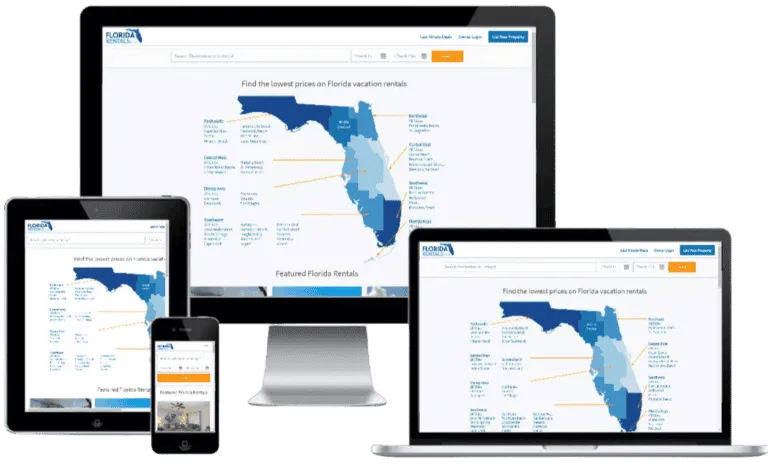
Florida Rentals
Vacation Rentals & Hotel Bookings | Florida
A booking site whose dated design lost travelers to slicker platforms. Egochi ran the redesign and search work that turned its visits into reservations.
- +65% Booking Conversion Rise
- +75% Organic Traffic Increase
- +50% Lead Generation Growth
-
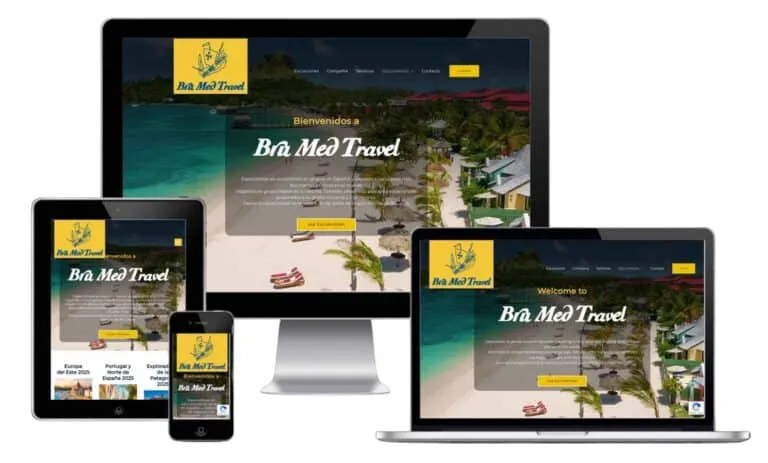
Bru Med Travel
Travel Agency | WordPress Rebuild
A travel brand whose site could not sell the trips it curated. Egochi rebuilt it with the imagery, structure, and speed that turned browsing into conversions.
- +40% Conversion Rate Rise
- +65% Organic Traffic Increase
- +50% User Engagement Growth
-
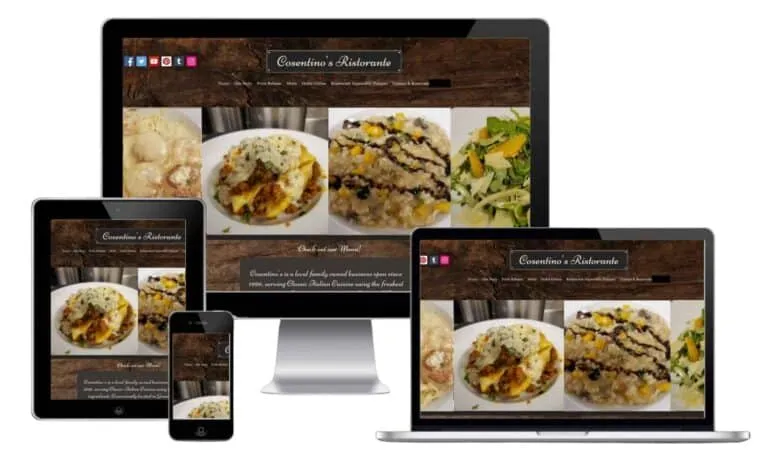
Cosentino's Ristorante
Italian Restaurant | ADA-Compliant Rebuild
A hospitality landmark that needed a site worthy of its reputation, accessible to every guest. Egochi ran the ADA-compliant rebuild behind its engagement and reservation growth.
- +72% Website Engagement Lift
- +66% Local Reservation Growth
- +78% Organic Traffic Increase
-
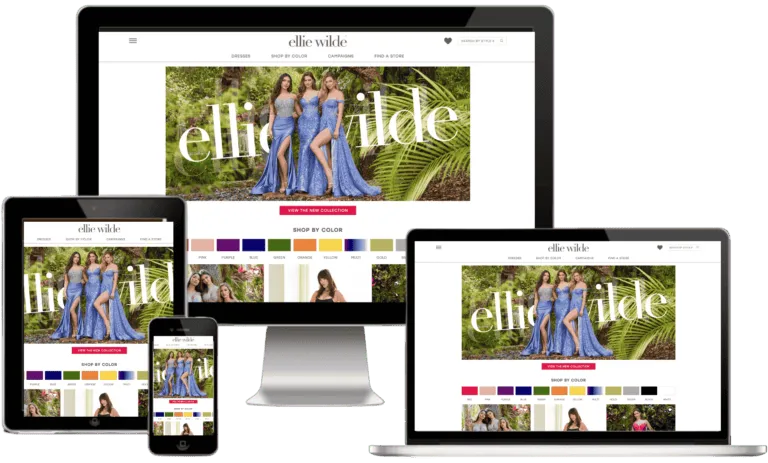
Ellie Wilde
Consumer Ecommerce | Conversion Receipt
A consumer brand receipt from outside hospitality. Egochi ran the build and program whose interaction numbers show the same hold-the-visitor discipline a booking path needs.
- 45% User Interaction Improvement
- 100K+ Monthly Organic Visitors
- 70% Email Open Rate Increase
-
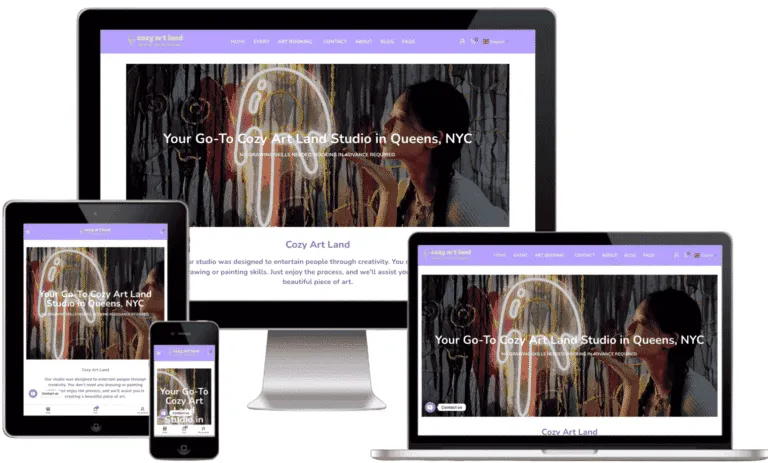
Cozy Art Land
Art Studio | Long Island City, NYC
A local destination whose site and profile had to convert nearby interest into visits, the same job a property site does. Egochi ran the work behind its booking growth.
- +60% Bookings or Form Submits
- +75% GBP Website Clicks
- +120% Organic Sessions
See How Egochi Works
A short look at how our team plans, builds, and reports on client work.
Is This Right for You?
This is for you if
- You run an independent property and your current site is a brochure with a link-out booking portal.
- Your property photographs well and the current site hides it behind a dated template.
- You want a site that ranks and takes reservations, not one that only looks good in a pitch meeting.
This may not be the right fit if
- You operate a franchised flag locked to brand-mandated templates; we cannot rebuild what the brand controls.
- You want a redesign but plan to keep rates and availability off the site. Without a booking path, design alone cannot move direct bookings.
See the work: Hospitality & travel case studies · Web design case studies
What Clients Tell Us
Wedding and corporate event bookings are way up since working with Egochi. They helped us rank for catering keywords and the website they built converts visitors into inquiries really well.
The Complete Hotel Program
This page is one part of a five-part program. Each piece works alone and works better together.
-
Hotel Marketing Agency
The full program judged on one number: your direct booking share.
-
Hotel SEO & Digital Marketing
Organic visibility for the searches that beat the OTA margin.
-
Hotel PPC Agency
Branded-term defense and metasearch, so OTAs stop buying your own name.
-
Hotel Social Media Marketing
Planning-phase content that fills the off-season.
Common Questions About Hotel Website Design
-
How much does a hotel website cost?
Egochi's hotel site builds typically run from $3,500 for a focused independent-property site to $8,000 and up where booking engine work and larger room inventories add scope. Ongoing marketing plans that send the finished site demand start at $1,500 monthly.
-
How do AI travel assistants read a hotel website?
ChatGPT, Gemini, Perplexity, and Google AI Overviews learn from the same crawl classic search runs, plus the structured data a site exposes. A site with a page per room, hotel and amenity schema, and destination content that answers questions directly can be identified, matched to a traveler request, and cited; a one-page brochure cannot. Egochi builds hotel sites as that structured source from day one.
-
What makes a hotel website rank in Google?
A page per room type and offer, hotel and room schema, fast load times, and local content about the destination that travelers search while planning. Sites that keep everything on one long homepage give Google a single page to rank against OTAs holding thousands, which is why Egochi architects the page map before designing a pixel.
-
How does a website get guests to book direct instead of on an OTA?
By winning the side-by-side comparison travelers already make. Live rates on the page, a short booking path with the engine embedded rather than linked out, and direct perks like late checkout or flexible cancellation stated next to the price. Parity rules may fix the rate, but the OTA cannot match the perks, and Egochi puts that argument on the screen at the moment of choice.
-
What should a hotel ask a website design company before hiring?
Ask whether the booking engine will be embedded on the page with live rates or linked out to a portal, because that one decision loses more reservations than any visual choice. Ask if each room type gets its own page with schema, how image-heavy pages will pass Core Web Vitals on phone connections, and where the book-direct perks will sit. A portfolio judged only on beauty misses the rate comparison; Egochi answers every one of these in the quote.
Awards and Partnerships Egochi Holds in 2026
-

Egochi Named 2026 Top Digital Marketing Agency by Clutch
Clutch, a B2B market research and reviews platform, names Egochi a top digital marketing agency for 2026. The distinction rests on overall market presence and, most importantly, verified client feedback. Egochi holds a 5.0 rating across 190+ reviews on Clutch.
-
Egochi Is a Certified Google Premier Partner
Egochi is a certified Google Premier Partner, a status Google grants to the top 3% of participating advertising agencies each year. The tier is earned on campaign performance, sustained client growth, and advanced Google Ads certification, and Google reviews it annually rather than granting it for life.
The Team Behind the Work
-

Jobin John
Chief Executive Officer
-

Justin Brown
Head of Search Engine Optimization
-

Bryan Thomson
Head of Web Design & Development
-

Ina Komins
Head of Social Media Marketing
-

Kierra Pita
Head of Advertising & Content Marketing
-

Patricia Turner
Chief Creative Officer
-

William Carter
Chief Digital Strategy Officer
-

Andrew Miller
Senior SEO Strategist
-

Amy Robinson
Content Marketing Manager
-

Betty Harrison
PPC Campaign Specialist
-

Anthony Carter
Lead Digital Account Executive
-

Amanda Cooper
Social Media Director
-

Carol Parker
Senior Client Success Manager
-

Barbara Bennett
Email Marketing Lead
-

Charles Turner
Technical SEO Analyst
-

Brian Sullivan
Creative Director
-

Christine Walker
Director of Project Management
-

Christopher Brooks
Digital Marketing Strategist
-

Daniel Wright
Senior Analytics Specialist
-

David Henderson
Lead Content Strategist
-

Donna Mitchell
Client Communications Manager
-

Elizabeth Foster
Director of Paid Advertising
-

Emily Baredi
Brand Experience Specialist
-

Emma Scott
Social Media Content Creator
-

George Crawford
Technical Solutions Architect
-

Jacob Evans
Digital Content Coordinator
-

James Anderson
Marketing Automation Specialist
-

Jason Palmer
Junior Copywriter
-

Jeffrey Reynolds
Paid Media Analyst
-

Jennifer Lewis
Community Engagement Specialist
-

Jonathan Murphy
SEO Reporting Specialist
-

Joseph Morgan
Influencer Marketing Coordinator
-

Kenneth Stevens
Digital PR Manager
-

Kimberly Harper
Digital Marketing Intern
-

Kevin Morris
SEO Outreach Specialist
-

Lee Dawson
Junior Web Developer
-

Linda Peterson
Email Campaign Coordinator
-

Lisa Thompson
Social Media Ads Specialist
-

Margaret Bradley
Marketing Operations Lead
-

Mark Richards
Data & Insights Analyst
-

Mary Kennedy
Senior Copyeditor
-

Matthew Clark
Growth Marketing Manager
-

Michelle Sanders
Junior Marketing Designer
-

Michael Foster
Senior Conversion Rate Specialist
-

Nancy Wheeler
Digital Analytics Manager
-

Nicholas Pierce
Affiliate Marketing Specialist
-

Nicole Adams
Outreach Program Coordinator
-

Paul Franklin
Paid Social Campaign Manager
-

Richard Barnes
Reputation Management Specialist
-

Robert Murphy
Lead Solutions Architect
-

Ronald Davis
Marketing Technology Analyst
-

Ryan Bell
Paid Media Buyer
-

Sandra Gregory
Digital Account Coordinator
-

Scott Hopkins
CRM Implementation Specialist
-

Shirley Ellis
Customer Insights Manager
-

Stephanie Cross
Brand Content Designer
-

Steven Greene
Web Analytics Specialist
-

Susan Price
Affiliate Campaign Manager
-

Thomas Fisher
Lead Technical Architect
-

Timothy Nash
Mobile Marketing Strategist
Certified & Accredited


A Site That Beats Your Own OTA Listing.
Send us your current site and your property's OTA listing. Egochi, the build team behind the booking numbers above, shows where the comparison is lost today: booking path, speed, room pages, and the direct case, and what a rebuild is worth in commission.
Egochi Stats
- 250+ Google Reviews
- 5.0 Clutch Rating
- 12+ Years Experience
- $200M+ Revenue Generated
- 4 US Offices
- 190+ Clutch Reviews
Blog Posts
- Aug 12, 2026 GEO vs. SEO: A Comparative Guide for Digital Marketers
- Aug 12, 2026 What is llms.txt? | How to Create llms.txt file for your website
- Aug 12, 2026 What is Semantic SEO? | How to Build Topical Authority That Ranks
- Aug 12, 2026 What is Schema Markup? | How to Add Structured Data to Your Website
- Aug 12, 2026 How to Optimize for Voice Search: A Realistic 2026 Guide