Restaurant Website Design
Most restaurant website design pages make you call to learn the price. Egochi publishes pricing up front: you get a fixed project quote after one scoping call, we tell you exactly what moves the number (locations, ordering setup, menu size, photography), and ongoing restaurant marketing plans start at $1,500 monthly if you want the site to earn after launch. Every site Egochi builds is built to sell food: menus as fast HTML pages Google can read, not PDFs; ordering and reservations embedded on your own domain instead of handed to an app; restaurant schema so search shows your hours and menu; and load times fit for a hungry person on a phone.
Get Your Fixed Price Quote See What's Included
- 250+ Google Reviews
- 190+ Clutch Reviews at 5.0
- Google Premier Partner
As Featured In






What a Restaurant Website Has to Do
Four standards Egochi builds to, and the pricing honesty most of this market avoids.
The price should not be a mystery
Almost every web design page ends with "contact us for a quote", which too often means the price depends on how you sound on the phone. Egochi quotes a fixed number after one scoping call and publishes what moves it: locations, ordering setup, menu size, and photography. No haggling, no surprise line items.
A PDF menu is invisible money
Diners search for dishes, not just restaurant names, and Google cannot rank a scanned PDF for "lamb shawarma near me". The HTML menu pages Egochi ships capture those searches, load fast on cellular, and update the moment a price changes, instead of waiting for someone to re-export a file. Those menu pages are also the raw material restaurant SEO ranks with.
Every outbound click is a commission
A website that links out to a delivery app for ordering and a platform for reservations is a brochure for middlemen. Egochi embeds both on your domain, so the order, the customer record, and the repeat visit belong to the restaurant that cooked the food.
Speed is a hunger metric
Your site is judged by hungry people on phones, often standing on a sidewalk deciding between you and the place next door. A menu that takes six seconds to load loses to one that takes one. Egochi builds to Core Web Vitals because impatience peaks at mealtime.
What's Inside a Restaurant Website Build
Menu, ordering, schema, and speed, quoted by Egochi at a fixed price up front.
-
Menu-First Design
Egochi builds layouts around your dishes and photography, so the site sells the food instead of burying it under a generic layout.
-
HTML Menus That Get Found
Egochi puts every menu item on a fast, crawlable page, so dish searches find you and price updates take minutes, not a designer.
-
Ordering and Reservations Built In
Egochi embeds direct ordering and booking on your domain, keeping the customer, the data, and the full margin with the restaurant.
-
Restaurant Schema Markup
Egochi structures data for hours, menu, cuisine, and location, so search results and AI answers can show your details accurately.
-
Speed and Core Web Vitals
Egochi tunes pages for hungry people on cellular connections, with the scores checked before launch, not promised after.
-
A Base for Local Search
Egochi ships clean structure, location pages, and metadata built so the site can rank, whether we run the marketing afterward or you do.
A Restaurant Website AI Assistants Can Read
Diners ask assistants where to eat tonight, which kitchen handles an allergy, and who takes a party of twelve, and Google AI Overviews, ChatGPT, Gemini, and Perplexity answer from whatever your website lets them read. Egochi builds restaurant sites as the source of truth those systems quote, which is the same structure that wins dish searches in classic results.
Google AI OverviewsChatGPTGeminiPerplexity
-
HTML menus are quotable, PDFs are not
AI Overviews and ChatGPT lift dishes, prices, and dietary notes from structured pages. A PDF menu is as invisible to them as it is to search, so every menu Egochi builds ships as fast, crawlable HTML a system can cite.
-
Schema tells assistants what is true
Egochi marks up restaurant, menu, cuisine, hours, and location data on every build. Gemini and Perplexity resolve which restaurant exists, what it serves, and when it is open through exactly that markup, before any diner walks in.
-
Ordering paths assistants can point to
When an assistant answers "order from this restaurant", the link that surfaces should be your own domain, not an app listing that charges commission. Egochi embeds ordering and reservations on the site so the direct path is the one systems find.
-
Built once, cited everywhere
Egochi does not sell an AI add-on after launch. The structured menus, schema, and speed the build ships with are what earn AI citations and classic rankings together, and the site owns both from day one.
How a Build Runs, Quote to Launch
-
Scoping call and fixed quote
One call covers locations, menu size, ordering and reservation needs, and photography. Egochi puts a fixed number in writing with the cost drivers itemized, and it does not move unless the scope does.
-
Content runs parallel
You get a checklist at the quote stage: final menu prices, descriptions, photos, hours. The menu is the usual bottleneck, so it moves alongside the build instead of after it.
-
Build to the standards
HTML menu pages, ordering and reservations embedded on your domain, restaurant schema for hours and cuisine, and a speed budget enforced from the first template, not patched at the end.
-
Test like a hungry person
Before launch Egochi checks Core Web Vitals on throttled cellular, validates the schema, taps every ordering path on a real phone, and wires the call and order tracking.
-
Launch and hand over
The site goes live with training for menu updates, or rolls into an ongoing plan if you want Egochi running the marketing. Either way, you own everything.
Questions Owners Ask Before a Rebuild
Why not just use a website builder ourselves?
For a placeholder, go ahead, and Egochi will say so on the scoping call if that is genuinely all you need. Builders default to the exact failures that cost restaurants money: PDF menus, ordering links that hand customers to apps, and themes that load slowly on cellular. The gap is not looks. It is whether the site sells food.
Our Instagram and Google profile get us found. Why pay for a site?
For some rooms that is honestly enough for now. The site starts earning when dish searches, catering inquiries, and direct ordering matter: a profile cannot rank for menu items, take a commission-free order, or hold a private events page. Once those revenue lines are on the table, the profile stops being the whole storefront.
Another agency quoted half the price. What is the catch?
Ask what the number includes. Cheap restaurant builds usually skip crawlable menu pages, schema, speed work, and tracking, the parts that take the labor and produce the revenue. You get a brochure that looks finished and performs like the PDF menu it probably contains. The difference shows up in search results, not in screenshots.
Will a new website bring in more customers on its own?
It converts demand better; it does not conjure demand. Expect more of the visitors you already get to order, book, and call, and expect dish searches to start finding the HTML menu over the following months. Filling the room beyond that is marketing work, which is a separate decision Egochi prices separately.
Common Mistakes to Avoid
-
Uploading the menu as a PDF, making every dish invisible to the searches people run when they crave it.
-
Putting an order button on your own site that routes to a commission app, paying a middleman for a customer already on your domain.
-
Launching with stock photos of food the kitchen does not serve, which diners recognize instantly and quietly hold against you.
-
Choosing animations and video backgrounds that look great on office wifi and take six seconds on the sidewalk.
-
Redesigning the look while keeping the slow theme and hosting underneath, so the new site inherits the old speed problem.
Restaurant Sites We Actually Built
Gallery searches deserve real work, not templates. The restaurant builds lead this row, and web receipts from the wider Egochi roster close it; every number restates the client's published case study.
-
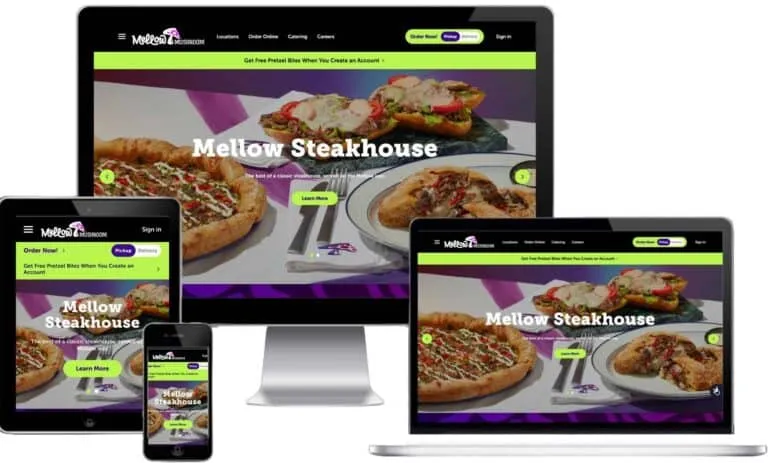
Mellow Mushroom
Pizza Restaurant Group | Custom Build
A national pizza group on a custom build, where the design problem was moving diners from browsing to ordering across many locations without burying the local pages. Egochi shipped the redesign, and orders followed the cleaner path.
- +90% User Engagement Increase
- +245% Online Orders
- +312% Local Traffic
-
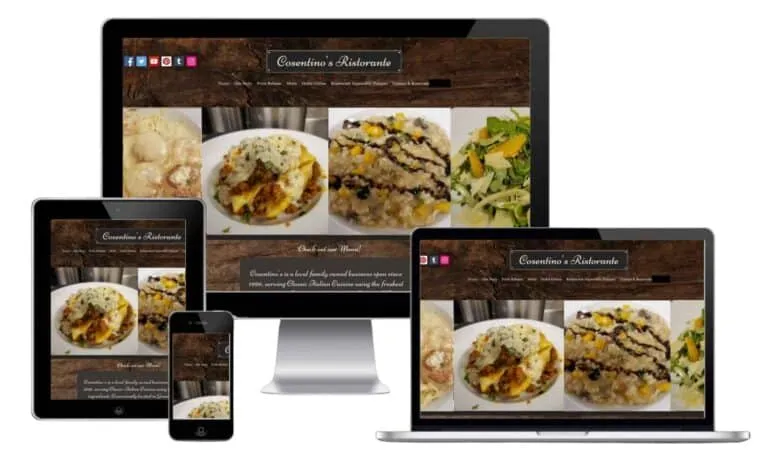
Cosentino's
Italian Restaurant | Geneva, NY
A Geneva, New York Italian restaurant rebuilt on WordPress to ADA accessibility standards, with the menu, the heritage, and the reservation path carrying the design instead of stock food photography. Egochi ran the build and the content.
- +72% Website Engagement Lift
- +78% Organic Traffic Increase
- +66% Local Reservation Growth
-
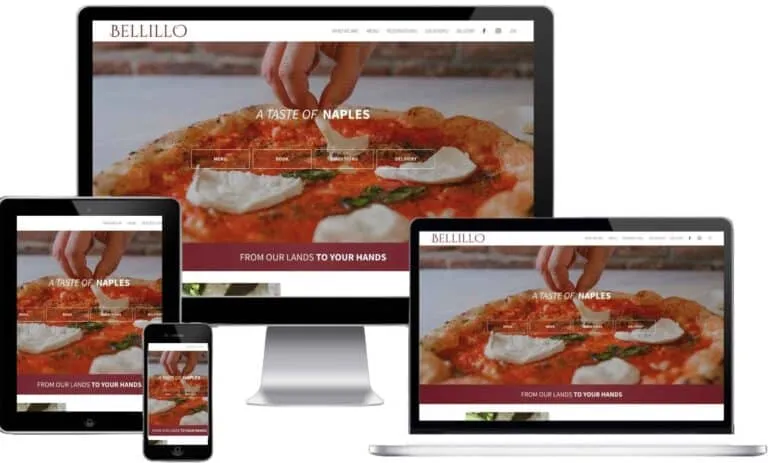
BELLILLO
Pizza Restaurant | Miami, FL
A Squarespace pizza spot whose menu lived in a slow image gallery. Egochi shipped a fast, text-forward menu page with compressed images and lazy loading, and the near-me rankings moved with the speed.
- 3,900 → 6,100 Organic Sessions
- 11.8 → 3.4 Avg Position, "pizza near me"
- 180 → 290 GBP Calls per Month
-
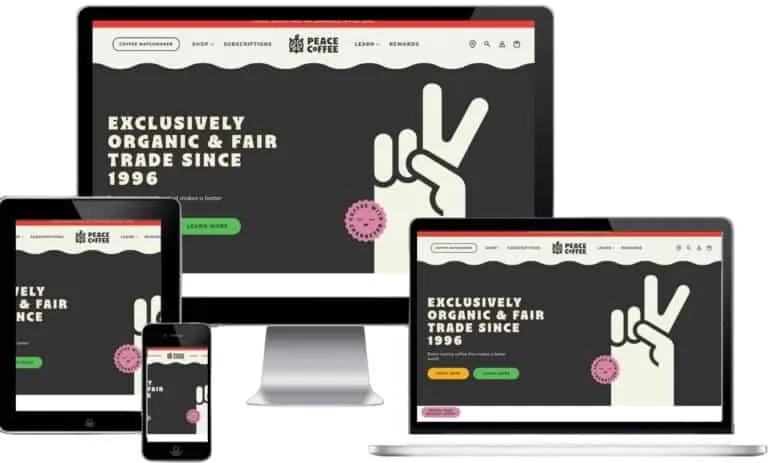
Peace Coffee
Coffee Brand | WooCommerce Redesign
A specialty roaster whose outdated store hid the product. Egochi redesigned the site around the blends and the buying path, and monthly revenue climbed with the traffic.
- +85% Organic Traffic Increase
- $75K Added Monthly Revenue
- 3K Monthly Customer Inquiries
-
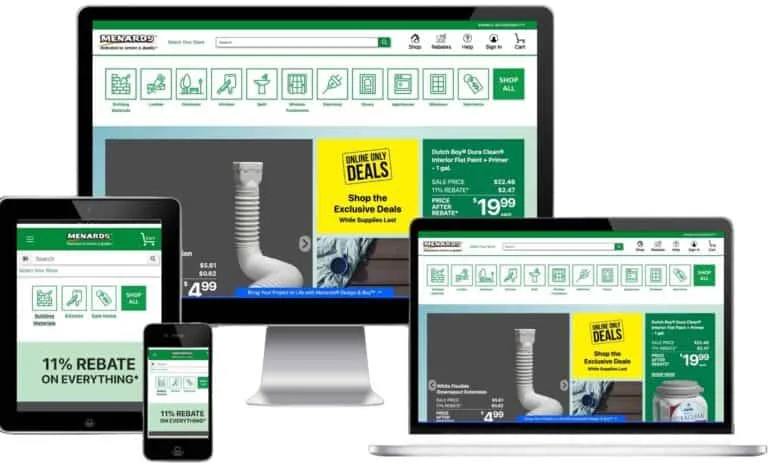
Menards
Home Improvement Retail | Web Build
A national retailer whose rebuild had to move conversions at scale. Egochi shipped the build, proof the process holds far past a single-location site.
- +245% Traffic
- +180% Conversions
- 2.3s Page Speed
-
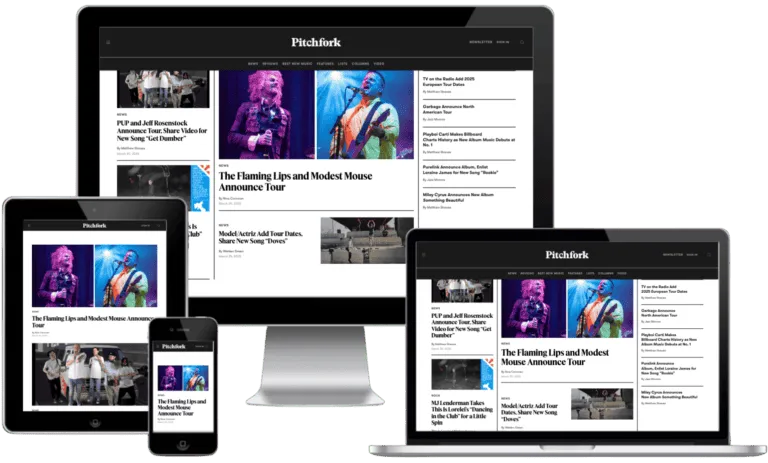
Pitchfork Media
Media Publisher | Site Speed
A publisher living on page speed. Egochi cut load times and reading depth climbed, the same speed discipline a sidewalk menu check on a phone demands.
- -60% Load Time
- +320% Engagement
- 2.6M Monthly Visitors
See How Egochi Works
A short look at how our team plans, builds, and reports on client work.
Is This Right for You?
This is for you if
- Your menu is a PDF, your ordering lives on someone else's app, or your site embarrasses the room it represents.
- You want the price before the pitch, in writing, with the cost drivers explained.
- You are opening a location or rebranding and want a site that can carry local search from day one.
This may not be the right fit if
- A well-kept Google Business Profile covers your needs for now; Egochi will tell you that on the scoping call if it is true.
- You need custom delivery logistics or app development; Egochi builds restaurant websites, not fleet software.
See the work: Food & beverage case studies · Web design case studies
What Clients Tell Us
Our restaurant was struggling to get found online. Egochi fixed our Google Business Profile, got us more reviews, and now we show up whenever someone searches for our type of food. Tables are full every night.
The Complete Restaurant Program
This page is one part of a five-part program. Each piece works alone and works better together.
-
Restaurant Marketing Agency
The full program: local search, reviews, direct orders, catering.
-
Restaurant SEO
Menu-page rankings and the neighborhood queries that fill tables.
-
Restaurant PPC Agency
Meal-decision targeting that promotes direct orders over app margins.
-
Restaurant Social Media Marketing
Dish content and creator dinners that turn scrolls into reservations.
Common Questions About Restaurant Website Design
-
How much does a restaurant website cost?
You will know before you commit: Egochi quotes a fixed project price after one scoping call, and we tell you what moves it, locations, ordering setup, menu size, and photography needs. Ongoing marketing plans start at $1,500 monthly and are separate from the build, never bundled in quietly.
-
Can AI assistants read my restaurant website?
Only if it is built to be read. AI Overviews, ChatGPT, Gemini, and Perplexity quote dishes, prices, and hours from structured HTML pages and schema markup; a PDF menu or an image is as invisible to them as it is to dish searches. Every restaurant site Egochi builds ships with menu and hours markup, so assistants answer with your details, not a guess.
-
Can my website take orders without a delivery app?
Yes. Egochi embeds ordering on your own domain so the customer, the order, and the data stay with you. Delivery platforms can still be a discovery channel if you want them, but repeat customers should have a direct path that does not hand a commission to a middleman every time.
-
How long does a restaurant website take to build?
The build itself is measured in weeks, and the menu is almost always the bottleneck: final prices, descriptions, and photography take longer than the code. Egochi hands you a content checklist at the scoping call so the menu and the build run in parallel instead of one waiting on the other.
-
How do we choose a restaurant website designer?
Ask for a fixed quote in writing with the cost drivers itemized; a price that depends on how you sound on the phone is a bad sign. Then check the fundamentals: menus as crawlable HTML pages that update in minutes instead of waiting on a re-exported PDF, ordering embedded on your own domain rather than routed to an app, and speed tested on cellular. Load a site they built while standing outside on your phone.
Awards and Partnerships Egochi Holds in 2026
-

Egochi Named 2026 Top Digital Marketing Agency by Clutch
Clutch, a B2B market research and reviews platform, names Egochi a top digital marketing agency for 2026. The distinction rests on overall market presence and, most importantly, verified client feedback. Egochi holds a 5.0 rating across 190+ reviews on Clutch.
-

Egochi Is a Certified Google Premier Partner
Egochi is a certified Google Premier Partner, a status Google grants to the top 3% of participating advertising agencies each year. The tier is earned on campaign performance, sustained client growth, and advanced Google Ads certification, and Google reviews it annually rather than granting it for life.
The Team Behind the Work
-

Jobin John
Chief Executive Officer
-

Justin Brown
Head of Search Engine Optimization
-

Bryan Thomson
Head of Web Design & Development
-

Ina Komins
Head of Social Media Marketing
-

Kierra Pita
Head of Advertising & Content Marketing
-

Patricia Turner
Chief Creative Officer
-

William Carter
Chief Digital Strategy Officer
-

Andrew Miller
Senior SEO Strategist
-

Amy Robinson
Content Marketing Manager
-

Betty Harrison
PPC Campaign Specialist
-

Anthony Carter
Lead Digital Account Executive
-

Amanda Cooper
Social Media Director
-

Carol Parker
Senior Client Success Manager
-

Barbara Bennett
Email Marketing Lead
-

Charles Turner
Technical SEO Analyst
-

Brian Sullivan
Creative Director
-

Christine Walker
Director of Project Management
-

Christopher Brooks
Digital Marketing Strategist
-

Daniel Wright
Senior Analytics Specialist
-

David Henderson
Lead Content Strategist
-

Donna Mitchell
Client Communications Manager
-

Elizabeth Foster
Director of Paid Advertising
-

Emily Baredi
Brand Experience Specialist
-

Emma Scott
Social Media Content Creator
-

George Crawford
Technical Solutions Architect
-

Jacob Evans
Digital Content Coordinator
-

James Anderson
Marketing Automation Specialist
-

Jason Palmer
Junior Copywriter
-

Jeffrey Reynolds
Paid Media Analyst
-

Jennifer Lewis
Community Engagement Specialist
-

Jonathan Murphy
SEO Reporting Specialist
-

Joseph Morgan
Influencer Marketing Coordinator
-

Kenneth Stevens
Digital PR Manager
-

Kimberly Harper
Digital Marketing Intern
-

Kevin Morris
SEO Outreach Specialist
-

Lee Dawson
Junior Web Developer
-

Linda Peterson
Email Campaign Coordinator
-

Lisa Thompson
Social Media Ads Specialist
-

Margaret Bradley
Marketing Operations Lead
-

Mark Richards
Data & Insights Analyst
-

Mary Kennedy
Senior Copyeditor
-

Matthew Clark
Growth Marketing Manager
-

Michelle Sanders
Junior Marketing Designer
-

Michael Foster
Senior Conversion Rate Specialist
-

Nancy Wheeler
Digital Analytics Manager
-

Nicholas Pierce
Affiliate Marketing Specialist
-

Nicole Adams
Outreach Program Coordinator
-

Paul Franklin
Paid Social Campaign Manager
-

Richard Barnes
Reputation Management Specialist
-

Robert Murphy
Lead Solutions Architect
-

Ronald Davis
Marketing Technology Analyst
-

Ryan Bell
Paid Media Buyer
-

Sandra Gregory
Digital Account Coordinator
-

Scott Hopkins
CRM Implementation Specialist
-

Shirley Ellis
Customer Insights Manager
-

Stephanie Cross
Brand Content Designer
-

Steven Greene
Web Analytics Specialist
-

Susan Price
Affiliate Campaign Manager
-

Thomas Fisher
Lead Technical Architect
-

Timothy Nash
Mobile Marketing Strategist
Certified & Accredited


Get the Price. Then Decide.
One scoping call, a fixed quote in writing, and the cost drivers explained line by line. If a rebuild is not worth it yet, Egochi will say so.
Egochi Stats
- 250+ Google Reviews
- 5.0 Clutch Rating
- 12+ Years Experience
- $200M+ Revenue Generated
- 4 US Offices
- 190+ Clutch Reviews
Blog Posts
- Aug 12, 2026 GEO vs. SEO: A Comparative Guide for Digital Marketers
- Aug 12, 2026 What is llms.txt? | How to Create llms.txt file for your website
- Aug 12, 2026 What is Semantic SEO? | How to Build Topical Authority That Ranks
- Aug 12, 2026 What is Schema Markup? | How to Add Structured Data to Your Website
- Aug 12, 2026 How to Optimize for Voice Search: A Realistic 2026 Guide