Multi-Location SEO
Multi-location SEO solves a problem single-location businesses never meet: your own branches competing with each other in search. Two offices of the same medical group target the same terms, Google picks one, and it is often the wrong one for the searcher's city, so both convert worse. Egochi builds the architecture that prevents it: a location page per branch with genuinely local content, a Google Business Profile per location with consistent name, address, and phone details, and one brand domain whose authority flows to every branch instead of being split across microsites. The result is a footprint where each location ranks in its own market and a new location inherits the brand's strength on day one. This architecture is also the base layer of Egochi's full multi-location marketing program. Plans start at $1,500 monthly. Start with a free cannibalization audit.
Get Your Free Cannibalization Audit See What's Included
- 250+ Google Reviews
- 190+ Clutch Reviews at 5.0
- Google Premier Partner
As Featured In





Why Multi-Location SEO Fails, and What Fixes It
The failure is almost always architectural. These four findings repeat across Egochi's audits.
Self-cannibalization is the core failure
When two branches of one company chase the same query, Google is forced to choose, and it chooses badly: rankings flip between URLs week to week, or the branch forty minutes away outranks the one around the corner. The signature is easy to spot in rank tracking once you look for it, and the fix Egochi applies is structural, not more content.
Location pages die by template
Swap-the-city-name pages get treated as thin duplicates, and one filtered page can drag its siblings down. Each location page needs material only that branch could publish: the team who works there, the services offered at that address, parking, the neighborhood context a local would recognize. Same skeleton is fine. Same copy is fatal.
One profile per location, one NAP standard
Every staffed branch needs its own Google Business Profile, and every profile needs name, address, and phone details that match the site and every citation exactly. Suite numbers and call-tracking phone numbers are where consistency usually breaks, quietly costing map rankings that get blamed on everything else.
Authority is a brand asset every branch inherits
A link earned anywhere on your domain lifts every location page on it. Separate microsites per branch forfeit that: each one starts from zero and stays weak. This is the compounding argument Egochi makes for one domain, and it is why a new location on a strong domain can rank in months instead of years.
What's Inside a Multi-Location SEO Plan
Egochi builds the architecture first, then the branch-level work that makes each market yours.
-
Location Page Architecture
Egochi designs URL structure, internal linking, and keyword separation that give every branch a distinct target, so no two pages of yours ever compete for one search.
-
Google Business Profile Management
Egochi manages a profile per branch with correct categories, photos, posts, and review cadence, each linked to that branch’s own landing page rather than the homepage.
-
Local Content Per Branch
Egochi writes location pages from details only that branch could supply: staff, services at that address, directions, local context. Structured alike, never interchangeable.
-
Citations and NAP Consistency
Egochi runs directory cleanup per location so every mention of a branch matches its profile and page exactly, including the suite numbers and phone formats that usually drift.
-
Brand Authority Building
Egochi earns links and mentions for the domain itself, because authority raised anywhere on one domain lifts every location page at once.
-
Location-Level Rank Reporting
Egochi tracks rankings per branch in its own market, with cannibalization flags when two of your URLs start trading places for the same query.
How Multi-Location Brands Get Cited in AI Search
The same customers who once typed a city and a service now ask an assistant for the nearest location, its hours, and whether the brand serves their area at all. Google AI Overviews, ChatGPT, Gemini, and Perplexity answer from structured location data, and a footprint those systems cannot resolve simply never gets recommended. Egochi structures per-location entity, NAP, hours, and review data so every branch is a fact the assistants can look up.
Google AI OverviewsChatGPTGeminiPerplexity
-
Location pages the engines can quote
AI Overviews and ChatGPT cite pages that answer one question cleanly for one place. The branch-real location pages Egochi builds, services at that address, staff, hours, directions, are exactly the shape a system can lift into an answer, and the same shape that ranks in classic search.
-
Entity work behind every branch
Egochi keeps one consistent identity per location across your site, Google Business Profiles, and directories, marked up with per-location schema. Gemini and Perplexity resolve a business through those signals before they recommend it, and a footprint of mismatched NAP data resolves as noise.
-
Reviews the assistants weigh per branch
When someone asks which nearby office to trust, the answer engines lean on review volume and recency at the branch level, not the brand level. The per-location review cadence in Egochi's program is what keeps each branch competitive in that comparison.
-
One architecture serves Google and AI
None of this is a second project. The structured location pages, clean entities, and single-domain authority that earn AI citations are the same assets that win the Map Pack and organic rankings, so Egochi reports both visibilities as one program.
Multi-Location SEO Runs on Egochi's Proprietary VERTEX Search™ Ranking System
VERTEX Search™ is Egochi's proprietary SEO methodology, custom built in-house since 2014 and run on every multi-location engagement. The full system holds 18 documented steps; the five milestones below are the ones multi-location brands see. Generic checklists break past the tenth location; this system was built to scale local relevance without stamping a template.
-
Cannibalization audit
Egochi pulls rank tracking for every branch and flags the queries where your own URLs trade places, the branches invisible in their home city, and the profile inconsistencies quietly costing map positions.
-
Architecture plan
Egochi gives each branch a distinct keyword target, a clear URL, and geographic signals no sibling shares. The plan doubles as the rulebook that keeps future pages from colliding with existing ones.
-
Location page rebuild
Egochi rewrites pages from branch-supplied detail: the people at that address, the services offered there, directions a local would give. Structure stays consistent while the substance becomes impossible to swap between cities.
-
Profile and citation cleanup
Egochi matches every Google Business Profile to its landing page, categories corrected, and citations aligned down to suite numbers and phone formats, the two details that break consistency most often.
-
Rank watch per market
Egochi tracks each branch in its own city, not from one office chair, and alerts on new cannibalization the moment two of your URLs start competing again.
VERTEX Search™ is not a rebranded checklist. Egochi built it, and every multi-location campaign runs through the same method at every location it covers. Every step is documented inside the EGOCHI VERTEX™ Growth System, so you can hold any month of work against the method you hired.
Honest Answers on Multi-Location SEO
We rank fine in our home city. Does the rest really matter?
Home-market strength usually comes from years of accumulated signals the other branches never got. Each additional city is a separate contest with its own competitors, and Google scores your branch there on its own local evidence. Extending the home playbook to every market is precisely the work, and the strength you already built proves it can be won.
Can our web team just fix the location pages themselves?
They can, and for a handful of branches with time and a clear spec, they should. What in-house efforts usually lack is the diagnostic layer: knowing which branches cannibalize which, what geographic signals Google reads per page, and how to collect branch-true detail at scale. Egochi's audit is worth buying even if you execute internally.
How long before a new branch ranks in its market?
On a strong existing domain with a real location page and a verified profile: months, not years. Map visibility often moves within a quarter, while competitive organic terms take longer. On a brand-new domain or a separate microsite, expect a far longer climb, which is one more argument for the single-domain architecture.
Is multi-location SEO just local SEO done several times?
The branch-level work overlaps, but the architecture problem is new: keeping your own pages from competing, deciding how authority distributes, and keeping fifty pages distinct without fifty writers. Local SEO done several times, independently, is exactly how companies end up cannibalizing themselves. Egochi runs the multi-location version as one system, not repeated projects.
Common Mistakes to Avoid
-
Publishing location pages that differ only in the city name, then adding more of them when none rank.
-
Running a separate microsite per branch and splitting authority into pieces too weak to compete anywhere.
-
Using call-tracking numbers inconsistently across profiles, citations, and pages until Google cannot tell which number is real.
-
Pointing every Google Business Profile at the homepage instead of the branch page that matches it.
-
Treating rank tracking from headquarters as reality, when results in each branch city look completely different.
Multi-Location SEO Case Studies
Egochi publishes these receipts from search engagements for brands with offices, stores, and branches in many markets. Every number restates the client's published case study, and the many-location footprints lead.
-
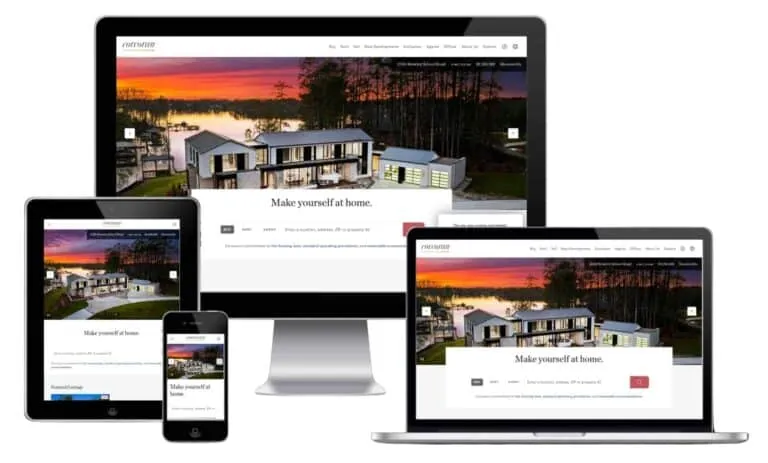
Corcoran Group
Real Estate Brokerage | New York
A brokerage whose offices cover submarkets across New York, the definitive many-locations-one-brand search problem. Egochi rebuilt the architecture so offices stopped trading rankings with each other.
- +120% Organic Traffic Lift
- 13.8 → 4.2 Average Position
- +288% Lead Growth
-
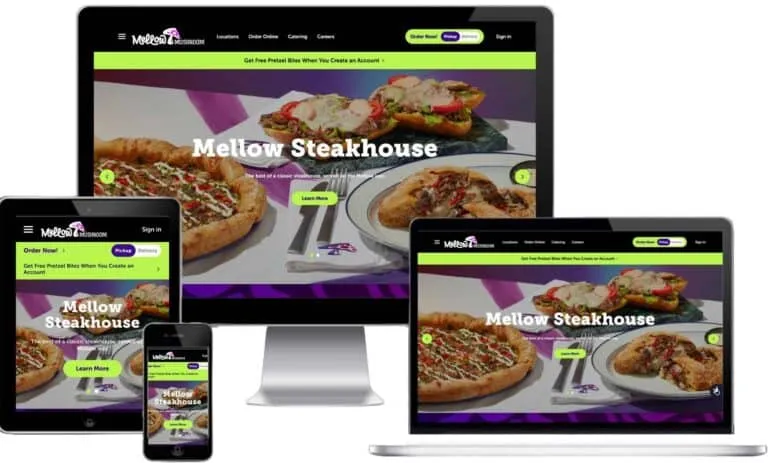
Mellow Mushroom
Restaurant Chain | Local SEO
A pizza chain where each store had to win its own neighborhood searches. Egochi ran the local search program that put locations in the local pack and kept them there.
- +312% Local Traffic Growth
- Top 3 Local Pack Position
- +85% Local Search Visibility
-

Original Penguin
Apparel Retail | South Florida Stores
A multi-store apparel presence on Shopify. Egochi built store pages and profile alignment so each location earned its own local impressions instead of hiding behind the brand.
- 10,400 → 24,600 Store Page Sessions
- 1,280 → 2,840 GBP Actions
- 195k → 410k Search Impressions
-

Menards
Home Improvement Retail | National
A national retail brand at enterprise scale. Egochi ran the SEO program these published numbers restate, evidence the single-domain method compounds no matter how large the footprint gets.
- +250% Organic Traffic
- +$8.7M Organic Revenue Added
- +435% Transactions
-

Grown Brilliance
Ecommerce Jewelry | National SEO
A roster receipt from ecommerce: Egochi runs the SEO program for this national jewelry brand, proof the authority-building layer of this architecture performs at revenue scale.
- 160K+ Organic Visits
- $200M Annual Revenue
- +80% Conversion Increase
-

Flagstar
Commercial Bank | Branch Network
A commercial bank balancing branch findability with a national brand. Egochi handled the search and accessibility work restated here, regulated-industry proof for the same architecture.
- +72% Organic Traffic Increase
- +80% Email Engagement Climb
- +85% ADA Compliance Improvement
See How Egochi Works
A short look at how our team plans, builds, and reports on client work.
Is This Right for You?
This is for you if
- You have two or more company-owned locations and at least one is invisible in its own city.
- Your locations’ rankings swap places for the same searches, which is the classic cannibalization signature.
- You are opening new branches and want each one to rank in months, not years, by inheriting the brand domain’s authority.
This may not be the right fit if
- Your locations are independently owned franchises. That structure needs owner-level governance and co-op rules, which is our franchise marketing program, not this one.
- You want a city-name-swapped template stamped across fifty pages. That pattern is what gets multi-location sites filtered, and we will not build it.
See the work: Local SEO case studies · SEO case studies
What Clients Tell Us
Property owners looking for management companies find us online now. Egochi understood our B2B model and created content that attracts the right property owners. Portfolio has grown 40% this year.
The Complete Multi-Location Program
This page is one part of a five-part program. Each piece works alone and works better together.
-
Multi-Location Marketing Agency
Strategy at both levels: every branch local, the brand compounding.
-
Multi-Location PPC
Geo-fenced campaigns and budgets that follow market opportunity.
-
Multi-Location Social Media
Branch-real content at scale, with review response across every office.
-
Multi-Location Website Design
One domain, a rankable page per branch, no redesign per new location.
Common Questions About Multi-Location SEO
-
How much does multi-location SEO cost?
Egochi's plans start at $1,500 monthly and scale with location count and market difficulty rather than a flat per-branch fee. Shared brand work such as technical fixes and authority building serves every location at once, so cost per branch falls as the footprint grows. The audit prices your exact situation.
-
How do multi-location businesses appear in AI search results?
Google AI Overviews, ChatGPT, Gemini, and Perplexity answer near-me and which-location questions from structured data: per-location schema, consistent name, address, and phone details, hours, and branch-level reviews. Egochi structures that data across the footprint so the assistants can resolve every branch, and the same signals move the Map Pack and organic rankings, one architecture serving both.
-
What is location cannibalization in SEO?
It is when two pages or profiles from the same company compete for one search, forcing Google to choose between them. The signature is rankings that alternate between URLs week to week, or a distant branch outranking the near one. The fix Egochi applies is architectural: distinct targets, distinct content, clear geographic signals per branch.
-
Does every location need its own Google Business Profile?
Yes, if it is a real staffed address that customers visit or that dispatches to them. Each profile needs its own reviews, photos, categories, and a landing page on your domain about that branch specifically. Sharing one profile across locations forfeits map visibility everywhere but one city.
-
How do I choose a multi-location SEO company?
Ask how they detect cannibalization between your own branches, and ask to see rank tracking per market rather than from one office chair. Ask whether they build on one domain or sell per-branch microsites, and walk away from anyone offering city-swapped template pages. Get pricing before the call ends; Egochi publishes its floor up front. If your locations are independently owned franchises, a franchise-specific program fits better than this one.
Awards and Partnerships Egochi Holds in 2026
-

Egochi Named 2026 Top SEO Company by Clutch
Clutch, a B2B market research and reviews platform, names Egochi a top SEO company for 2026. The distinction rests on overall market presence and, most importantly, verified client feedback. Egochi holds a 5.0 rating across 190+ reviews on Clutch.
-

Egochi Is a Certified Google Premier Partner
Egochi is a certified Google Premier Partner, a status Google grants to the top 3% of participating advertising agencies each year. The tier is earned on campaign performance, sustained client growth, and advanced Google Ads certification, and Google reviews it annually rather than granting it for life.
The Team Behind the Work
-

Jobin John
Chief Executive Officer
-

Justin Brown
Head of Search Engine Optimization
-

Bryan Thomson
Head of Web Design & Development
-

Ina Komins
Head of Social Media Marketing
-

Kierra Pita
Head of Advertising & Content Marketing
-

Patricia Turner
Chief Creative Officer
-

William Carter
Chief Digital Strategy Officer
-

Andrew Miller
Senior SEO Strategist
-

Amy Robinson
Content Marketing Manager
-

Betty Harrison
PPC Campaign Specialist
-

Anthony Carter
Lead Digital Account Executive
-

Amanda Cooper
Social Media Director
-

Carol Parker
Senior Client Success Manager
-

Barbara Bennett
Email Marketing Lead
-

Charles Turner
Technical SEO Analyst
-

Brian Sullivan
Creative Director
-

Christine Walker
Director of Project Management
-

Christopher Brooks
Digital Marketing Strategist
-

Daniel Wright
Senior Analytics Specialist
-

David Henderson
Lead Content Strategist
-

Donna Mitchell
Client Communications Manager
-

Elizabeth Foster
Director of Paid Advertising
-

Emily Baredi
Brand Experience Specialist
-

Emma Scott
Social Media Content Creator
-

George Crawford
Technical Solutions Architect
-

Jacob Evans
Digital Content Coordinator
-

James Anderson
Marketing Automation Specialist
-

Jason Palmer
Junior Copywriter
-

Jeffrey Reynolds
Paid Media Analyst
-

Jennifer Lewis
Community Engagement Specialist
-

Jonathan Murphy
SEO Reporting Specialist
-

Joseph Morgan
Influencer Marketing Coordinator
-

Kenneth Stevens
Digital PR Manager
-

Kimberly Harper
Digital Marketing Intern
-

Kevin Morris
SEO Outreach Specialist
-

Lee Dawson
Junior Web Developer
-

Linda Peterson
Email Campaign Coordinator
-

Lisa Thompson
Social Media Ads Specialist
-

Margaret Bradley
Marketing Operations Lead
-

Mark Richards
Data & Insights Analyst
-

Mary Kennedy
Senior Copyeditor
-

Matthew Clark
Growth Marketing Manager
-

Michelle Sanders
Junior Marketing Designer
-

Michael Foster
Senior Conversion Rate Specialist
-

Nancy Wheeler
Digital Analytics Manager
-

Nicholas Pierce
Affiliate Marketing Specialist
-

Nicole Adams
Outreach Program Coordinator
-

Paul Franklin
Paid Social Campaign Manager
-

Richard Barnes
Reputation Management Specialist
-

Robert Murphy
Lead Solutions Architect
-

Ronald Davis
Marketing Technology Analyst
-

Ryan Bell
Paid Media Buyer
-

Sandra Gregory
Digital Account Coordinator
-

Scott Hopkins
CRM Implementation Specialist
-

Shirley Ellis
Customer Insights Manager
-

Stephanie Cross
Brand Content Designer
-

Steven Greene
Web Analytics Specialist
-

Susan Price
Affiliate Campaign Manager
-

Thomas Fisher
Lead Technical Architect
-

Timothy Nash
Mobile Marketing Strategist
Certified & Accredited


Stop Competing With Your Own Locations.
Send us your locations and the searches that matter to them. Egochi, a 5.0 rated SEO partner across 190+ Clutch reviews, maps which branches collide, which are invisible, and the architecture that fixes both.
Egochi Stats
- 250+ Google Reviews
- 5.0 Clutch Rating
- 12+ Years Experience
- $200M+ Revenue Generated
- 4 US Offices
- 190+ Clutch Reviews
Blog Posts
- Aug 12, 2026 GEO vs. SEO: A Comparative Guide for Digital Marketers
- Aug 12, 2026 What is llms.txt? | How to Create llms.txt file for your website
- Aug 12, 2026 What is Semantic SEO? | How to Build Topical Authority That Ranks
- Aug 12, 2026 What is Schema Markup? | How to Add Structured Data to Your Website
- Aug 12, 2026 How to Optimize for Voice Search: A Realistic 2026 Guide